







- Site Navigation -
What Makes a Durable Cargo Tricycle: A Supplier and Buyer Guide
Author:duomi Date:2026-08-05 23:37:22 Hits:157
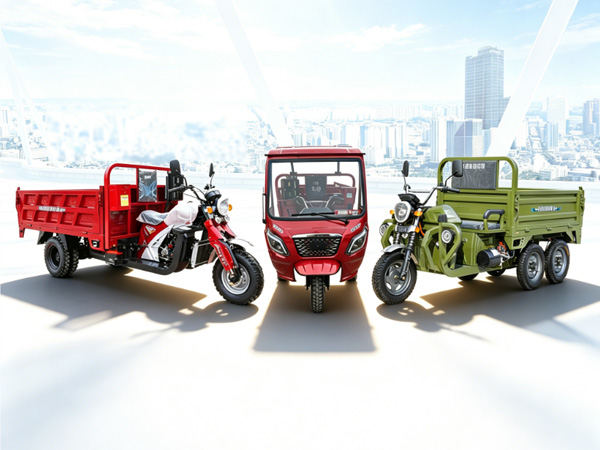
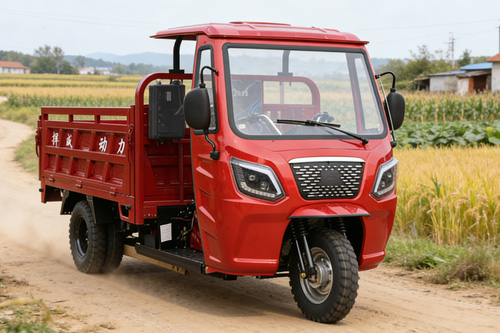
Not all cargo tricycles are built to the same standard. Two vehicles may look nearly identical at first glance—one lasts eight years in daily commercial service; the other develops frame cracks, bearing failures, and component seizures within eighteen months. The difference lies in the engineering decisions made during design and manufacturing: frame material selection, weld quality, component specification, and quality assurance protocols applied during production. For buyers sourcing from industrial suppliers and manufacturers, understanding what makes a durable cargo tricycle is essential to making purchasing decisions that deliver reliable long-term performance rather than a string of premature failures and replacement costs.
Frame Material: Steel Grade and Tube Construction
The frame is the structural backbone of any cargo tricycle, and its material determines the vehicle's fatigue life under commercial loads. High-quality durable cargo tricycles are built from mild carbon steel tubing (Q215–Q235 grade, equivalent to ASTM A36) with wall thickness of 2.0–2.5 mm for main frame tubes and 2.5–3.0 mm for high-stress sections. Budget models frequently use 1.2–1.5 mm wall thickness tubing that looks adequate visually but fatigues rapidly under repeated loading cycles, developing cracks at weld joints within 12–18 months of daily commercial use. Beyond wall thickness, tube construction matters: butted tubes (thicker at the ends where stress concentrates) outperform constant-wall tubing of the same weight. For the most demanding applications, chromoly steel (4130 grade) delivers 30–40% higher yield strength at equivalent weight, though at a 25–40% cost premium. Reputable manufacturers specify steel grade and wall thickness in their technical documentation; buyers should request this information as part of the supplier evaluation process rather than relying on visual inspection alone.
Weld Quality: The Hidden Determinant of Frame Life
Weld quality is the most technically demanding aspect of cargo tricycle manufacturing and the hardest for buyers to evaluate without destructive testing. A high-quality weld is continuous along the full joint length, penetrates fully into the base material, and creates a smooth transition without undercut or porosity. Poor quality welds—identified by visible porosity, incomplete fusion, or irregular bead profiles—are stress concentration points where fatigue cracks initiate under repeated load cycling. The most reliable manufacturers use fixtured welding jigs that hold frame components in precise alignment during welding, ensuring consistent weld quality across every frame rather than relying on individual operator skill. buyers sourcing from manufacturers should request weld samples, factory quality documentation, and—if ordering in volume—consider requesting weld section inspection or radiographic weld testing as part of the acceptance protocol. The cost difference between a properly welded frame and a poorly welded one is invisible in the purchase price but dramatic in service life.
Component Specification: Bearings, Axles, and Drivetrain
A durable cargo tricycle distinguishes itself not only in the frame but in every mechanical component that transmits power or supports load. Wheel bearings are a prime example: sealed cartridge bearings with appropriate load ratings (C3 or C4 clearance for industrial use) last 15,000–25,000 km in commercial service, while unshielded or undersized bearings fail within 3,000–5,000 km. Bottom bracket and headset bearings follow the same logic—specification and seal quality determine longevity. The rear axle assembly on a cargo tricycle carries the majority of the vehicle's payload through its drivetrain; a single-wall rear axle of adequate diameter (18–22 mm) and material (chrome steel, induction hardened) handles commercial loads without deflection, while an undersized or soft steel axle bends under repeated heavy loading. buyers should request the manufacturer's component specifications for bearings, axle, and chain drive components, comparing these against the payload rating to verify adequate safety margins (minimum 2:1 factor of safety is standard practice for industrial vehicle design).
Corrosion Protection: Powder Coating and Surface Treatment
A cargo tricycle operated in wet climates, near coastal areas, or in industrial environments with chemical exposure faces ongoing corrosion attack that can compromise frame integrity within 3–5 years if surface protection is inadequate. The industry standard for industrial cargo tricycle frames is multi-stage powder coating: sandblasting or phosphating pretreatment followed by electrostatic powder coat application and oven curing. This process achieves coating adhesion and thickness (60–100 microns) that protects against stone chip, moisture, and mild chemical exposure far more effectively than spray-painted finishes. For marine or coastal applications, buyers should specify hot-dip galvanizing or marine-grade powder coating as an additional protective measure. The 10–15% cost premium for premium surface treatment delivers 2–3× longer corrosion-free service life, particularly for vehicles that spend significant time outdoors in wet conditions.
Cargo Bed and Load-Bearing Structure
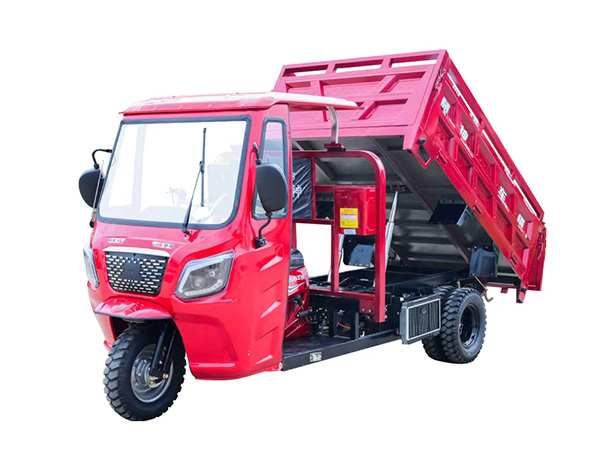
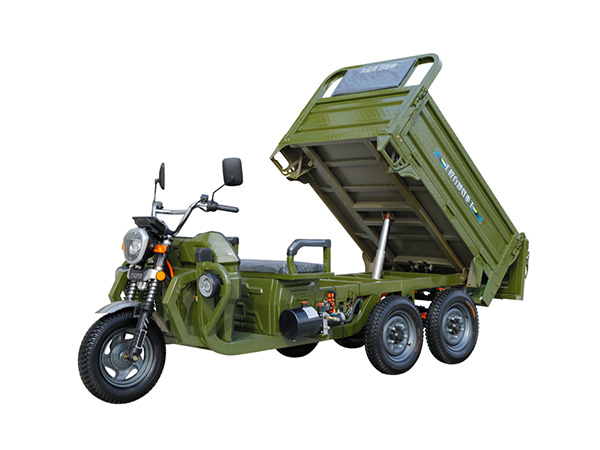
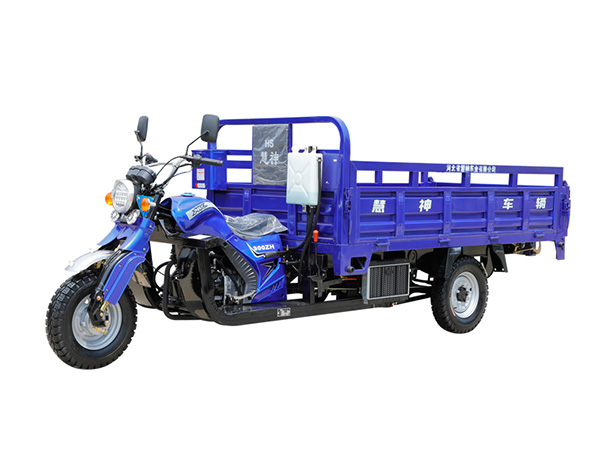
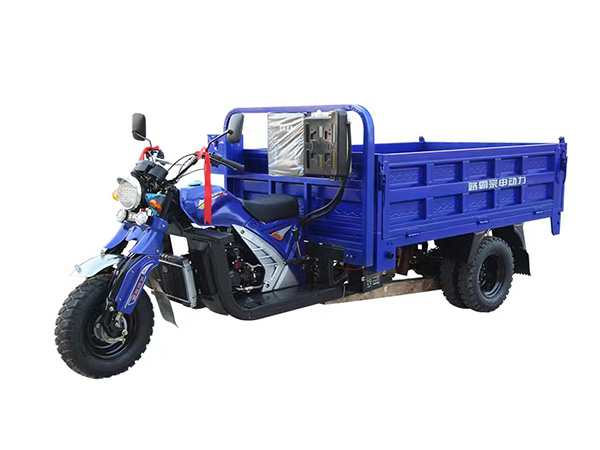
The cargo bed and its mounting system are load-bearing structures that must survive repeated full-load stress cycles, dump mechanism forces, and lateral loading from dynamic cargo movement. A durable cargo tricycle features: a cargo bed floor constructed from minimum 1.5 mm steel with cross-members on 200–300 mm spacing to prevent floor flex under load, bed side walls with adequate height and thickness to contain cargo without deformation, reinforcement at the bed-to-frame attachment points (these are high-stress junctions that frequently crack on inadequately reinforced designs), and a dump mechanism—if fitted—with a hinge rated for 1.5× maximum rated load and a mechanical latch that cannot accidentally release during transport. Buyers evaluating cargo tricycle specifications should verify these cargo bed structural details with the manufacturer, as the cargo bed is where many budget models cut costs in ways that create safety hazards and premature failures.
Suspension and Wheel Systems for Sustained Heavy Loads
For cargo tricycles operating on rough terrain or intended for sustained heavy-load use, suspension specification directly determines durability and operator safety. A rigid-frame cargo tricycle transmits all road shock directly to the frame and cargo, accelerating frame fatigue at weld joints and causing cargo damage. A front or full-suspension system absorbs these loads, reducing peak frame stress by 30–50% and extending service life proportionally. The suspension specification should match the operating environment: for paved urban and intra-factory routes, a rigid frame with adequately sized wheels and high-volume pneumatic tires (2.125–2.5 inch width) provides sufficient vibration damping; for compacted earth, gravel, or uneven site surfaces, specify a front suspension fork (spring or elastomer) and consider a rear suspension system. Wheel spoke count and lacing pattern also affect durability: 36-spoke wheels with cross-lacing provide superior strength and reliability for heavy commercial use compared to 24 or 28-spoke wheels that are adequate for light-duty recreational use.
Frequently Asked Questions
How can I tell if a cargo tricycle is built to last before purchasing?
Request the manufacturer's technical specification sheet covering frame material (steel grade and wall thickness), weld process documentation, component specifications for bearings and axle, and payload safety factor. Reputable suppliers provide this documentation as standard. If a supplier cannot or will not provide these details, treat the absence as a quality warning signal. Additionally, physically test the vehicle: lift one end and let it drop from 5 cm—a quality frame should feel solid with minimal resonance, while a poorly built frame will vibrate excessively.
What is a realistic service life for a durable cargo tricycle?
A durable cargo tricycle built to industrial specifications achieves 8–12 years of reliable daily commercial service with proper maintenance. Budget models from low-specification manufacturers typically last 2–4 years under equivalent conditions before requiring major component replacement or retirement. The difference in service life often exceeds the purchase price difference, making the more expensive durable model the more economical choice over any multi-year operating period.
How does frame weight relate to durability?
Heavier is not always better, but excessively light frames almost always indicate inadequate material specification. A commercial-grade cargo tricycle frame weighs 15–25 kg depending on configuration; frames below 12 kg for equivalent payload ratings are almost always built with thinner wall tubing and smaller-diameter tubes that compromise structural integrity. The manufacturer's weight specification, compared against the payload rating and frame tube dimensions, is a reliable indicator of whether the frame is appropriately engineered for its intended use.
Do suspension systems reduce the durability of a cargo tricycle?
Properly specified suspension does not reduce overall durability—it redirects the loads that would otherwise fatigue the frame into the suspension components designed to handle them. The key is specifying suspension components with adequate load ratings for the intended payload. An incorrectly rated or poorly assembled suspension system can indeed reduce durability by adding stress points and component complexity, but when matched correctly, suspension extends service life in rough-terrain applications by 30–50% compared to rigid-frame equivalents.
Conclusion
Understanding what makes a durable cargo tricycle is a procurement competency that directly affects fleet operating costs and productivity. The key indicators—adequate steel grade and tube wall thickness, high-quality weld construction, sealed cartridge bearings with appropriate load ratings, multi-stage corrosion protection, and properly reinforced cargo bed and dump mechanism—combine to create a vehicle that delivers 8–12 years of reliable service rather than repeated premature failures. Buyers who invest time in evaluating supplier technical specifications and requesting documentation find that the most durable cargo tricycles from established manufacturers and suppliers, despite commanding a 15–30% higher purchase price, deliver 3–5× lower total cost of ownership over their service life. Quality is not an expense—it is the most economical choice for serious commercial operators.
References
ASM International, "Fatigue Properties of Steel Weldments in Vehicle Frame Applications," ASM Handbook Volume 19, 2020.
Bhadeshia, H.K.D.H. and Honeycombe, R.W.K., "Steels: Microstructure and Properties," Elsevier, 4th Edition, 2017.
Shigley's Mechanical Engineering Design, "Design of Mechanical Connections and Frame Members," McGraw-Hill Education, 2021.
European Committee for Standardization, "EN 14764: City and Trekking Bicycles — Safety Requirements and Test Methods," CEN, 2005.

Contact Us
Tel:8615713172715 / 8619061777149
WeChat:8615713172715 / 8619061777149
E-mail:942778859@qq.com
Url:https://www.duomitricycle.com