







- Site Navigation -
Understanding Load Capacity in Cargo Tricycles: A Technical Guide for Industrial Buyers
Author:duomi Date:2026-06-22 15:30:51 Hits:198
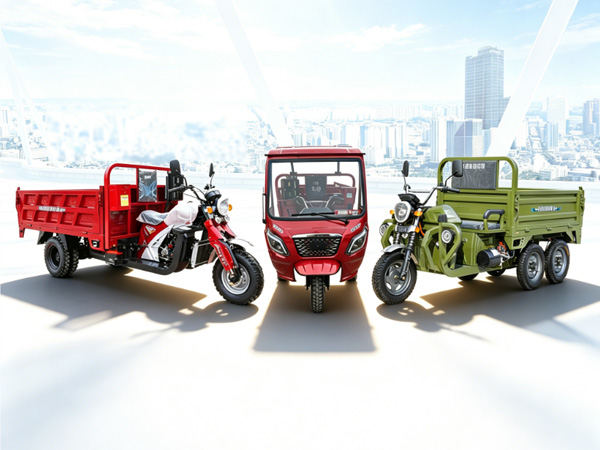
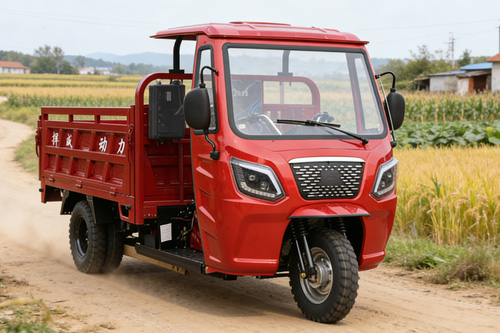
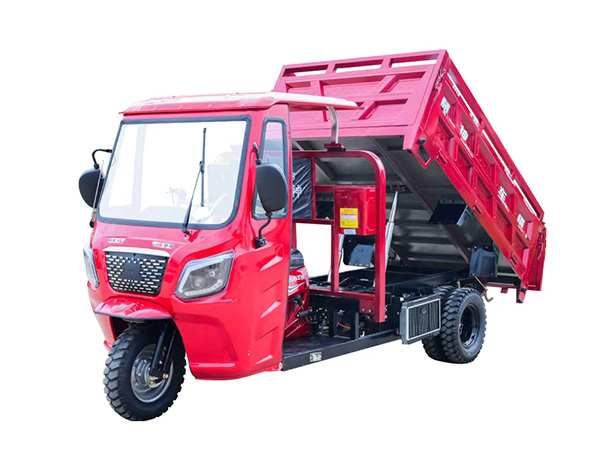
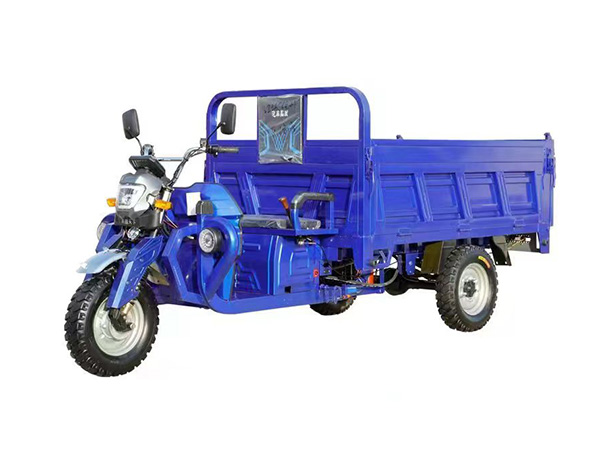
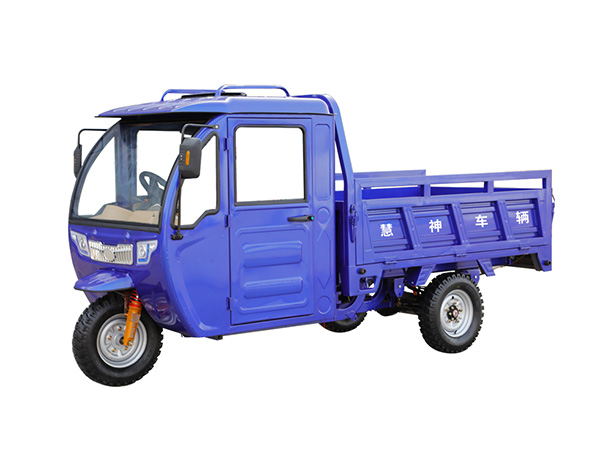
Load capacity specification is the most critical—and most frequently misunderstood—parameter in cargo tricycle procurement. Manufacturers publish maximum load ratings that represent structural limits under ideal laboratory conditions, not the sustainable working loads that industrial operators experience in daily use. Misunderstanding the difference between nominal capacity and operational capacity has led to frame failures, premature component wear, and safety incidents across logistics fleets. This guide provides the technical framework for understanding load capacity in cargo tricycles, enabling fleet managers to specify, operate, and maintain vehicles within safe working limits that maximize both vehicle longevity and operational throughput.
Load Capacity Terminology: Gross Vehicle Weight Rating vs. Payload Rating
The published "load capacity" of a cargo tricycle is typically the Payload Rating—the maximum cargo weight the vehicle is designed to carry. The more operationally relevant figure is the Gross Vehicle Weight Rating (GVWR), which includes the combined weight of: vehicle frame and components (~70–120 kg for a heavy industrial trike), cargo bed and mounting hardware (~20–50 kg), the operator (~75–90 kg average), and the cargo payload. For a cargo tricycle with a published payload rating of 500 kg and an operator weighing 85 kg, the actual GVWR is 500 + 85 + vehicle weight (~100 kg) = 685 kg. Always specify vehicles where GVWR leaves at least 15% margin above your maximum anticipated combined load—this prevents chronic overloading even when operators and loading supervisors estimate weights imprecisely.
Static vs. Dynamic Load: Why Published Ratings Understate Real Demands
Manufacturer load ratings are established under static test conditions: the vehicle is loaded uniformly, positioned on a flat surface, and subjected to a sustained load test. Real-world cargo tricycle operations impose dynamic loads that significantly exceed static ratings. Accelerating a loaded vehicle from rest generates inertial forces of 1.3–1.5× static cargo weight. Hard braking multiplies forces by 1.5–2.0×. Cornering at speed introduces lateral loads of 0.5–1.0× cargo weight. Crossing a 50 mm curb or obstacle at speed generates an instantaneous vertical impulse equivalent to 2.0–3.0× static weight. These dynamic load spikes occur multiple times per trip, accelerating frame fatigue, joint wear, and component failure when vehicles are consistently operated at published payload limits. The practical rule: for daily commercial use, derate the manufacturer's published payload rating by 20–25% to achieve a sustainable working load that preserves vehicle service life.
Frame Engineering and Load Distribution
The frame of a cargo tricycle must manage three distinct load paths simultaneously: vertical bending (from cargo weight and vehicle weight), torsional twisting (from asymmetric loading and road surface irregularities), and fatigue cycling (from repeated loading and unloading). The critical load distribution for a rear-loader cargo tricycle places 65–75% of cargo weight on the rear axle and 25–35% on the front wheel. This asymmetric distribution is why the rear frame section and rear axle mounting plates experience 3–5× higher stress than the front section. Industrial-grade frames address this with: gusseted rear dropout plates, reinforced chain stay tubes (oversized 25–32 mm diameter vs. standard 19–22 mm), and cross-bracing between seat stays and main frame tubes. When evaluating cargo tricycle specifications, verify that the frame uses butted or oversized tubing in the rear load-bearing sections—not just the head tube and main triangle.
Axle Load Ratings and Wheel Configuration
Individual wheel and axle load ratings define the practical payload ceiling for a given vehicle. For a three-wheel cargo tricycle, the two rear wheels typically share the majority of cargo load while the front wheel bears primarily steering loads. Each wheel's load rating depends on tire load index, rim strength, and hub bearing capacity. A common industrial spec is: tire load index ≥85 (545 kg per tire at rated inflation), double-wall or reinforced rim, and sealed cartridge bearings with a rated fatigue life of 10,000+ hours under load. For a cargo tricycle intended for 500 kg payload, each rear wheel must support 180–250 kg under typical loading conditions—verify that tire load index and bearing ratings accommodate 1.5× this value to provide dynamic load margin. Under-inflated tires are the most common cause of premature wheel failure in overloaded cargo tricycles: check tire pressure weekly and maintain within 90–90% of rated pressure for optimal load distribution.
Impact of Cargo Geometry on Effective Load Capacity
The shape and placement of cargo within the bed dramatically affects whether a cargo tricycle operates within its safe working load. A centered, low-profile load distributes weight evenly across the rear axle and maintains the vehicle's center of gravity within the stability triangle. A tall, top-heavy load (stacked boxes, drums) raises the combined CG, reducing the threshold for pitch-over instability on grades and during braking. An asymmetrically loaded bed (all weight on one side) introduces lateral load imbalance that increases frame stress at the non-drive side dropout by 40–60% and causes chronic steering pull. For operations handling variable cargo geometry, specify a cargo tricycle with a lower bed height (≤400 mm from ground to bed floor) and a wider rear axle track (≥800 mm) to maximize stability margin regardless of cargo distribution.
Electric Assist and Load Capacity: Separating Marketing Claims from Engineering Reality
Electric-assist cargo tricycles are often marketed with load capacity claims that include the motor's hill-climbing compensation effect. While the motor can assist the operator in moving heavier loads up grades, it does not increase the vehicle's structural load capacity—the frame, wheels, brakes, and axle are rated for the same loads regardless of assist level. A cargo tricycle rated for 500 kg structural capacity carries 500 kg whether or not an electric motor is fitted. The motor's value is in reducing operator fatigue and enabling sustained operation at the upper end of the load range, not in increasing the physical load limit. Be skeptical of models that advertise "increased capacity" through electric assist: the structural limit remains unchanged. What the motor genuinely improves is the operational feasibility of regularly operating near that limit, particularly on routes with grades exceeding 5%.
Frequently Asked Questions
How do I calculate the safe working load for my cargo tricycle?
Start with the manufacturer's payload rating. Subtract 20–25% for daily commercial use to establish your sustainable working load. Subtract the combined weight of your operator and cargo bed from this figure to determine maximum cargo weight per trip. Example: a cargo tricycle rated at 500 kg payload, with a 100 kg vehicle and 85 kg operator, yields a maximum cargo weight of 500 − 100 = 400 kg static, derated to 300–320 kg for daily use. The operator and bed weight further reduce net cargo capacity.
What happens if I consistently overload a cargo tricycle?
Consistent overloading of a cargo tricycle beyond its rated payload triggers a predictable failure cascade: accelerated frame fatigue at weld joints (crack initiation within 500–2,000 overload cycles), premature chain and sprocket wear (stretch exceeding 1% within 3,000–5,000 km), brake fade under repeated heavy stops, and eventual wheel bearing failure. Beyond mechanical failure, overloaded cargo tricycles exhibit dangerous handling characteristics: increased stopping distance by 30–50%, reduced stability on curves, and higher risk of pitch-over on grades above 8°.
Do tire choices affect load capacity?
Yes, directly. Every tire has a load index (LI) rating that specifies the maximum weight it can support at its rated inflation pressure. A cargo tricycle with LI 85 tires (545 kg per tire) can support the rear axle loads of a 500–600 kg payload cargo tricycle only when inflated to rated pressure. Under-inflation of 15–20% reduces effective load capacity by 25–30% and generates excessive heat buildup that accelerates tire failure. Always match tire load index to at least 1.5× the per-wheel load share of your maximum payload.
Can I increase the load capacity of an existing cargo tricycle?
Not safely or economically. Upgrading a cargo tricycle to higher load capacity requires replacing the frame with a heavier-duty unit—the primary load-bearing structure. Component upgrades (wheels, brakes, axle) without frame reinforcement leave the weakest link (the original frame) as the governing constraint. Retrofit costs typically reach 70–90% of the price of a purpose-built heavy-class vehicle with no improvement in structural integrity. For higher payload requirements (800 kg+), purchase a dedicated heavy-class cargo tricycle from the outset.
Conclusion
Understanding load capacity in cargo tricycles is the foundation of safe, cost-effective fleet operation. The published payload rating is a structural limit, not a working recommendation. By applying a 20–25% derating for daily commercial use, verifying component load ratings exceed 1.5× per-wheel load share, accounting for operator and bed weight in net payload calculations, and managing cargo geometry to maintain CG within the stability envelope, fleet managers can operate cargo tricycles reliably at their maximum sustainable throughput for 8–12 years of service life. The investment in precise load management—weighing cargo, monitoring tire pressure, training operators—costs far less than the repair and replacement bills from chronic overloading.
References
Shigley, J.E. and Mischke, C.R., Mechanical Engineering Design, 10th ed., McGraw-Hill, 2014.
Society of Automotive Engineers, "J1739: Potential Failure Mode and Effects Analysis in Design (Design FMEA)," SAE International, 2020.
Bicycle Tire and Rim Standards Technical Committee, "ETRTO: European Tire and Rim Technical Organisation Standards Manual," ETRTO, 2023.
Megson, T.H.G., Structural and Stress Analysis, 4th ed., Butterworth-Heinemann, 2019.
European Committee for Standardization, "EN 14765:2005+A1:2010 — Safety requirements for racing bicycles," CEN, 2010.

Contact Us
Tel:8615713172715 / 8619061777149
WeChat:8615713172715 / 8619061777149
E-mail:942778859@qq.com
Url:https://www.duomitricycle.com