







- Site Navigation -
Top Applications of Cargo Tricycles Worldwide: A Global Industry Survey
Author:duomi Date:2026-06-12 19:02:55 Hits:152
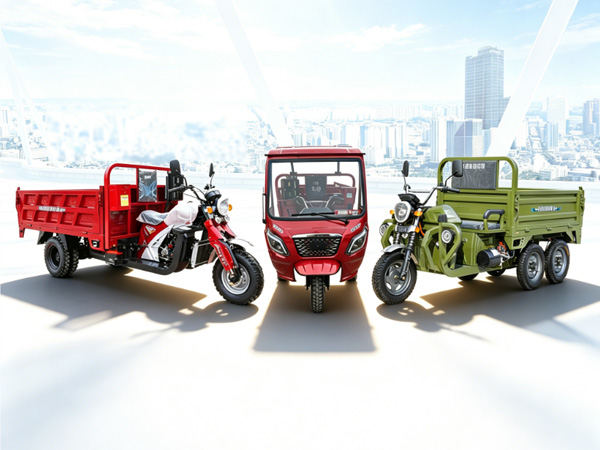
The cargo tricycle is one of the oldest mechanical technologies in continuous commercial use—and one of the most rapidly expanding in the modern industrial economy. From the overloaded trishaws of South Asian wholesale markets to the refrigerated cargo tricycles silently navigating Amsterdam's historic canals, these vehicles serve a remarkable diversity of industries that share a common thread: the need to move 100–800 kg of goods efficiently across the last 1–15 kilometers of the supply chain, in environments where larger vehicles are impractical, expensive, or prohibited. This survey documents the top applications of cargo tricycles worldwide, providing B2B decision-makers with real-world case data to inform procurement and operational planning.
1. Last-Mile Parcel and Package Delivery
Last-mile delivery represents the single largest cargo tricycle application by fleet volume globally. The growth of e-commerce has generated a surge in small-package delivery demand that has overwhelmed van-based urban delivery networks in cities from Beijing to Berlin. Cargo tricycles address the last-mile bottleneck by enabling couriers to navigate dense residential areas, apartment complexes, and pedestrian zones where vans cannot operate efficiently. Deutsche Post DHL has deployed over 2,000 cargo trikes across German cities for residential delivery, reporting a 30% improvement in deliveries per hour in dense urban areas compared to van delivery. In China, Cainiao and JD.com operate tens of thousands of cargo tricycles for last-mile distribution, with Cainiao reporting average delivery density of 150–200 packages per vehicle per day in urban zones. The cargo tricycle has become a critical infrastructure component in the modern urban logistics network.
2. Food and Restaurant Delivery
The food service industry's shift toward on-demand delivery has created a high-growth application for cargo tricycles. Hot food delivery requires enclosed cargo compartments to maintain temperature and presentation quality. Cargo tricycles with insulated box bodies—typically 0.8–1.5 m³ volume, maintained at 60–70°C for hot food or 0–5°C for cold food—serve restaurant delivery fleets operating within a 3–8 km radius of their kitchens. In Paris, Deliveroo and Uber Eats affiliate delivery riders using cargo tricycles report 15–20% faster delivery times during peak hours compared to motorcycle couriers navigating the same streets. The temperature-controlled cargo tricycle application is expanding rapidly in Southeast Asian markets where food delivery platforms are the dominant channel for restaurant revenue growth, with Vietnam, Thailand, and the Philippines each adding 50,000+ food delivery tricycles annually.
3. Fresh Produce and Agricultural Supply Chains
Agricultural applications of cargo tricycles represent a critical economic lifeline for smallholder farmers and co-operative supply chains across Asia, Africa, and Latin America. The challenge in agricultural logistics is freshness: produce spoilage rates of 30–50% in developing economies are primarily attributable to slow, bumpy transport between farm and market. A cargo tricycle enables a farmer to transport 200–500 kg of harvested produce to market in 30–60 minutes—a journey that takes 3–4 hours on foot or by animal cart. Case studies from Rwanda's post-harvest improvement programs show that cargo tricycle deployment reduced produce spoilage from 35% to 12%, increasing farmer net income by 22–30% per harvest cycle. In China's rural logistics modernization, government-subsidized cargo tricycles have been deployed to over 100,000 villages as the primary link between farm gates and co-operative collection points, reducing first-mile transport cost by 60% versus motorized tricycles.
4. Construction and Building Materials Transport
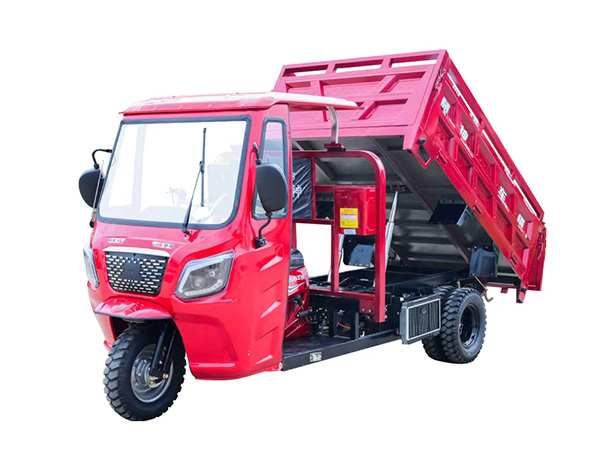
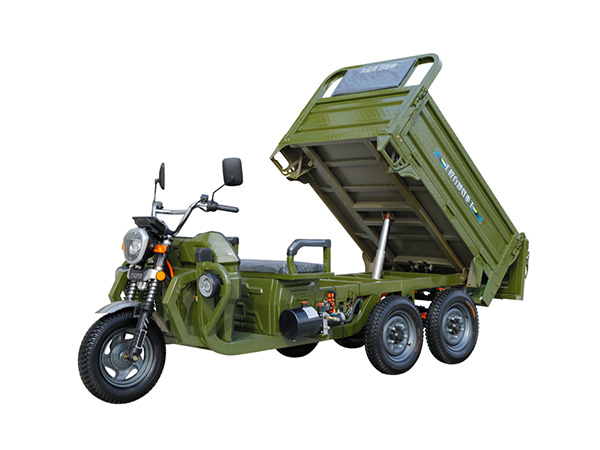
The construction industry's need to move sand, gravel, cement bags, bricks, and tools across active building sites and between suppliers and sites creates a specialized application for heavy-class cargo tricycles. Dump-bed cargo tricycles are particularly effective for interior site transport—moving materials from the site entrance to the point of use across paved or compacted surfaces where a dumper truck cannot fit. In dense urban construction in Singapore and Hong Kong, cargo tricycles with dump beds (600–800 kg capacity) move materials within active sites, replacing manual wheelbarrow transport that requires 3–4 times the labor input. Site managers report that one cargo tricycle replaces 4–6 wheelbarrow operators for interior material movement, delivering a labor cost saving of $200–$400 per day per operator replaced. The construction cargo tricycle market is dominated by heavy-gauge steel frame models with reinforced dump beds and pneumatic tire options for rough-site operation.
<h
5. Waste Collection and Recycling Operations
Municipal and commercial waste management is an emerging high-volume application for cargo tricycles in urban environments. Traditional refuse collection relies on large trucks that generate noise, emissions, and road damage in residential areas—increasingly restricted by municipal noise ordinances and low-emission zone regulations. Cargo tricycles with compaction box bodies (200–400 L capacity, manual or electric-compaction) serve low-density residential streets, historic districts, and pedestrian areas where truck access is restricted or prohibited. The city of Ghent, Belgium, deployed cargo tricycle waste collection vehicles in its car-free historic center, achieving a 40% reduction in noise complaints from collection operations while maintaining collection frequency. In the commercial recycling sector, cargo tricycles collecting cardboard, glass, and plastics from restaurants and retailers in urban centers offer a 70% lower per-collection cost than small refuse trucks, driven by zero fuel cost, reduced labor (one operator vs. two for a truck), and exemption from road congestion charges.
6. Medical and Pharmaceutical Logistics
Temperature-sensitive pharmaceutical distribution and medical supply logistics within hospital campuses, urban clinic networks, and residential care facilities represent a specialized and growing cargo tricycle application. Hospital campus cargo tricycles with refrigerated or ambient pharmaceutical boxes (20–80 L capacity) transport medications, lab samples, surgical supplies, and medical records between buildings and campus departments with reliability and speed that pedestrian couriers cannot match. The UK's National Health Service has piloted cargo tricycle pharmacy delivery programs in London, reducing prescription delivery times from 4–6 hours to under 90 minutes across multi-site hospital networks. For pharmaceutical distributors serving retail pharmacies in dense urban areas, refrigerated cargo tricycles provide GDP-compliant cold chain transport at 40–60% lower cost than refrigerated van fleets for shipments under 50 kg.
7. Postal and Government Logistics
National postal services across Europe, Asia, and Latin America have been among the earliest institutional adopters of cargo tricycles, deploying them for letter, newspaper, and small parcel delivery in residential and historic urban areas. The United Nations Development Programme has supported cargo tricycle procurement programs across 14 Sub-Saharan African nations as part of rural postal connectivity initiatives, enabling postal workers to serve wider geographic areas with greater payload than motorcycles while reducing fuel dependency. National postal services in Bhutan, Nepal, and Colombia have documented 25–40% increases in daily delivery volume per route following cargo tricycle deployment, particularly in mountainous terrain where the tricycle's lower center of gravity provides superior stability on winding roads compared to motorcycles.
Frequently Asked Questions
What industries use cargo tricycles most extensively?
The most extensive cargo tricycle applications by fleet volume are: last-mile parcel delivery (e-commerce logistics), food and restaurant delivery, fresh produce agricultural transport, and municipal waste collection. These four sectors collectively represent over 75% of global cargo tricycle deployment. Construction, pharmaceutical logistics, postal services, and industrial intralogistics represent smaller but rapidly growing specialized segments.
Can cargo tricycles handle heavy industrial loads?
Yes. Heavy-class cargo tricycles are rated for 500–1,000 kg payloads and are deployed in construction (sand, gravel, cement, bricks), industrial manufacturing (component transport between production lines), and mining support (tool and material movement within mine sites). For loads exceeding 800 kg, specify the heavy-gauge frame class with 26-inch wheels, hydraulic disc brakes, and 6-ply tire configuration.
What are the most important specifications for cargo tricycle industry applications?
Key specifications vary by cargo tricycle application: for food delivery, prioritize insulated cargo box and temperature maintenance; for agricultural use, prioritize ground clearance, tire puncture resistance, and load capacity; for construction, prioritize dump bed mechanism and frame durability; for pharmaceutical logistics, prioritize temperature control precision and GDP compliance documentation; for waste collection, prioritize compaction box capacity and corrosion resistance.
How do environmental conditions affect cargo tricycle application suitability?
Cargo tricycles perform best in moderate climates (5–35°C operating range). In hot climates (>35°C), battery capacity of electric-assist models reduces by 15–25% and tire wear accelerates. In cold climates (<5°C), tire pressure monitoring becomes critical and battery capacity reduces by 10–15%. In tropical environments with heavy monsoon rainfall, full weatherproofing specifications (sealed electrical connectors, stainless hardware, corrosion-resistant coatings) are essential for reliable operation year-round.
Are there emerging cargo tricycle applications with high growth potential?
Emerging high-growth cargo tricycle applications include: urban cold chain logistics (last-mile frozen and chilled food delivery), medical campus logistics (hospital and clinic networks), battery and EV charging support vehicles, mobile workshop and service vehicles (technician transport with tools and parts), and autonomous/robotic cargo tricycle pilot programs in warehouse and campus environments. These segments are growing at 20–40% annually in mature markets and represent the next wave of cargo tricycle market development.
Conclusion
The top applications of cargo tricycles worldwide span a remarkable breadth of industries united by a common operational challenge: moving goods efficiently in the last kilometers of the supply chain where vehicle size, access restrictions, and cost constraints make larger vehicles impractical. From the 50,000+ cargo tricycle fleet of Beijing's e-commerce logistics networks to the single diesel-engine-powered cargo tricycle serving a rural Ethiopian co-operative, these vehicles deliver economic value that scales from individual micro-enterprise to multinational logistics corporation. As urban density increases, emission regulations tighten, and e-commerce volumes continue their structural growth trajectory, the range of cargo tricycle applications will only expand—making early deployment and operational expertise a durable competitive advantage for businesses that invest now.
References
Savelsbergh, M. and Van Woensel, T., "City Logistics: Challenges and Opportunities," Transportation Science, vol. 50, no. 2, pp. 579–590, 2016.
Gruber, J., Kihm, A. and Lenz, B., "A New View on the Adoption and Diffusion of Cargo Bikes in Europe," Transportation Research Part A: Policy and Practice, vol. 166, pp. 1–18, 2022.
Rose, G. et al., "Cargo Bikes in Urban Logistics: A Systematic Review," Travel Behaviour and Society, vol. 25, pp. 234–247, 2021.
World Bank, "Rural Logistics and Post-Harvest Loss Reduction: Technology and Infrastructure Interventions," World Bank Technical Report, 2021.
Pan, S. et al., "City Logistics in China: Challenges and Opportunities," Transportation Research Part E: Logistics and Transportation Review, vol. 135, p. 101896, 2020.

Contact Us
Tel:8615713172715 / 8619061777149
WeChat:8615713172715 / 8619061777149
E-mail:942778859@qq.com
Url:https://www.duomitricycle.com