







- Site Navigation -
Industrial Heavy-Duty Tricycles: Applications Across Manufacturing and Logistics
Author:duomi Date:2026-08-26 17:02:04 Hits:160
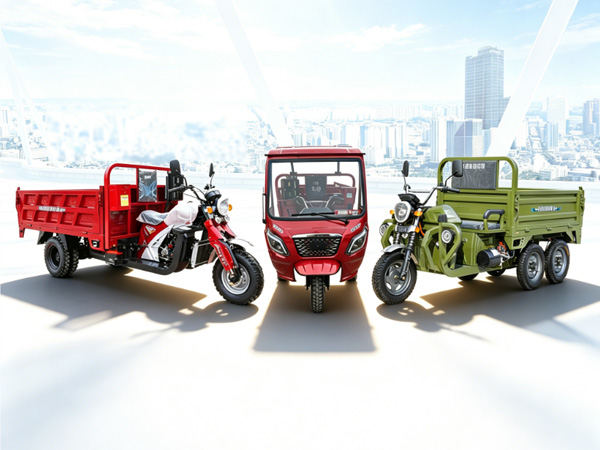
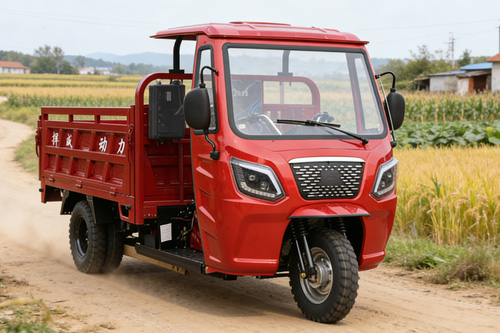
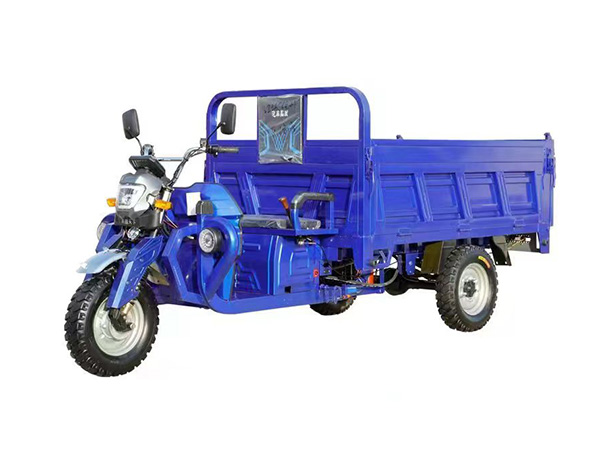
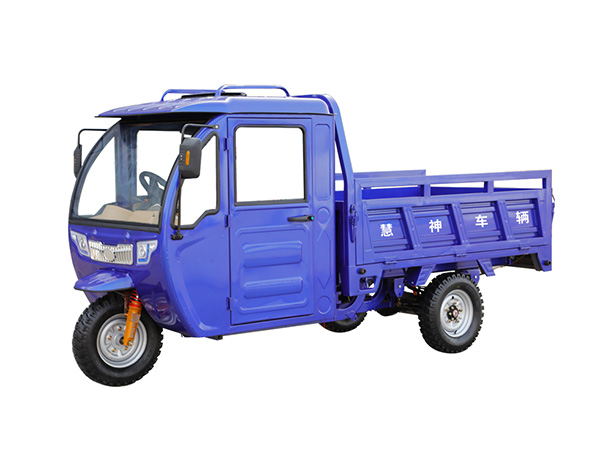
Industrial environments demand vehicles built to handle loads, surfaces, and operating rhythms that consumer-grade equipment cannot sustain. An industrial heavy-duty tricycle is a purpose-engineered material transport vehicle designed to survive the daily punishment of factory floors, construction sites, warehouse aisles, and port operations—carrying payloads of 500–1,500 kg per trip across surfaces ranging from smooth concrete to compacted gravel, operating in dusty and humid conditions, and doing this day after day, year after year. This guide examines the specific applications, technical requirements, and supplier evaluation criteria that enable manufacturing and logistics operations to select and deploy heavy-duty tricycles that genuinely meet the demands of industrial service.
The Industrial Material Transport Challenge
Internal factory and warehouse logistics is a persistent efficiency gap in manufacturing operations. Survey data from industrial engineering studies consistently shows that 25–40% of on-site labor time is devoted to material movement rather than value-adding production work. Forklifts and pallet jacks address bulk material movement but are over-specified for the 200–800 kg, 10–100 m trips that constitute the majority of internal transport events. A purpose-built industrial heavy-duty tricycle fills this gap: it handles individual workstation-level deliveries, moves between process stations, supports tool and component distribution, and manages waste and scrap removal without the footprint, cost, or operational overhead of powered industrial trucks. For operations where 5–15 workers depend on materials arriving at workstations throughout the day, the availability of reliable industrial tricycles directly affects overall productivity and labor efficiency.
Factory Floor Applications: Assembly Line Support and Tool Distribution
Assembly line and manufacturing operations deploy industrial heavy-duty tricycles for three primary functions: component kitting (transporting batches of components from stores to workstations along the production sequence), tool and fixture distribution (moving tools, jigs, and fixtures to maintenance and changeover points), and finished goods transfer (moving completed assemblies from production to inspection, packaging, or storage areas). For component kitting, the industrial tricycle is typically configured with a flatbed or low-profile box sized to accommodate standard EUR pallets or dedicated kitset containers, with a low loading height (under 400 mm from floor) to match standard pallet jack height and minimize operator lifting effort. For tool distribution, the vehicle carries a locked tool box mounted on the flatbed, moved to the production line for tool changes and then returned. The durability requirements are high: factory floor heavy-duty tricycles operate on smooth concrete but are subject to impact loading from dropped tools, oil and coolant exposure, and continuous multi-shift use that tests every component.
Warehouse and Distribution Center Use
In warehouse and distribution center environments, industrial heavy-duty tricycles serve as the flexible material transport layer between fixed conveyor systems, forklift routes, and pick-and-pack workstations. Unlike forklifts that require licensed operators and wide aisles, a well-specified warehouse tricycle operates in standard picking aisles (1,200–1,500 mm width), requires minimal operator training, and handles the frequent stop-and-go pattern of order picking without the fuel, exhaust, or noise of internal combustion equipment. The preferred configuration for warehouse use is an electric-assist platform industrial tricycle with a flatbed sized for one or two order bins (600 × 400 mm each), a maximum payload of 200–400 kg (appropriate for pick-order quantities), pneumatic tires with non-marking compound for finished floor protection, and a parking brake for stable unloading on racking aisle slopes. Fleet operators report that industrial tricycles in warehouse picking applications achieve 30–50% faster internal transport times compared to manual cart pushing, with proportional reductions in operator fatigue and turnover.
Construction Site Heavy-Duty Applications
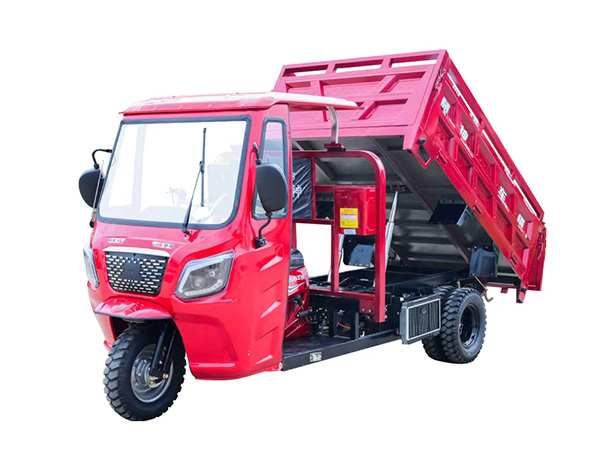
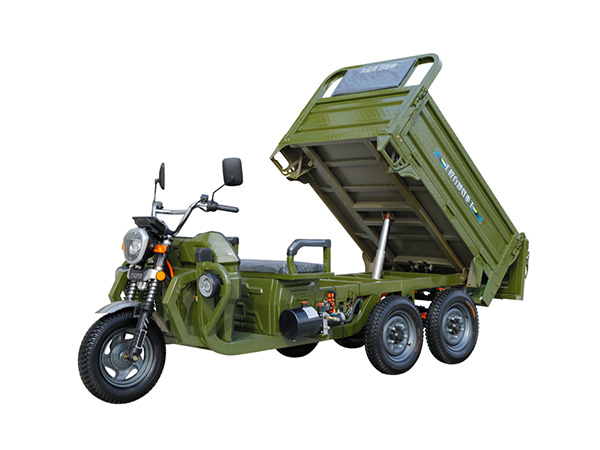
Construction sites represent the most demanding operating environment for industrial heavy-duty tricycles, and the vehicles deployed there must be specified accordingly. Surfaces are rough—compacted earth, gravel, concrete slab, temporary steel decking—creating vibration and impact loads that rapidly defeat components designed for smooth-surface operation. Space constraints around formwork, scaffolding, and stored materials require compact overall dimensions. Load types include heavy bulk materials (sand, gravel, soil) in dump configurations, unitized materials (cement bags, bricks, blocks) on flatbeds, and long-length items (rebar, pipe, lumber) on specialized rack configurations. The heavy-duty tricycle specification for construction use requires: 26-inch wheels with 6-ply puncture-resistant tires, ground clearance of 150 mm minimum, a frame built from Q345 steel with reinforced gusseted joints, hydraulic disc brakes on all three wheels, a dump mechanism (manual or hydraulic) for bulk material applications, and a corrosion-resistant powder coating finish to survive outdoor exposure and job-site dust and mud. With these specifications, an industrial heavy-duty tricycle achieves 6–10 years of reliable service on active construction sites.
Specification Framework: Matching the Heavy-Duty Tricycle to the Application
Selecting the correct industrial heavy-duty tricycle requires matching vehicle specifications to the specific combination of payload, surface, duty cycle, and environmental conditions at the site. The key specification parameters are: maximum gross vehicle weight rating (GVWR), which must exceed the intended payload by a minimum safety margin of 25–30%; frame material and weld specification, verified against the manufacturer's stated payload and safety factor; wheel and tire specification, matched to surface conditions; brake type and rating, adequate to stop the fully loaded vehicle on the maximum anticipated grade; powertrain type (electric-assist or fuel-powered), matched to range and infrastructure requirements; and corrosion protection specification, matched to the environmental exposure. A reputable supplier provides technical documentation covering all of these parameters and—with detailed information about your application—can recommend the appropriate configuration from their range or specify a custom build. Buyders who provide incomplete application information to suppliers risk receiving a vehicle that is under-specified for the intended use, creating safety risks and premature failure.
Supplier Selection for Industrial Tricycle Procurement
The industrial tricycle market includes both specialized vehicle manufacturers and general cargo tricycle suppliers who extend their range into light industrial applications. For serious industrial procurement, buyers should evaluate suppliers on: demonstrated experience supplying heavy-duty tricycles to industrial customers in their sector, willingness to provide reference customers and application case studies, technical documentation quality (comprehensive specifications, load calculations, safety factor statements), after-sales support infrastructure (regional service agents, parts availability, warranty terms), and customisation capability for application-specific configurations. Direct manufacturer sourcing from established Asian manufacturers can offer 20–35% lower purchase prices, but buyers must factor in shipping costs, import duties, longer spare parts lead times, and potentially limited warranty enforcement. The total cost calculation—including total cost of ownership, downtime risk, and after-sales support quality—frequently favors established regional suppliers over the lowest purchase price source.
Frequently Asked Questions
What payload capacity do I need for an industrial heavy-duty tricycle?
Calculate your actual maximum payload requirement by identifying the heaviest material type you need to move (density × volume), adding the weight of any containers, pallets, or equipment carried, and adding a 25–30% safety margin. Specify a vehicle rated above this figure. For mixed-fleet industrial operations, a 600–800 kg rated vehicle covers the majority of internal transport needs, with heavier 1,000–1,500 kg units reserved for specific bulk material applications.
Can industrial tricycles operate on outdoor construction sites in all weather?
Yes, with appropriate specifications. For outdoor construction use, specify: IP65-rated electrical enclosures if electric-powered, hydraulic disc brakes (superior wet-weather performance), corrosion-resistant frame coating, and puncture-resistant tires with all-weather tread compound. Operating in sustained rain or temperatures below 0°C requires additional consideration: reduce rated payload by 15–20% in adverse conditions and schedule additional daily maintenance inspections for brakes, electrical connections, and tire condition.
What is the difference between a heavy-duty tricycle and a forklift for industrial use?
A heavy-duty tricycle is a human-guided vehicle that carries loads on a flatbed or in a box, suitable for payloads of 500–1,500 kg over distances of 10–200 m. A forklift is a powered vehicle with a mast and forks for lifting pallets, suitable for payloads of 1,500–5,000+ kg over distances of 10–50 m with vertical lift capability. The industrial tricycle complements rather than replaces forklifts: it handles the material movement tasks that are too small, too frequent, or too distributed for forklifts to handle efficiently.
How do I maintain an industrial tricycle in a multi-shift manufacturing operation?
Multi-shift operations require daily pre-shift inspections (tire pressure, brakes, chain tension, electrical connections), weekly lubrication and inspection services, and monthly component service—all performable in-house by trained operators or maintenance technicians. Quarterly and annual deep services should be scheduled with the supplier or a regional service agent. A spare parts inventory for the most failure-prone items (brake pads, chains, batteries for electric models) reduces downtime during multi-shift operation when repair windows are limited.
Conclusion
Industrial heavy-duty tricycles are precision material transport tools for operations that need to move 500–1,500 kg of materials across factory floors, warehouses, and construction sites without the overhead and limitations of powered industrial vehicles. The selection process begins with accurate specification of the intended application—payload, surface, duty cycle, and environmental exposure—and extends to supplier evaluation based on technical documentation quality, application experience, and after-sales support capability. Operations that invest in correctly specified industrial tricycles from established suppliers consistently report improvements in internal logistics efficiency, reductions in material movement labor costs, and measurable productivity gains across production and warehousing functions. The right heavy-duty tricycle, properly maintained, is an indispensable component of any efficient internal logistics operation.
References
Stevenson, W., "Operations Management," McGraw-Hill Education, 13th Edition, 2021.
Tompkins, J. et al., "Facilities Planning," Wiley, 4th Edition, 2010.
Huang, G. et al., "Material Handling Equipment Selection Using Multi-Criteria Decision Analysis," International Journal of Production Research, vol. 58, no. 12, 2020.
European Materials Handling Federation, "Industrial Vehicle Safety Standards and Procurement Guidelines," FEM Publication, 2022.

Contact Us
Tel:8615713172715 / 8619061777149
WeChat:8615713172715 / 8619061777149
E-mail:942778859@qq.com
Url:https://www.duomitricycle.com