







- Site Navigation -
Improving Cargo Efficiency with Tricycles: Strategies for Logistics Operations
Author:duomi Date:2026-07-30 12:34:51 Hits:152
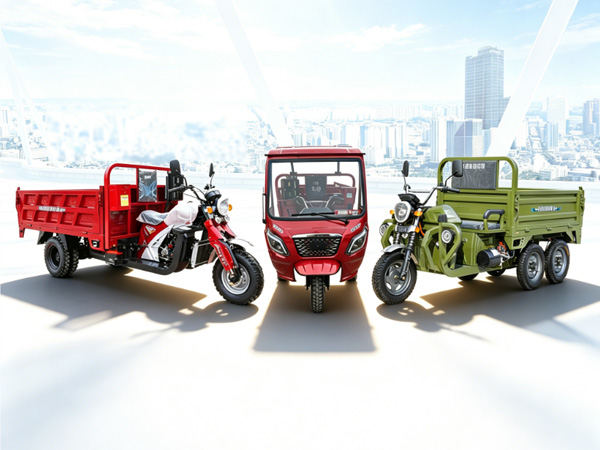
Cargo efficiency—the ratio of payload transported per trip to the total distance traveled and time spent—is the core metric that determines whether a tricycle fleet is a profitable logistics investment or an expensive underperformer. A tricycle that carries 30% of its rated capacity on 80% of its trips is consuming nearly as much energy and operator time as a fully loaded vehicle but delivering a fraction of the productivity. Improving cargo efficiency is not a single action—it is a systematic discipline that touches route design, load scheduling, vehicle specification, operator training, and fleet management technology. This guide presents the operational strategies that logistics managers use to push cargo efficiency ratios from acceptable to excellent, transforming their tricycle fleets into genuine competitive assets.
Understanding and Measuring Cargo Efficiency
Before cargo efficiency can be improved, it must be measured. The foundational metric is the payload utilization rate: actual payload weight divided by rated vehicle payload, expressed as a percentage. Industry data from commercial tricycle fleet operations shows average payload utilization of 45–65% for first-generation deployments—meaning that 35–55% of the vehicle's carrying capacity is wasted on the majority of trips. World-class cargo efficiency operations achieve 75–90% average payload utilization by designing their logistics systems to match load sizes to vehicle capacity. Fleet managers should track payload utilization per trip using simple weighbridge checks, a bathroom scale at the loading point, or—most efficiently—an integrated load sensor on the cargo tricycle that logs weight data per trip and uploads to a fleet management platform. Without this data, optimization efforts are guesswork.
Route Consolidation: Reducing Empty Running
Empty running—trips made without cargo—is the largest single source of cargo efficiency loss in tricycle fleets. Every return trip from a delivery point to the hub or depot with no payload is a pure cost with no revenue. The primary strategy for eliminating empty running is route consolidation: designing routes where each outbound trip is paired with a return trip carrying reverse logistics cargo (returns, waste, empties) or structuring operations so that the tricycle never returns to base empty. In urban parcel delivery, this means establishing micro-consolidation hubs at 5–8 km intervals within the delivery zone—a tricycle collects parcels from the hub, delivers to 15–25 stops within a 3–5 km radius, collects return items from those stops, and returns to the same hub to offload and reload for the next loop. With this model, the vehicle is never more than 1–2 km from its reload point, maximizing productive running time and eliminating return-to-base empty trips entirely.
Batch Size Optimization: Matching Load to Capacity
The economic lot size for tricycle cargo transport depends on the relationship between vehicle capacity, trip cost, and the value of delivered goods. For low-value, high-volume goods (building materials, agricultural produce, waste), larger batch sizes that fully utilize vehicle capacity minimize the per-kilogram transport cost. For high-value, low-volume goods (pharmaceuticals, precision components, express parcels), smaller loads delivered faster with higher frequency may generate more value despite lower cargo efficiency. The optimization framework for fleet managers is: calculate the cost per trip (energy or fuel, operator time, vehicle depreciation per trip), calculate the revenue or cost saving per kilogram delivered, and design load batching to maximize revenue per trip while maintaining a target payload utilization of 75%+. Dynamic routing software that adjusts load batching and stop sequences in real time based on incoming orders can improve average cargo efficiency by 15–25% compared to static route planning.
Vehicle Specification for Maximum Cargo Utilization
Vehicle design directly affects achievable cargo efficiency. The most common design failure is specifying a cargo tricycle with a cargo bed sized for the theoretical maximum load rather than the actual typical load—resulting in a large, heavy vehicle that is underloaded on the majority of trips. A better approach is to specify the smallest vehicle that handles the typical load plus a reasonable peak margin (typically 25–30% above the average payload). For most urban delivery applications, a 300–500 kg rated vehicle with a 0.8–1.2 m³ cargo box handles the typical load efficiently, with a larger 500–800 kg vehicle reserved for peak-period or heavy-item routes. Cargo box design also affects cargo efficiency: low bed height reduces loading time, multi-compartment interiors reduce sorting time at delivery points, and weather-protected boxes prevent damage-related returns that waste capacity on already-completed trips.
Operator Training for Load Maximization
Operator behavior is a significant variable in cargo efficiency outcomes. Inexperienced operators frequently underload vehicles out of caution, return to base with unused capacity, or fail to optimize the sequence of stops to minimize empty running distance between the last delivery and the return point. Structured operator training for tricycle fleet drivers should cover: load planning principles (how to pack the cargo box for maximum utilization and delivery sequence efficiency), route familiarity (reducing navigation time and dead-distance between stops), vehicle handling under load (braking distances, cornering stability, and parking with loaded vehicles), and trip reporting (communicating load utilization and route anomalies to the fleet manager). Operators who complete structured training and receive regular performance feedback on their cargo efficiency metrics consistently outperform untrained operators by 10–20% in payload utilization and route productivity.
Fleet Sizing and Dynamic Deployment
Over- or under-sized fleets are both enemies of cargo efficiency. An oversized fleet creates fixed capital costs that are not justified by the volume of cargo requiring transport; an undersized fleet causes missed deliveries, overtime costs, and rushed loads that compromise cargo efficiency when operators crowd excessive cargo onto available vehicles. The correct fleet size for a given volume of cargo is calculated by: determining the total daily cargo volume in kilograms or cubic meters, dividing by the average vehicle payload utilization rate (target: 75%+), multiplying by the average number of trips each vehicle can complete per day (typically 3–6 depending on trip distance and stop frequency), and dividing the total vehicle-days required into the available vehicle-days, adding a 10–15% contingency for maintenance and repair reserve vehicles. Dynamic deployment—adjusting the number of active vehicles by shift based on daily order volume rather than running a fixed fleet size regardless of volume—can reduce capital costs and idle vehicle costs by 15–25% while maintaining service quality during peak demand.
Technology and Data Tools for Continuous Improvement
The most effective tricycle fleet managers use simple technology to continuously improve cargo efficiency. GPS tracking devices ($25–$60 per unit) record vehicle location, speed, and route compliance, enabling route performance analysis and identification of dead zones where vehicles spend time without delivering value. Weight sensors integrated into the cargo bed or a portable weigh platform at loading points capture payload utilization data per trip, aggregated weekly or monthly to identify patterns in underutilization by route, shift, or operator. Fleet management applications compile this data into dashboards showing key cargo efficiency metrics—average payload utilization, trips per vehicle per day, deadhead ratio, cost per kilogram delivered—and flag anomalies for investigation. Fleet operators who implement systematic data collection and monthly review of cargo efficiency metrics consistently identify 5–15% productivity improvement opportunities each quarter that would not be visible without the data.
Frequently Asked Questions
What is a good cargo efficiency target for a tricycle fleet?
A target of 75–85% average payload utilization (actual payload as a percentage of rated payload) is achievable for well-managed urban delivery fleets. Trips below 50% utilization should be investigated and remediated through route redesign, batch consolidation, or vehicle right-sizing. Elite operations with excellent route density and load consolidation achieve 85–90% average utilization.
How do I calculate the right number of tricycles for my fleet?
Calculate daily vehicle-days required as: (total daily cargo volume in kg) / (average payload per vehicle × average trips per vehicle per day). Add 10–15% contingency for maintenance reserves. Adjust the average payload per vehicle based on your cargo efficiency data—if current utilization is 55%, your effective capacity is 55% of rated, so you need more vehicles than if utilization were 80%.
How can I reduce empty running on tricycle delivery routes?
Design routes as loops rather than out-and-back trips. Establish micro-consolidation hubs within the delivery zone so vehicles reload at points closer to the delivery area rather than returning to a distant depot. Plan return cargo (returns, empty containers, reverse logistics) to occupy the return leg. Implement GPS tracking to identify and address routes with high deadhead ratios.
Does electric vs fuel power affect cargo efficiency?
Indirectly, yes. Electric tricycles have lower per-kilometer operating costs, which reduces the financial impact of imperfect cargo efficiency—an electric vehicle that runs at 60% payload utilization still costs less per kilogram delivered than a fuel-powered vehicle at 80% utilization. However, the cargo efficiency discipline of maximizing utilization is equally important for both powertrains, as it directly affects the number of trips required and thus the fleet size needed.
Conclusion
Improving cargo efficiency with tricycles is an achievable, measurable, and financially significant operational discipline. The strategies that deliver the greatest impact are: implementing payload utilization measurement to make cargo efficiency visible and trackable, designing routes that eliminate empty running through loop structures and micro-consolidation hubs, right-sizing vehicles to actual typical loads rather than theoretical maximum loads, training operators in load planning and route optimization, sizing the fleet dynamically based on actual cargo volumes, and using GPS and load data to drive continuous improvement. Operations that implement these practices consistently achieve 75–85% average payload utilization—compared to the 45–65% of unmanaged fleets—while reducing per-delivery cost by 20–35% and increasing effective fleet capacity by 25–40% without adding vehicles. The investment in cargo efficiency optimization is modest; the return is substantial and compounding.
References
Chopra, S. and Meindl, P., "Supply Chain Management: Strategy, Planning, and Operation," Pearson, 7th Edition, 2019.
Ballou, R.H., "Business Logistics/Supply Chain Management," Pearson Prentice Hall, 5th Edition, 2004.
Crainic, T.G. and Laporte, G., "Planning Models for Freight Transportation," European Journal of Operational Research, vol. 97, no. 3, 1997.
Melo, S. et al., "Routing Problems for City Logistics: Optimizing Cargo Bike Operations," Transportation Research Part E, vol. 148, 2021.

Contact Us
Tel:8615713172715 / 8619061777149
WeChat:8615713172715 / 8619061777149
E-mail:942778859@qq.com
Url:https://www.duomitricycle.com