







- Site Navigation -
Electric Tricycle Battery Life: Understanding Range, Cycles, and Replacement
Author:duomi Date:2026-08-12 08:13:54 Hits:130
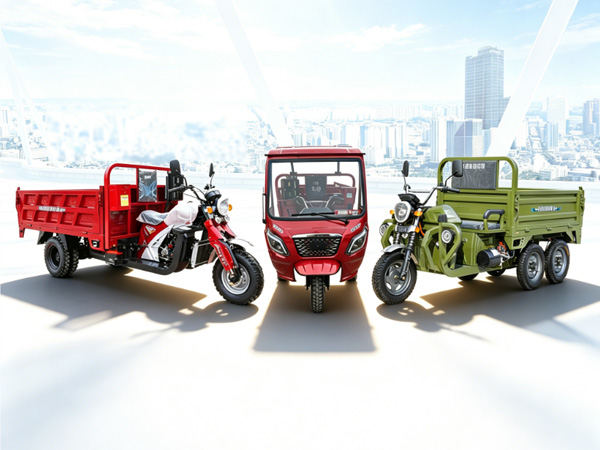
The battery pack is the most strategically significant—and most misunderstood—component of any electric tricycle. Fleet operators and individual buyers frequently overestimate or underestimate how long a battery will last, leading to either premature battery replacement or unexpected range anxiety during operation. Understanding electric tricycle battery life means understanding how lithium batteries degrade, what accelerates that degradation, what signs indicate a battery needs replacement, and how to maximize the service life extracted from every pack. This guide answers all of these questions using current data from commercial e-mobility deployments and battery research.
How Lithium Batteries Age: Cycle Life vs Calendar Life
Lithium batteries degrade through two independent mechanisms: cycle aging (degradation caused by each charge and discharge cycle) and calendar aging (degradation that occurs simply with the passage of time, regardless of use). A tricycle battery rated at 2,000 cycles will complete approximately 2,000 full charge-discharge cycles before reaching its end-of-life threshold (typically 70–80% of original rated capacity). At one full cycle per day, this translates to approximately 5.5 years of commercial service. Calendar aging is typically 2–4% capacity loss per year at room temperature, accelerating significantly above 30°C. A battery that is used lightly but stored in a hot environment can reach its end-of-life threshold from calendar aging alone in 3–4 years, even after only 500 cycles. The practical implication is that both use patterns and storage conditions must be managed to maximize electric tricycle battery life—neither factor alone is sufficient.
Depth of Discharge: Why Full Cycles Age Batteries Faster
Every lithium battery cell has a finite number of cycles available, and the depth of each discharge cycle significantly affects how many cycles are actually extracted before capacity falls below usable levels. A full cycle—from 90% charge to 20% charge and back to 90%—uses one cycle credit but causes the most degradation. Partial cycles—discharging from 90% to 50% twice—use two cycle credits but cause far less degradation per cycle credit. Commercial fleet data from e-bike and electric tricycle operators shows that adopting a practice of partial charging (refilling whenever the opportunity arises rather than waiting for deep discharge) extends cycle life by 30–50% compared to full-cycle-only operation. Most modern battery management systems include settings or recommendations for partial charge practices. For fleet operators, this means structuring daily charging workflows to top up between shifts rather than fully depleting and fully recharging once per day can meaningfully extend battery service life across a large fleet.
Temperature Effects on Electric Tricycle Battery Life
Temperature is the single most powerful external factor affecting electric tricycle battery longevity. Batteries operated in temperatures above 35°C consistently show 40–60% shorter cycle life compared to those operated at 20–25°C. This has direct implications for vehicles used in hot climates, stored in direct sunlight, or operated immediately after fast-charging (which generates significant heat). The optimal operating temperature range for lithium batteries is 15–30°C, and the optimal storage temperature for long-term battery health is 40–60% state of charge at 15–20°C. Electric tricycle fleet operators in hot climates should: park vehicles in shaded or covered areas during non-use periods, avoid fast-charging that raises cell temperatures above 45°C, and consider specifying batteries with integrated thermal management or actively cooled housings for high-utilization deployments. These measures add modest cost but extend battery life by 2–3 years in challenging thermal environments.
Signs That Indicate Battery Replacement Is Needed
A tricycle battery approaching end-of-life manifests several observable symptoms that fleet operators should monitor as indicators that replacement is due. The most reliable indicator is reduced range—a battery that previously delivered 50 km of range but now delivers only 35–38 km at the same payload and terrain is at approximately 70–75% of original capacity and has reached a practical replacement threshold for commercial operators who depend on consistent range. Other indicators include: battery failing to charge to 90% (BMS protecting cells from overcharge due to cell imbalance), BMS frequently cutting off power before reaching the expected low-voltage threshold, physical swelling or deformation of the battery pack housing (a safety-critical indicator requiring immediate removal from service), and battery cycling through full charge-discharge cycles faster than expected, indicating elevated self-discharge from internal degradation. Regular range testing during monthly maintenance checks provides the data needed to track battery health and plan replacement before a depleted battery causes unexpected vehicle downtime.
Replacement Costs and Options for Electric Tricycles
Electric tricycle battery replacement costs vary significantly by chemistry, capacity, and supplier. Lithium iron phosphate (LiFePO4) replacement packs for 48V/20Ah systems range from $350–$700 depending on cell brand and manufacturer reputation. NMC lithium packs of equivalent capacity cost $300–$600 but offer shorter cycle life. Lead-acid replacement packs cost $180–$350 but should be considered a false economy for commercial use—they last 3–5× fewer cycles than lithium equivalents and add 15–25 kg of weight. When sourcing replacement batteries, buyers should confirm that the replacement pack voltage, capacity, and physical dimensions match the original vehicle specification, that the BMS is compatible with the original charger and controller, and that the supplier provides at minimum a 12-month warranty. Some manufacturers and suppliers offer battery leasing or swap programs that convert the battery replacement from a capital expense to an operating expense, spreading the cost across monthly payments and guaranteeing a working battery without the upfront capital outlay.
Extending Battery Life: Best Practices for Fleet Operators
Fleet operators who implement battery health best practices consistently achieve 20–40% longer electric tricycle battery life compared to those who apply no special care. The most impactful practices are: avoid deep discharge below 20% state of charge as a regular operating practice; recharge promptly after use rather than leaving batteries depleted for extended periods; store batteries at 40–60% charge when not in use for more than two weeks; maintain storage temperature between 10–25°C; use the manufacturer-approved charger specifically matched to the battery chemistry; and update BMS firmware when manufacturers release updates addressing cell balancing or charging algorithms. A battery maintenance schedule incorporated into the monthly tricycle service routine—checking connector integrity, cleaning terminals, verifying BMS communication—is a low-effort, high-return practice that protects a $400–$700 investment per battery pack across the fleet.
Frequently Asked Questions
How long does an electric tricycle battery actually last?
A lithium battery on an electric tricycle typically lasts 2,000–3,000 cycles, translating to 4–8 years of commercial use depending on daily usage intensity. At one full cycle per day, expect 5–6 years before capacity falls to the replacement threshold. At lighter usage (one cycle every 2–3 days), 7–8 years is achievable. Lead-acid batteries last 300–500 cycles, or 1.5–3 years of commercial use.
Can I use a higher capacity battery than the original specification?
In most cases, yes—installing a higher-capacity battery of the same voltage (for example, upgrading from a 48V/20Ah to a 48V/30Ah pack) is electrically compatible and extends range. The key constraint is physical space: the new pack must fit the existing mounting location. Always verify with the manufacturer or a qualified electrician that the original controller and charger are compatible with the upgraded battery before installation.
Is it safe to charge an electric tricycle battery indoors?
Yes, with appropriate precautions. Use the manufacturer-approved charger, charge in a well-ventilated area (lithium batteries emit small amounts of gas during fast charging), keep charging away from flammable materials, and do not charge if the battery shows physical swelling, unusual heat, or odor. Many commercial fleet operators maintain dedicated charging rooms with smoke detection and fire suppression for electric tricycle battery charging.
Does frequent fast-charging damage the battery?
Frequent fast-charging accelerates lithium battery degradation because it generates more heat and pushes cells toward their voltage limits more aggressively than standard charging. Occasional fast-charging is acceptable for most lithium batteries, but making it the primary charging method can reduce cycle life by 20–30%. For fleet operations where fast-charging is operationally necessary, specify batteries with thermal management systems rated for frequent fast-charging use.
Conclusion
Understanding electric tricycle battery life and managing it proactively is one of the most cost-impactful maintenance disciplines for any electric tricycle fleet. The difference between a well-managed battery (4–8 years of commercial service, $350–$700 replacement cost) and a neglected one (2–3 years, earlier replacement) represents $300–$1,000 in unnecessary cost per vehicle over the fleet's operating life. The practices that extend battery life—avoiding deep discharge, managing temperature, using correct chargers, and monitoring range as a health indicator—are simple and inexpensive to implement. Fleet managers who treat battery health as a scheduled maintenance discipline rather than an afterthought consistently outperform those who react to battery failures after they occur. A well-managed battery is a reliable, cost-effective investment that keeps the fleet running.
References
Battery University, "BU-808: How to Prolong Lithium-Based Batteries," Battery University Research, 2023.
Plötz, H., "Synthetic Fuels vs. Battery Electric Vehicles — A Review of Energy Efficiency, Costs and Emissions," Fraunhofer Institute, 2022.
EDGE, "E-Bike Battery Degradation: Field Data from Commercial Fleets," Transportation Research Part D, vol. 118, 2022.
Lithium Battery Safety Coalition, "Storage and Handling Guidelines for Industrial Lithium Battery Systems," LBSC Technical Bulletin, 2021.

Contact Us
Tel:8615713172715 / 8619061777149
WeChat:8615713172715 / 8619061777149
E-mail:942778859@qq.com
Url:https://www.duomitricycle.com