






- Site Navigation -
Electric Motor Systems in Tricycles: How the Powertrain Works
Author:duomi Date:2026-08-08 23:53:55 Hits:149
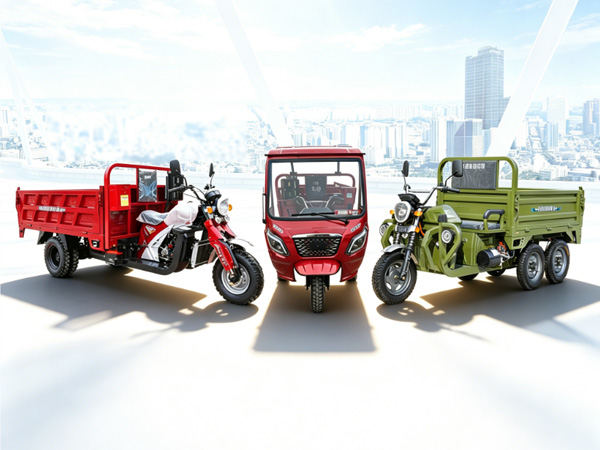
The electric powertrain is what separates a modern electric motor tricycle from its human-powered or fuel-burning counterparts—and understanding how it functions is increasingly important for fleet buyers making technology selection decisions. An electric motor system in a tricycle comprises five integrated components: the motor itself, the battery pack, the motor controller, the throttle and pedal-assist sensor, and the wiring and connector system that links them all. Each component's specification and quality directly affects the vehicle's performance, reliability, and total cost of ownership. This guide explains how these systems work together, what specifications matter most, and what questions buyers should ask their supplier before committing to an electric motor tricycle purchase.
Motor Types: Hub Motors vs Mid-Drive Systems
The two dominant motor architectures used in electric motor tricycle systems are hub motors and mid-drive motors, each with distinct performance characteristics that suit different applications. A hub motor is integrated into the front or rear wheel hub, driving the wheel directly without relying on the drivetrain. Front hub motors (250–350 W) are common on light-duty electric tricycles, providing a smooth, low-maintenance assist without affecting the vehicle's existing gear system. Rear hub motors (500–750 W) deliver higher torque and are preferred for cargo tricycles carrying 200–600 kg, where the higher mass of rear cargo placement benefits from the drive being located at the same end. A mid-drive motor drives the chain or belt at the bottom bracket, leveraging the existing transmission to multiply motor torque across multiple gear ratios. This architecture delivers superior hill-climbing performance and is the preferred choice for electric motor tricycle applications on steep terrain or with heavy payloads exceeding 500 kg. The trade-off is slightly higher drivetrain wear due to increased chain loading and the need for a torque sensor compatible with the transmission.
Power Ratings and What They Mean in Practice
Motor power ratings for electric motor tricycle systems range from 250 W to 1,500 W, with different regulatory and performance implications at each level. In the European Union, electric tricycles are classified as EPACs (Electrically Power Assisted Cycles) when the motor is rated at 250 W maximum and cuts out at 25 km/h, requiring no registration or license. Motors rated at 500–750 W fall outside the EPAC classification and may be subject to vehicle registration and licensing requirements depending on jurisdiction. In the United States, Class 2 e-bikes with 750 W motors and throttle-actuated pedal-assist are permitted on most bike lanes and paths. For industrial cargo tricycles operating in markets without strict EPAC-style restrictions, 500–750 W mid-drive or rear hub motors provide the best balance of performance and regulatory compliance. Motors rated above 750 W are typically used for heavy-duty industrial applications where the vehicle is classified as a motor vehicle regardless of its three-wheel configuration.
Battery Systems: Capacity, Chemistry, and Integration
The battery pack is the most expensive single component of an electric motor tricycle and the primary determinant of vehicle range. Common configurations are: 36V systems with 10–15 Ah capacity (suitable for 20–35 km range, light-duty cargo tricycles), 48V systems with 15–30 Ah capacity (40–60 km range, standard commercial cargo tricycles), and 60–72V systems with 20–50 Ah capacity (60–100 km range, heavy-duty or extended-range applications). Lithium iron phosphate (LiFePO4 or LFP) batteries are the preferred chemistry for commercial electric tricycle applications: they offer 2,000–3,000+ charge cycles, excellent thermal stability (no fire risk from thermal runaway), and consistent voltage output throughout the discharge cycle. Nickel manganese cobalt (NMC) batteries provide 10–15% higher energy density but have shorter cycle life and greater thermal sensitivity. Lead-acid batteries remain available as a budget option ($200–$400 per pack) but offer only 300–500 cycles, are 2–3× heavier than lithium equivalents, and are rarely the economical choice for commercial use when total cost of ownership is considered.
Motor Controller: The Brain of the System
The motor controller is the electronic system that translates throttle input and pedal-assist sensor signals into precise motor output, managing current, voltage, and power delivery across all operating conditions. A quality electric motor tricycle controller provides: current limiting to protect the motor and battery from thermal overload, regenerative braking activation to recapture energy during deceleration, low-voltage cutoff to prevent battery deep discharge that damages cells, and pedal-assist sensor compatibility for multi-level assist modes. Controllers are rated by maximum current (typically 15–35 A for 48V systems) and must be matched to both the motor's current handling capability and the battery's continuous discharge rating. Undersized controllers overheat and fail prematurely; oversized controllers waste energy and can damage motors. Buyers should confirm that the controller is purpose-designed for the specific motor and battery combination rather than a generic unit, as mismatched controller specifications are a common cause of electric motor tricycle performance and reliability problems.
Thermal Management in Electric Motor Systems
Electric motors and controllers generate heat during operation, and managing this heat is critical to maintaining performance and preventing damage. Hub motors rely on passive heat dissipation through the aluminum housing—a solution that works adequately for 250–500 W motors at typical assist levels but can cause thermal derating (automatic power reduction to prevent overheating) during sustained high-power operation such as hill climbing with heavy loads. Mid-drive motors experience higher heat loads because they operate at higher mechanical stresses within the transmission, and many include active cooling fins or integrated fans to maintain thermal equilibrium. For commercial electric motor tricycle applications involving frequent hill climbing or sustained heavy loads, specifying a motor with adequate thermal headroom—rated at 30–50% above the continuous power requirement—is essential to avoiding performance degradation during extended operation. Regular inspection of motor and controller heat sinks, with removal of accumulated dust and debris, maintains cooling efficiency over the vehicle's service life.
Diagnostics, Fault Codes, and Maintenance Tools
Modern electric motor tricycle controllers generate fault codes that help identify and resolve electrical problems before they cause vehicle immobilization. Common fault codes indicate: throttle signal out of range (throttle or wiring fault), motor Hall sensor failure (motor windings or Hall sensor fault), controller over-temperature (cooling inadequate or ambient temperature too high), battery communication error (battery management system or connector fault), and over-current event (sudden load spike or controller failure). A quality supplier provides a fault code reference document and—increasingly—a smartphone application or handheld diagnostic tool that allows fleet technicians to read and clear fault codes without specialized equipment. Fleet managers should verify the availability of diagnostic support tools before purchasing electric motor tricycle systems, as the ability to quickly diagnose and resolve electrical faults minimizes downtime and reduces dependence on specialist service centers.
Frequently Asked Questions
What is the difference between a hub motor and a mid-drive motor on a tricycle?
A hub motor drives the wheel directly, offering simplicity and low maintenance. A mid-drive motor drives the chain at the bottom bracket, leveraging the transmission for superior hill-climbing torque and efficiency across varied terrain. For cargo tricycles on flat to moderately hilly terrain, hub motors are adequate. For heavy loads or steep grades, a mid-drive electric motor tricycle delivers meaningfully better performance.
How much power do I need for my electric cargo tricycle?
For flat terrain with payloads under 300 kg, a 250–500 W motor is sufficient. For varied terrain with payloads of 300–600 kg or grades up to 10%, specify 500–750 W. For heavy payloads exceeding 600 kg on steep terrain, specify 750–1,000 W with a mid-drive system to ensure adequate torque across the full speed range.
What happens when an electric motor overheats during operation?
Most controllers implement thermal derating—automatically reducing motor power—when internal temperatures exceed safe operating limits. This manifests as noticeably reduced assist, slower acceleration, or inability to maintain speed on hills. If overheating persists, the motor or controller may suffer permanent winding or electronic damage. Preventing overheating requires adequate thermal headroom in motor specification and maintaining clean, unobstructed heat sinks on both motor and controller.
Can I upgrade the motor on an existing electric tricycle?
Motor upgrades are possible but require matching controller, battery, and wiring upgrades to handle the increased power. A motor upgrade without a corresponding controller upgrade risks controller failure; a controller upgrade without a battery capable of delivering the required current risks BMS tripping or battery damage. In most cases, it is more reliable and cost-effective to specify the correct motor power from the outset than to attempt an aftermarket upgrade on an existing system.
Conclusion
The electric motor system in a tricycle is an integrated powertrain where every component—motor type, power rating, battery chemistry, controller quality, and thermal management—interacts to determine real-world performance and reliability. Buyers who understand these relationships and match system specifications to their actual operating requirements select vehicles that perform consistently and last reliably. The key selection principles are: specify hub motors for light-duty flat-terrain applications, mid-drive for heavy-load and hill-climbing requirements; choose lithium batteries over lead-acid for all commercial applications; verify controller and motor specifications are matched to each other and to the battery's discharge capability; and confirm diagnostic tools are available to support fleet maintenance. A correctly specified electric motor tricycle system delivers years of efficient, low-maintenance service.
References
Emadi, A., "Advanced Electric Drive Vehicles," CRC Press, 2015.
Anderson, C.D. and Anderson, J., "Electric and Hybrid Cars: A History," McFarland & Company, 2nd Edition, 2010.
Lindley, T., "Lithium-Ion Battery Management for E-Bikes and E-Tricycles," Journal of Energy Storage, vol. 42, 2021.
International Electrotechnical Commission, "IEC 61851: Electric Vehicle Conductive Charging System," IEC Standard, 2019.

Contact Us
Tel:8615713172715 / 8619061777149
WeChat:8615713172715 / 8619061777149
E-mail:942778859@qq.com
Url:https://www.duomitricycle.com