







- Site Navigation -
Dump Tricycle vs Standard Cargo Tricycle: Which Is Right for Your Operation?
Author:duomi Date:2026-06-09 18:46:44 Hits:65
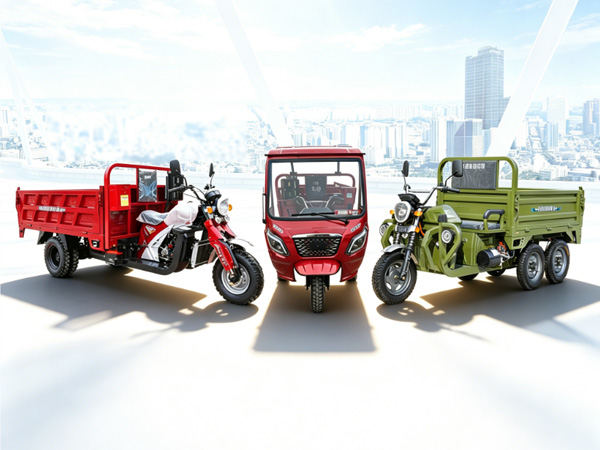
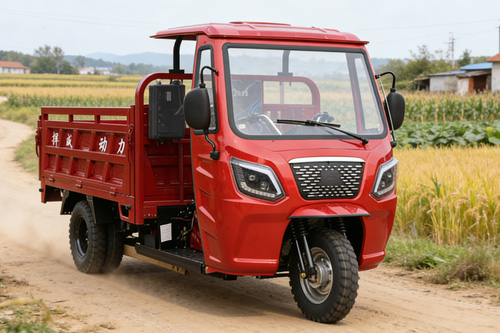
When industrial buyers evaluate human-powered material handling vehicles, the choice between a dump tricycle and a standard cargo tricycle often hinges on a single operational question: does your workflow require rapid, gravity-assisted unloading of bulk materials? If the answer is yes—construction sites, mining operations, agricultural processing, waste management—a dump tricycle delivers unloading time savings of 70–90% compared to manual unloading from a standard cargo tricycle. But the dump mechanism introduces trade-offs in payload capacity, structural complexity, and maintenance burden that this comparison will quantify precisely, enabling data-driven procurement decisions.
Core Design Differences: Dump Mechanism vs Fixed Bed
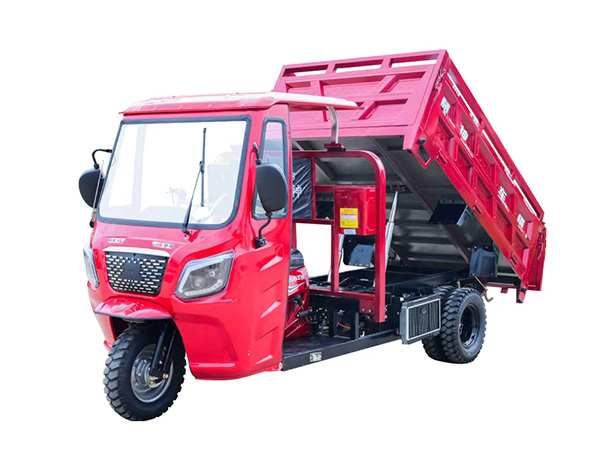
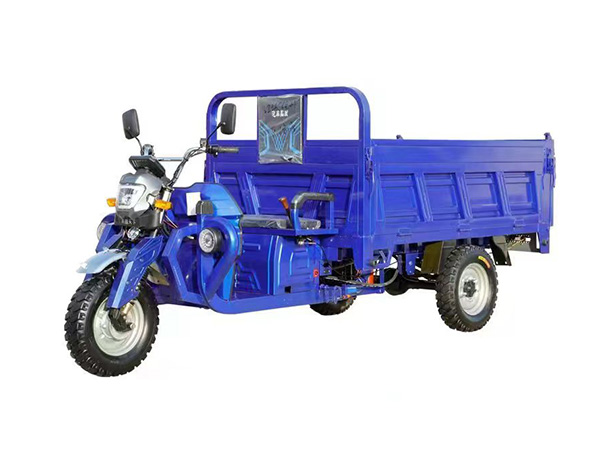
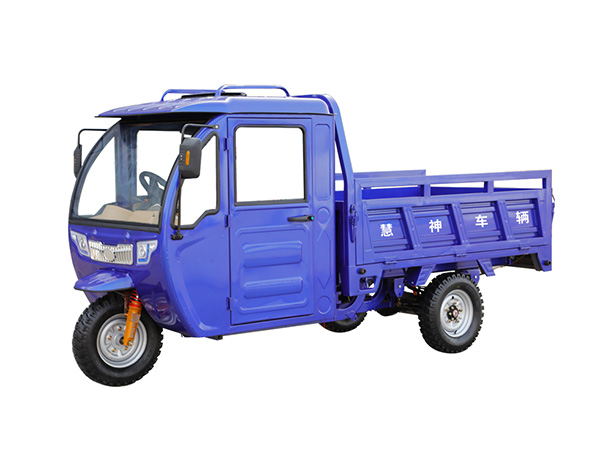
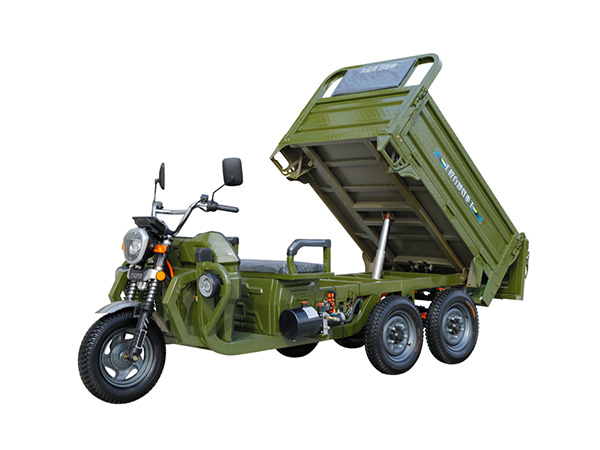
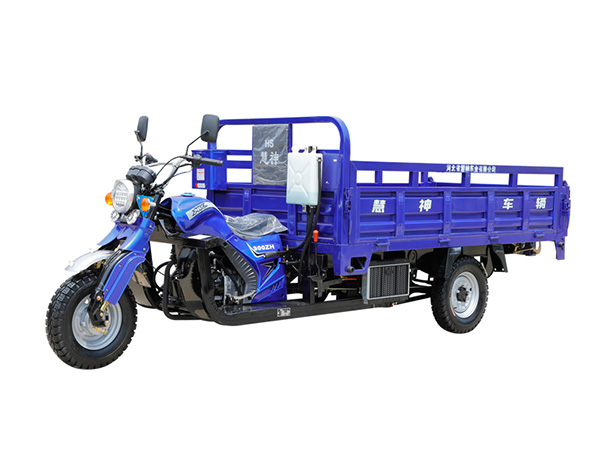
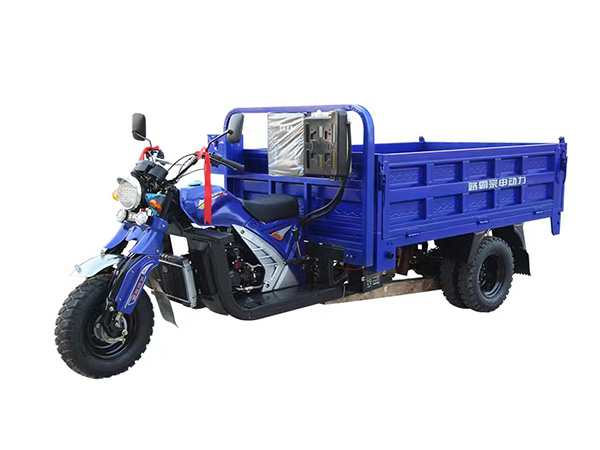
The fundamental engineering distinction is the cargo bed mounting system. A standard cargo tricycle uses a rigidly mounted bed—welded or bolted directly to the frame—which maximizes structural stiffness and payload capacity. A dump tricycle replaces this with a pivoting bed mounted on a hinge axis (typically at the front or side of the bed) and a tipping mechanism. The two dominant tipping mechanisms are:
Manual lever-actuated: A hand lever operates a mechanical linkage (four-bar or scissor mechanism) to tilt the bed 45–60°. Simple, reliable, no hydraulic system to maintain. Lifting effort: 150–300 N at the lever for a 500 kg load.
Hydraulic cylinder-actuated: A small hydraulic cylinder (bore 40–50 mm, stroke 200–300 mm) powered by a manual pump tilts the bed to 50–70°. Higher initial cost but reduces operator effort by 60–75% and enables controlled, incremental tipping for partial unloading.
The hinge, linkage, and cylinder add 15–25 kg to the vehicle weight and reduce usable payload by an equivalent amount due to GVWR constraints.
Payload Capacity Comparison
A standard cargo tricycle in the heavy industrial class typically offers 500–1,000 kg payload capacity with a fixed bed. The equivalent dump tricycle offers 400–850 kg—approximately 10–15% lower—due to the weight of the tipping mechanism and the structural reinforcement required at the hinge mounting points. However, this capacity gap narrows in practice because the dump mechanism eliminates the need for the operator to climb onto or reach into the bed for unloading, reducing per-trip cycle time by 3–8 minutes. Over a 10-hour shift with 20–30 trips, the time savings from a dump tricycle can deliver 15–25% higher daily throughput despite the slightly lower per-trip payload.
Unloading Efficiency and Cycle Time Analysis
The decisive advantage of a dump tricycle is unloading speed. Field timing studies across construction and agricultural operations show:
Standard cargo tricycle manual unloading (shovel/scoop): 3–8 minutes per trip for bulk materials (sand, gravel, grain, compost), depending on material angle of repose and bed depth.
Dump tricycle gravity unloading: 15–45 seconds per trip, including lever actuation, material discharge, and bed return.
Partial dump (hydraulic models): 5–10 seconds to tip to desired angle, hold, and return—enabling precise metered unloading for filling bins, hoppers, or spreaders.
For operations where the load-to-unload time ratio exceeds 3:1 (i.e., unloading takes more than 25% of total cycle time), a dump tricycle consistently outperforms a standard cargo tricycle on total daily tonnage moved.
Structural Durability and Maintenance Requirements
The tipping mechanism introduces additional wear points. A dump tricycle requires maintenance beyond the standard tricycle schedule:
Hinge pins and bushings: Inspect every 500 operating hours; replace every 2,000–3,000 hours. Cost: $15–$40 per set. Grease-able bushings extend life 2× over plain bushings.
Hydraulic cylinder seals: Inspect every 1,000 hours; replace seal kit every 3,000–5,000 hours. Cost: $25–$60 per kit. Cylinder bore wear limits service life to 8,000–12,000 hours.
Latching mechanism: The bed lock that secures the bed in transport position sees high cyclic load. Inspect and adjust every 250 hours; replace latch components every 1,500–2,500 hours.
A standard cargo tricycle eliminates all of these maintenance items. For operations with maintenance capacity constraints (remote sites, limited mechanic availability), the lower maintenance burden of the fixed-bed design may outweigh unloading speed advantages.
Optimal Use Cases for Each Type
Choose a dump tricycle when:
Primary cargo is bulk, free-flowing material (sand, gravel, soil, grain, coal, ore, compost, waste)
Unloading frequency exceeds 15 trips per shift
Unloading points lack elevated platforms or receiving hoppers (ground-level discharge)
Material must be deposited in piles, windrows, or spread patterns
Operator safety concerns preclude manual shoveling from elevated beds (ergonomic injury risk)
Choose a standard cargo tricycle when:
Cargo is unitized (pallets, crates, drums, sacks) and can be lifted off by hand or light equipment
Loading and unloading occur at dock height or with mechanical assist (conveyor, hoist)
Maximum payload per trip is the primary throughput constraint
Maintenance resources are limited or operating environment is highly corrosive (reduces hinge/cylinder life)
Cargo bed must be enclosed (box configuration for weather/contamination protection)
Cost Analysis: Purchase Price and 5-Year TCO
A dump tricycle commands a 20–35% price premium over an equivalent standard cargo tricycle due to the tipping mechanism, reinforced hinge structure, and (for hydraulic models) the cylinder and pump system. Typical pricing (heavy industrial class, 500–800 kg rated capacity):
Standard cargo tricycle: $800–$1,500 (manual) / $1,800–$3,000 (electric assist)
Dump tricycle (manual lever): $1,000–$1,900 / $2,000–$3,500 (electric assist)
Dump tricycle (hydraulic): $1,200–$2,200 / $2,200–$4,000 (electric assist)
Five-year TCO analysis for a 25-trip-per-day operation moving bulk sand/gravel: the dump tricycle saves $8,000–$15,000 in labor costs (reduced unloading time × operator hourly rate) that more than offsets its higher purchase price and $300–$600 additional maintenance cost over 5 years. For unitized cargo operations where unloading time difference is negligible, the standard cargo tricycle has lower TCO.
Safety Considerations for Dump Operations
Tipping a loaded bed shifts the vehicle's center of gravity dramatically. A dump tricycle with an 800 kg load tipped to 60° experiences a lateral CG shift of 200–350 mm depending on bed width. Safety requirements include: wheel chocks for unattended dumping, operator training on stable surface requirements (never dump on >5° cross-slope), bed return springs or dampers to prevent uncontrolled slam-down, and a mechanical lock that prevents accidental tipping during transport. Hydraulic models should include a velocity fuse in the cylinder circuit to prevent rapid descent if a hose fails. These features are standard on reputable industrial models but must be verified during procurement—omission of any one creates significant operator injury risk.
Frequently Asked Questions
Can a dump tricycle handle the same loads as a standard cargo tricycle?
A dump tricycle typically handles 85–90% of the payload of an equivalent standard cargo tricycle due to the tipping mechanism weight and hinge reinforcement. For example, where a standard model is rated at 800 kg, the dump version is typically rated at 680–720 kg. This gap is offset by faster unloading, which increases daily throughput for bulk materials.
Is a hydraulic dump mechanism worth the extra cost over a manual lever?
For loads under 400 kg, a manual lever is sufficient and more reliable (no hydraulic system to maintain). For loads of 400–800 kg, hydraulic actuation reduces operator effort by 60–75% and enables controlled partial dumping—worth the $200–$400 premium if the operator makes 15+ dump cycles per shift. Hydraulic systems also allow dumping at steeper angles (up to 70° vs. 60° for manual), improving discharge completeness for cohesive materials like wet clay or compost.
Can I convert a standard cargo tricycle to a dump tricycle?
Retrofit kits exist but are not recommended for industrial applications. The hinge mounting requires frame reinforcement at the pivot points, the bed must be modified with a hinge line and latch, and the frame's GVWR must be re-evaluated. Conversion cost typically reaches 60–80% of the price difference between new standard and dump models, with inferior structural integrity. Purchase purpose-built dump tricycle models for industrial use.
What materials can a dump tricycle handle effectively?
Dump tricycles excel with free-flowing bulk materials: sand, gravel, crushed stone, soil, grain, coal, ore, wood chips, compost, and loose waste. They are less effective with cohesive materials that bridge or stick (wet clay, fresh concrete, sticky organic waste)—these may require vibratory bed options or manual assist. For unitized cargo (pallets, crates), a standard cargo tricycle is the appropriate choice.
Conclusion
The dump tricycle vs standard cargo tricycle decision reduces to a throughput optimization problem. If your operation moves bulk, free-flowing materials with high unloading frequency, the dump tricycle's 70–90% unloading time reduction delivers superior daily throughput and lower per-ton handling cost despite its 10–15% payload penalty and higher maintenance requirements. If your cargo is unitized, your unloading is mechanically assisted, or maintenance resources are constrained, the standard cargo tricycle's simplicity, higher payload, and lower TCO make it the rational choice. Quantify your load profile, measure your cycle times, and let the data decide—the wrong choice in this category costs far more than the price difference between the two.
References
Peurach, S.C. and Kaminsky, W., "Tipping Vehicle Stability Analysis Under Dynamic Loading," Journal of Terramechanics, vol. 55, pp. 37–48, 2015.
National Institute for Occupational Safety and Health, "Ergonomic Guidelines for Manual Material Handling," NIOSH Publication 2007-131, 2007.
Chen, Y. and Wang, L., "Comparative Lifecycle Cost Analysis of Human-Powered vs. Powered Industrial Material Handling Equipment," International Journal of Industrial Engineering, vol. 24, no. 3, pp. 312–326, 2017.
Spoelstra, M. and van der Meer, F., "Bulk Material Discharge Mechanics from Tipping Containers: Angle of Repose and Cohesion Effects," Powder Technology, vol. 342, pp. 789–801, 2019.
Occupational Safety and Health Administration, "Materials Handling and Storage — OSHA Publication 2236," U.S. Department of Labor, 2023.

Contact Us
Tel:8615713172715 / 8619061777149
WeChat:8615713172715 / 8619061777149
E-mail:942778859@qq.com
Url:https://www.duomitricycle.com