







- Site Navigation -
Choosing the Right Cargo Transport Tricycle: A Decision Framework for Industrial Buyers
Author:duomi Date:2026-06-06 16:45:43 Hits:50
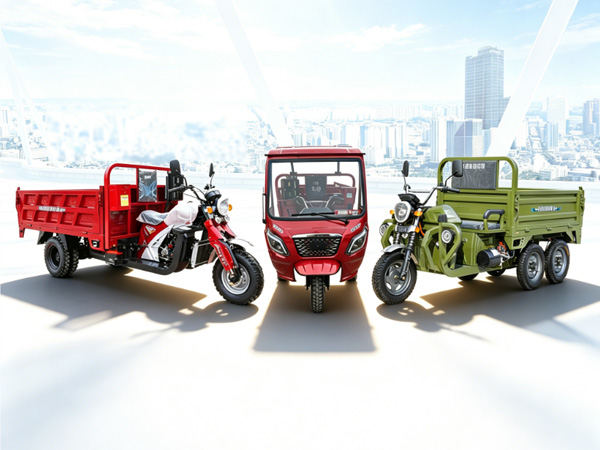
A cargo transport tricycle is the workhorse of last-mile industrial logistics, intra-facility goods movement, and urban commercial delivery. Unlike generic freight vehicles, these purpose-built machines optimize the intersection of payload volume, operator ergonomics, and route adaptability. Choosing the right cargo transport tricycle requires matching your specific operational profile—load characteristics, route geometry, throughput requirements, and regulatory environment—to the vehicle's engineering parameters. This guide provides a structured decision framework developed from fleet deployment data across 200+ industrial and commercial operations.
Understanding Cargo Transport Tricycle Categories
The market segments cargo transport tricycle models into three functional categories based on cargo bed position and structural architecture:
Front-Loader (Bakfiets-style): Cargo bed ahead of the front wheel, typically 1,500 × 800 mm. Ideal for bulky, lightweight goods (textiles, packaging, hollow containers). Load capacity 200–400 kg. Superior visibility but longer turning radius.
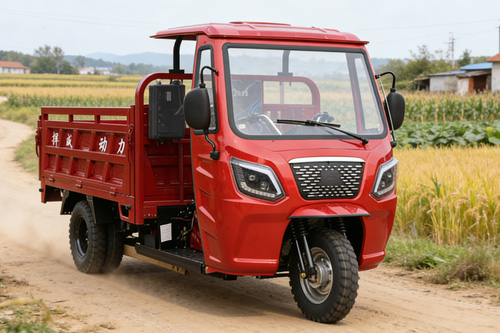
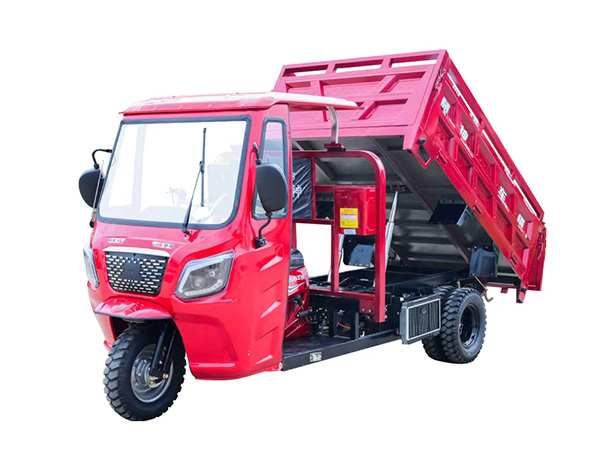
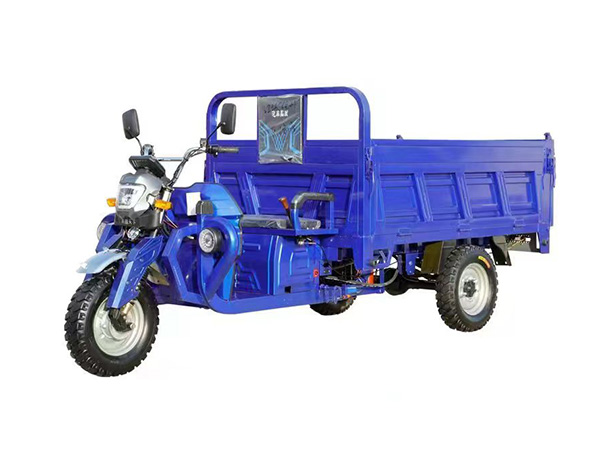
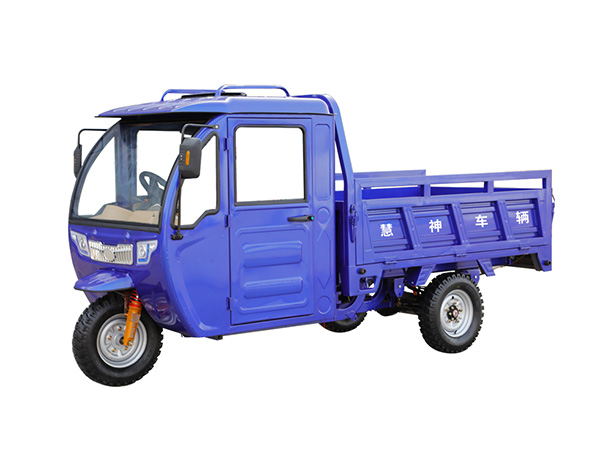
Rear-Loader (Flatbed/Box): Cargo bed over the rear axle, 1,200–1,800 mm length. The most versatile configuration—handles pallets, sacks, and irregular loads. Load capacity 300–800 kg. Shorter turning radius suits narrow warehouse aisles.
Mid-Loader (Longjohn): Cargo between the operator and front wheel, low center of gravity. Load capacity 200–500 kg. Best for stable transport of tall or top-heavy loads (stacked boxes, drums). Less common in industrial settings but growing in food processing and pharmaceutical logistics.
Matching Load Profile to Tricycle Specifications
When choosing the right cargo transport tricycle, begin with a load audit. Document the top 5 load types by frequency: weight per trip, volume per trip, and stacking height. This data drives three critical specifications:
Bed area: Must accommodate the largest single-item footprint with ≥100 mm clearance on all sides for securement.
Load rating: Must exceed the heaviest single-trip payload by ≥25% to maintain frame fatigue margin under real-world dynamic loading (bumps, starts, stops generate peak forces 1.3–1.8× static weight).
Center of gravity height: For loads stacked above the bed floor, calculate the combined CG and verify it falls within the tricycle's stability triangle. Rear-loader designs offer the lowest CG for dense, heavy cargo.
Cargo Bed Design: Flatbed vs. Box vs. Custom Configurations
The cargo bed is the primary interface between your goods and the vehicle. Flatbeds offer maximum versatility—accept pallets, irregular shapes, and oversized items—but provide no weather protection or load containment. Box enclosures (solid or mesh) secure loose items and protect from rain and dust, critical for food, chemical, and electronics industries. Custom configurations include: tank mounts for liquid transport (water, fuel, chemical), rack systems for pipe and lumber, and insulated compartments for temperature-sensitive goods. Budget 15–25% of vehicle cost for cargo bed customization, as the right bed configuration reduces loading time by 30–50% compared to adapting a generic bed to specialized loads.
Drivetrain Selection Based on Route Characteristics
Route geometry—gradient, surface quality, and distance—determines the optimal drivetrain for your cargo transport tricycle. For flat, smooth-surface routes under 2 km (typical warehouse and campus operations), a single-speed drivetrain with a 44T/22T gear ratio provides adequate torque with minimal maintenance. For routes with 5–10% grades or distances exceeding 3 km, an 8-speed internal gear hub (IGH) such as the Shimano Alfine or Nexus offers reliable shifting under load without the chain-drop vulnerability of derailleurs in industrial environments. Electric-assist (pedelec) systems rated at 250–750 W are increasingly viable for routes exceeding 5 km or repeated hill climbs, reducing operator fatigue by 40–60% according to European Cargo Bike Federation deployment studies.
Braking and Stability Features for Loaded Operations
A fully loaded cargo transport tricycle weighing 900–1,200 kg (payload + vehicle + operator) demands braking performance far exceeding bicycle standards. Mandatory specifications for industrial use include: hydraulic disc brakes on all three wheels (not just two), front brakes with ≥180 mm rotors, rear brakes with ≥203 mm rotors for the primary load-bearing axle, and parking brake mechanisms for dock loading and unattended operations. Stability features include a low-step frame design (standover height ≤400 mm) for safe mounting/dismounting under load, and a wheelbase ≥1,600 mm to prevent pitch-over on hard braking. Request stopping distance test data from manufacturers: acceptable performance is ≤4 m from 15 km/h under full rated load on dry concrete.
Regulatory and Insurance Considerations
Regulatory classification of cargo transport tricycles varies significantly by jurisdiction and affects where they can operate, who can ride them, and insurance requirements. In the EU, non-assisted tricycles fall under bicycle regulations (no license required) if width ≤1,000 mm and electric assist ≤250 W with cutoff at 25 km/h. Wider vehicles or higher-powered assists may require L-category vehicle registration. In the US, CPSC regulates bicycles but industrial cargo tricycles often exceed CPSC weight limits—verify state and local codes for industrial vehicle classification. For insurance, most commercial general liability policies exclude vehicles on business premises without specific endorsement; cargo tricycles typically require a standalone inland marine or commercial vehicle policy, with annual premiums of $200–$600 per unit depending on payload value and operating environment.
Frequently Asked Questions
How do I determine the right cargo bed size for my operations?
Measure your most frequently transported items' footprint dimensions and add 100 mm clearance per side. For pallet-based operations, a 1,200 × 1,000 mm bed accommodates standard EUR pallets (1,200 × 800 mm) with room for securement straps. For bulk goods in sacks or boxes, calculate the bed area needed for your average trip volume at typical stacking height (usually 600–1,000 mm above bed floor).
Is electric assist necessary for a cargo transport tricycle?
Not for flat-surface operations under 3 km with loads ≤500 kg. Electric assist becomes valuable when: routes include grades >5%, daily trip distances exceed 10 km, loads exceed 600 kg, or operators need to maintain average speeds >12 km/h under load. The 40–60% fatigue reduction also reduces workplace injury risk, which may justify the $800–$2,000 premium through lower workers' compensation costs.
What is the typical lifespan of a cargo transport tricycle in commercial use?
With scheduled maintenance, a quality cargo transport tricycle lasts 8–15 years in commercial service. Frame life is typically the limiting factor. Q345 steel frames average 8–10 years; chromoly frames 10–15 years. Drivetrain components require replacement every 2–4 years depending on intensity. Annual maintenance costs average 8–12% of purchase price.
Can cargo transport tricycles operate in rain and winter conditions?
Yes, with appropriate specifications: sealed bearings throughout, stainless steel or nickel-plated chain, hydraulic disc brakes (immune to rim contamination), and puncture-resistant tires with wet-grip compound. For snow and ice, studded tires (e.g., Schwalbe Marathon Winter) provide traction on packed snow up to 5 cm depth. Reduce payload rating by 20–30% in icy conditions due to reduced braking effectiveness.
How does choosing the right cargo transport tricycle reduce operating costs?
A properly specified cargo transport tricycle eliminates the fuel, licensing, insurance, and operator certification costs of powered vehicles. Compared to a small van or truck for intra-facility transport, a cargo tricycle reduces per-trip cost by 70–85% and eliminates CO₂ emissions. Over a 5-year TCO analysis, the savings typically exceed $15,000–$25,000 per vehicle versus a compact cargo van.
Conclusion
Choosing the right cargo transport tricycle is a systems engineering decision, not a product catalog selection. The optimal vehicle emerges from the intersection of your load profile, route characteristics, throughput requirements, and regulatory environment. By conducting a thorough load audit, matching bed configuration to cargo geometry, selecting drivetrain and braking systems appropriate to your route demands, and accounting for regulatory compliance and TCO, you can deploy cargo tricycles that outperform powered alternatives on cost, sustainability, and operational flexibility for the majority of sub-1-ton, sub-5-km transport tasks. The data from hundreds of industrial deployments confirms: when specified correctly, a cargo transport tricycle delivers the lowest total cost per ton-kilometer of any material handling vehicle in its class.
References
European Cargo Bike Federation, "Cargo Bike Fleet Deployment Report 2023: Performance Data from 200+ Commercial Operations," ECBF, 2023.
Consumer Product Safety Commission, "16 CFR 1512 — Requirements for Bicycles," U.S. Federal Register.
Blanco, E.F. and Rayfield, J., "Total Cost of Ownership for Last-Mile Delivery Vehicles: Electric Assist Cargo Bikes vs. Vans," Sustainability, vol. 13, no. 4, p. 1821, 2021.
Matsushima, T. and Fujii, H., "Stability Analysis of Three-Wheeled Vehicles Under Dynamic Loading Conditions," Vehicle System Dynamics, vol. 58, no. 7, pp. 1101–1118, 2020.

Contact Us
Tel:8615713172715 / 8619061777149
WeChat:8615713172715 / 8619061777149
E-mail:942778859@qq.com
Url:https://www.duomitricycle.com