







- Site Navigation -
Best Tricycles for Last-Mile Delivery: A Complete Buyer's Guide
Author:duomi Date:2026-07-06 16:31:57 Hits:191
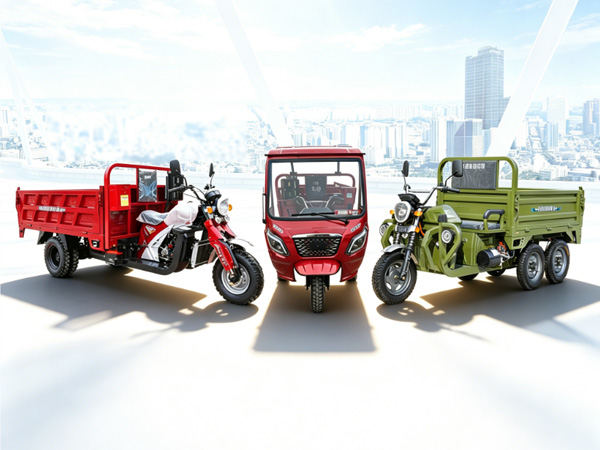
Last-mile delivery accounts for over half of total parcel logistics cost and is the fastest-growing source of urban emissions and congestion. As e-commerce volume continues its structural growth, logistics operators are under pressure to reduce per-delivery cost while improving delivery speed and environmental performance. The delivery tricycle has emerged as the most effective vehicle class for addressing this challenge in dense urban environments. Selecting the best tricycles for last-mile delivery requires evaluating cargo configuration, powertrain, range, durability, and fleet management compatibility against your specific delivery profile. This guide analyzes each factor using performance data from deployed fleets to help procurement teams make evidence-based decisions.
The Economics of Last-Mile Delivery by Tricycle
The business case for delivery tricycles is built on quantifiable cost and productivity advantages. In dense urban areas (building density >5,000 per km²), a delivery tricycle achieves 25–35% faster average speed during peak hours compared to a delivery van, due to bicycle lane access, exemption from car traffic restrictions, and superior maneuverability in narrow streets. The per-delivery operating cost is $0.15–$0.35 for a delivery tricycle versus $0.80–$1.50 for a van, driven by zero fuel cost (electric models), minimal maintenance, and no parking or congestion charge exposure. For a fleet operator processing 100 deliveries per day per vehicle, the daily cost saving is $65–$115 per vehicle—$23,700–$41,975 per vehicle per year. The payback period on a $3,000 delivery tricycle is under 3 months of full utilization.
Cargo Box Design: The Productivity Multiplier
The cargo box is the primary driver of delivery productivity. For parcel delivery, the optimal delivery tricycle box specification includes: volume of 1.2–2.0 m³, internal divider system to separate parcels by stop sequence, top-opening lid for single-parcel retrieval without unloading the entire box, lockable closure for unattended stops, and a low floor height (≤750 mm from ground) to minimize operator lifting effort. Field data from major European logistics operators show that a well-designed multi-compartment box reduces average per-stop time by 18–22 seconds compared to a single open bed, accumulating to 15–25 minutes saved per 50-stop shift. For food delivery, specify insulated box compartments with separate hot (60–70°C) and cold (0–5°C) zones, each with independent temperature monitoring.
Electric vs Manual: Which Delivery Tricycle Powertrain?
For last-mile delivery, the choice between manual and electric delivery tricycles depends on route distance and payload frequency. Manual delivery tricycles are adequate for routes under 15 km per shift with payloads under 200 kg—suitable for high-density residential areas with short inter-stop distances. Electric-assist delivery tricycles with 250–750 W motors are recommended for routes of 15–50 km per shift, payloads of 200–400 kg, or any route with grades exceeding 3%. The electric assist reduces operator fatigue by 50–70%, maintains consistent 15–22 km/h average speed across varied terrain, and enables older or less physically fit operators to perform at the same productivity level as younger, fit operators. The $800–$2,000 premium for electric assist typically pays back within 6–12 months through increased daily delivery volume and reduced operator turnover.
Route Planning and Range Management
Effective deployment of delivery tricycles requires matching vehicle range to route design. A 48V/20Ah electric delivery tricycle achieves 40–60 km range under typical delivery conditions (including 40–80 stops with frequent acceleration from rest). For routes exceeding 50 km per shift, either: deploy larger battery packs (48V/30–40 Ah, +$200–$400), implement mid-day battery swap (requires spare batteries and swap infrastructure), or split the route into two shorter loops with a central sorting hub. Route optimization software that accounts for vehicle range, traffic patterns, and delivery time windows can improve delivery tricycle utilization by 20–30% compared to manual route assignment, particularly for dynamic routing where delivery volumes fluctuate daily.
Durability and Fleet Service Life
Last-mile delivery subjects delivery tricycles to high-frequency loading cycles, frequent curb impacts, and all-weather operation. Fleet-grade durability specifications include: reinforced rear frame with gusseted dropout plates, sealed cartridge bearings throughout (headset, bottom bracket, wheel hubs), hydraulic disc brakes on all wheels, stainless steel hardware for corrosion resistance, and a powder-coated frame finish rated for 5+ years of outdoor exposure. With these specifications, a commercial delivery tricycle achieves 6–8 years of service life in daily delivery operations. Without them, service life typically falls to 3–4 years. The durability specification premium is 15–25% of purchase price but delivers 2× service life—a 4:1 return on the durability investment.
Regulatory Compliance for Delivery Operations
Regulatory treatment of delivery tricycles varies by jurisdiction but consistently favors deployment. In the EU, electric-assist delivery tricycles (≤250 W, cutoff at 25 km/h) are classified as bicycles, exempt from vehicle registration, road tax, and commercial driver licensing. In the US, classification varies by state but most states treat human-powered and low-speed electric tricycles as bicycles. In China, delivery tricycles are a regulated vehicle class requiring registration in most cities, but electric models receive preferential licensing compared to fuel-powered equivalents. For multinational fleet deployment, verify local classification and any helmet, lighting, or insurance requirements. The regulatory trend globally is toward more favorable treatment of electric delivery tricycles relative to motorized alternatives.
Frequently Asked Questions
What is the ideal cargo capacity for a last-mile delivery tricycle?
For parcel delivery, the ideal delivery tricycle carries 40–80 standard parcels (30 × 25 × 15 cm) per load, requiring a cargo volume of 1.2–1.8 m³ and a payload capacity of 150–300 kg. This capacity supports 1.5–2 hours of delivery before returning to the sorting hub for reload, optimizing the ratio of driving time to stopping time. Oversized cargo boxes reduce vehicle maneuverability and increase wind resistance without improving productivity if the extra volume cannot be filled per load cycle.
How many delivery tricycles replace one delivery van?
In dense urban areas, 2–3 delivery tricycles typically replace one delivery van in terms of daily parcel volume, because tricycles can access pedestrian zones, bicycle lanes, and narrow streets that vans cannot efficiently serve. The van remains necessary for bulk deliveries and addresses outside the delivery tricycle's range and payload envelope. A hybrid fleet model—vans for bulk outer-zone delivery and tricycles for dense inner-zone delivery—optimizes total fleet cost and coverage.
What maintenance does a delivery tricycle fleet require?
Weekly: tire pressure check, chain lubrication, and cargo box latch inspection. Monthly: brake pad wear check, electrical system inspection (for electric models), and frame fastener torque check. Quarterly: full drivetrain service, battery capacity test, and cargo box hinge lubrication. Annual: comprehensive safety inspection and frame integrity check. Budget 8–12% of purchase price per year for maintenance. Electric models reduce engine-related maintenance to near zero but add battery replacement every 4–5 years.
Can delivery tricycles operate in all weather conditions?
With appropriate specifications, delivery tricycles operate in rain, snow (with studded tires), and temperatures from −10°C to 40°C. For sub-zero operation, specify lithium batteries with low-temperature tolerance and heated cargo compartments for food delivery. For heavy rain, ensure the cargo box has drainage, sealed electrical connectors, and waterproof latch mechanisms. Most fleet operators reduce service frequency by 20–30% during extreme weather but maintain operation rather than shutting down.
Conclusion
Choosing the best tricycles for last-mile delivery is a rigorous specification exercise, not a catalog selection. The optimal vehicle combines a multi-compartment cargo box designed for parcel density and quick access, electric-assist powertrain for range and operator fatigue management, fleet-grade durability specifications, and regulatory compliance for your operating jurisdiction. The data from deployed fleets across Europe, Asia, and North America is unambiguous: for urban delivery within a 15 km radius, delivery tricycles deliver 60–75% lower per-delivery cost, 25–35% faster delivery cycles, and 90%+ lower per-delivery emissions compared to van-based models. For logistics operators facing margin pressure and emission targets, the delivery tricycle is not an alternative to vans—it is the new baseline for urban last-mile economics.
References
Allen, J. et al., "The Role of Urban Consolidation Centres in Sustainable Freight Transport," Transport Reviews, vol. 32, no. 4, pp. 473–490, 2012.
Gruber, J. and Rudloff, A., "Evaluation of a Cargo Bike Sharing System: User Behavior and Operational Efficiency," Transportation Research Part A, vol. 156, pp. 189–203, 2022.
Melo, S. and Baptista, P., "Evaluating the Potential of Cargo Bikes for Urban Parcel Delivery," Transportation Research Procedia, vol. 62, pp. 391–398, 2022.
Pan, S. et al., "Last-Mile Delivery in City Logistics: Achievements and Challenges," International Journal of Production Economics, vol. 223, p. 107521, 2020.

Contact Us
Tel:8615713172715 / 8619061777149
WeChat:8615713172715 / 8619061777149
E-mail:942778859@qq.com
Url:https://www.duomitricycle.com