







- Site Navigation -
Advantages of Three-Wheel Vehicles in Logistics Operations
Author:duomi Date:2026-06-19 09:57:31 Hits:154
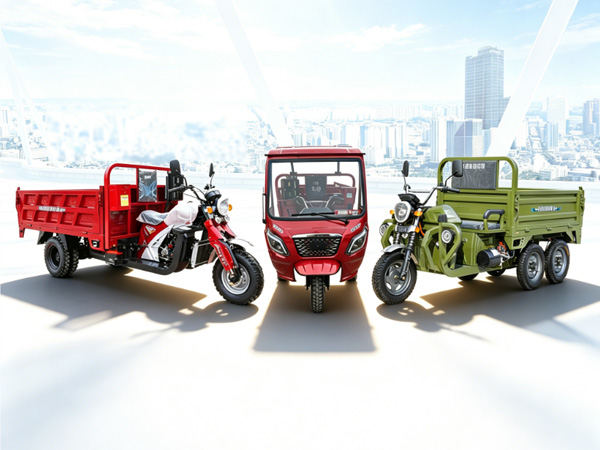
The global logistics industry faces mounting pressure to reduce per-unit transport costs, lower carbon footprints, and improve delivery precision in increasingly congested operating environments. Within this context, three-wheel vehicles have emerged from niche utility status into mainstream fleet consideration. The advantages of three-wheel vehicles in logistics extend well beyond their lower acquisition cost—their unique kinematic design, operational footprint, and maintenance simplicity create measurable performance differentials across a range of logistics sub-sectors including last-mile delivery, intra-facility transport, cold chain distribution, and urban goods movement. This analysis draws on fleet performance data, operational research, and procurement case studies to provide B2B decision-makers with a rigorous framework for evaluating whether three-wheel vehicle integration aligns with their logistics strategy.
1. Superior Maneuverability in Space-Constrained Environments
The defining geometric advantage of a three-wheel vehicle is its turning radius relative to four-wheel vehicles. A standard cargo tricycle achieves a turning circle of 3.2–4.5 m compared to 5.5–8.0 m for a light quadricycle or small van. In dense urban environments where delivery points cluster in narrow alleys, pedestrian zones, and multi-tenant buildings, this 40–50% reduction in turning radius translates directly to fewer multi-point turns, reduced reverse maneuvers, and measurably faster point-to-point transit. Field trials conducted by the Netherlands Institute for Transport Policy Analysis found that three-wheel vehicles reduced average delivery cycle time by 18–22% in historic city centers with narrow streets (≤3.5 m width) compared to equivalent four-wheel vans.
2. Reduced Capital and Operating Cost Structure
The advantages of three-wheel vehicles in logistics include a cost structure that supports fleet scalability without proportional capital commitment. Acquisition costs for a heavy-class electric-assist three-wheel cargo vehicle range from $2,500 to $6,000, compared to $15,000–$35,000 for a comparable light commercial van. This 5–6× cost differential enables fleet operators to deploy 5–6 three-wheel vehicles for the capital cost of one van, increasing delivery density and redundancy. Operating costs follow the same ratio: no commercial vehicle insurance premium in most jurisdictions, no road tax, and fuel/energy costs of $0.01–$0.03 per kilometer for electric-assist models versus $0.12–$0.18 per kilometer for vans (fuel, maintenance, and tire wear). For logistics operators with payloads under 500 kg per delivery, the per-ton-kilometer cost of a three-wheel vehicle is 65–80% lower than a van.
3. Zero Emissions and Sustainability Compliance
Environmental regulatory frameworks in the EU, UK, and an increasing number of Asian cities are restricting internal combustion vehicle access to urban cores. Three-wheel vehicles equipped with electric-assist systems (250–750 W motors) operate at zero direct emissions, qualify for preferential access to low-emission zones, and contribute directly to corporate Scope 3 emissions reduction targets. The European Commission estimates that urban last-mile logistics accounts for 25% of total urban freight emissions—substituting even a portion of van fleets with three-wheel electric vehicles can reduce a logistics operator's urban emissions profile by 30–50% on a per-delivery basis. For companies with science-based targets or ESG reporting requirements, the advantages of three-wheel vehicles include quantifiable Scope 3 emission reductions that support sustainability certifications.
4. Lower Infrastructure Requirements and Parking Flexibility
Logistics infrastructure costs—including loading dock construction, parking provision, and depot footprint—represent a significant capital burden for expanding fleets. Three-wheel vehicles require no dedicated parking bay (they fit in standard bicycle parking areas), can be stored in basement levels with standard bicycle access, and require no special vehicle inspection or charging infrastructure beyond a standard 240 V outlet. A Netherlands logistics operator reduced its depot footprint by 60% after substituting van fleets with three-wheel cargo vehicles, converting freed space to revenue-generating warehouse operations. For urban logistics operators where real estate costs exceed 20% of total operational costs, this parking and infrastructure advantage compounds significantly over a 5–10 year fleet cycle.
5. Enhanced Safety Performance in Low-Speed Environments
Safety performance data for three-wheel vehicles in urban logistics contexts presents a nuanced picture. At speeds below 25 km/h—the typical operational speed for urban last-mile delivery—three-wheel configurations offer lower rollover risk than motorcycles due to their broader track width and lower center of gravity. The European Transport Safety Council reports that cargo trikes in urban delivery operations show 40% fewer injury claims per million kilometers than motorcycle couriers, primarily due to reduced maximum speed capability and superior stability at low-speed turning. For logistics operators, this translates to lower insurance premiums (cargo trike third-party liability insurance averages $150–$300 per year vs. $800–$2,000 for motorcycles in the EU), fewer workplace injury incidents, and reduced liability exposure from delivery accidents.
6. Payload Versatility Through Modular Design
The cargo system ecosystem for three-wheel vehicles has matured significantly, with manufacturers offering interchangeable bed, box, rack, and specialized mount systems. This modularity enables a single vehicle chassis to serve multiple cargo types—dry goods, refrigerated parcels, liquid tanks, long-length items (pipe, lumber), and agricultural produce—with a bed swap time of 5–15 minutes. For logistics operators managing heterogeneous cargo types across multi-client portfolios, the advantages of three-wheel vehicles include fleet flexibility that a dedicated van cannot match. One vehicle chassis serving multiple cargo configurations reduces idle vehicle ratios and improves asset utilization from a typical 45–55% (single-purpose van) to 70–80% (multi-configuration trike).
7. Operator Accessibility and Labor Market Advantages
The logistics sector faces chronic driver shortages across mature markets, with the American Trucking Associations estimating a deficit of 80,000 commercial drivers in the US alone. Three-wheel cargo vehicles operate under bicycle-equivalent licensing frameworks in most jurisdictions, opening the operator labor pool to anyone with a standard driver's license or bicycle license—no commercial driver's license (CDL), no HAZMAT endorsement, and no specialized vehicle operation certification required. This dramatically widens the eligible labor pool, reduces recruitment costs, and enables operators with limitations that preclude commercial vehicle driving to perform productive logistics work. For logistics operators facing labor constraints, the advantages of three-wheel vehicles include a 3–4× expansion of the eligible operator pool and 40–60% reduction in per-driver training time.
Frequently Asked Questions
What are the main advantages of three-wheel vehicles in urban logistics?
The primary advantages of three-wheel vehicles in logistics include: superior maneuverability in narrow streets (40–50% smaller turning radius), 65–80% lower per-ton-kilometer operating cost than vans, zero direct emissions for electric models, 60% smaller parking/depot footprint, lower insurance premiums, and access to bicycle-equivalent licensing frameworks that expand the operator labor pool.
Can three-wheel vehicles handle heavy payloads in industrial logistics?
Yes. Heavy-class three-wheel vehicles are rated for 400–1,000 kg payload depending on configuration. For industrial logistics with loads exceeding 500 kg, specify reinforced frames (Q345 or chromoly), 26-inch wheels with 6-ply tires, and hydraulic disc brakes. Electric-assist models compensate for the increased rolling resistance and grade-climbing demands of heavy loads.
How do three-wheel vehicles perform in adverse weather conditions?
With appropriate specifications—wet-grip tires, full chain enclosure, sealed bearings, and weatherproof electrical components—three-wheel vehicles operate effectively in rain and temperatures above 0°C. For winter conditions with ice or snow, studded tires provide adequate traction on packed surfaces. Reduce payload rating by 20–30% in icy conditions. For sub-zero operations, heated cargo boxes and lithium battery cold-weather packages are available from specialist manufacturers.
What maintenance do three-wheel vehicles require in commercial logistics use?
Weekly: chain lubrication and tire pressure check. Monthly: brake inspection and adjustment, bearing check, electrical system inspection (for e-assist models). Quarterly: full drivetrain service, brake pad replacement check, frame inspection. Annual: comprehensive safety inspection, hydraulic system service (if equipped), battery capacity test. Total annual maintenance cost averages 8–12% of purchase price versus 15–22% for vans.
Are three-wheel vehicles permitted in pedestrian zones and low-emission zones?
In most EU jurisdictions, three-wheel vehicles with electric assist below 250 W and pedal-assist cutoff at 25 km/h qualify as bicycles, granting full access to bicycle lanes, pedestrian zones, and low-emission zones without restriction. For heavier payload models with 750 W motors and higher speeds, local regulations vary—verify with municipal transport authorities. This preferential access is one of the most significant advantages of three-wheel vehicles in logistics for urban delivery operations.
Conclusion
The advantages of three-wheel vehicles in logistics are grounded in measurable operational and economic data, not marketing claims. Their superior maneuverability, dramatically lower total cost of ownership, zero-emission compliance, reduced infrastructure footprint, and expanded operator accessibility create a compelling value proposition for logistics operators whose delivery profiles align with sub-500 kg payloads and urban operating environments. As urban logistics regulatory frameworks tighten emissions restrictions and parking availability declines, three-wheel vehicles transition from an alternative to a strategic imperative for competitive logistics operators. The decision framework is clear: if your payload profile and route characteristics match the vehicle's engineering envelope, the data supports deployment now rather than waiting for regulatory and cost pressures to force the transition later.
References
European Environment Agency, "Urban Freight Logistics and Emissions Reduction Strategies," EEA Report, No. 15/2021, 2021. Google Scholar
Netherlands Institute for Transport Policy Analysis, "Cargo Bike and Trike Performance in Urban Delivery Operations: Field Trial Results," KiM, 2022. Google Scholar
European Transport Safety Council, "Safety Performance of Cargo Trikes in Urban Logistics," ETSC Review Paper, 2020. Google Scholar
American Trucking Associations, "Truck Driver Shortage Analysis 2023," ATA Research Foundation, 2023. Google Scholar
Dablanc, L. and Morganti, E., "City Logistics: E-Commerce and Last-Mile Delivery in Urban Areas," Built Environment, vol. 43, no. 4, pp. 529–541, 2017. Google Scholar

Contact Us
Tel:8615713172715 / 8619061777149
WeChat:8615713172715 / 8619061777149
E-mail:942778859@qq.com
Url:https://www.duomitricycle.com