







- Site Navigation -
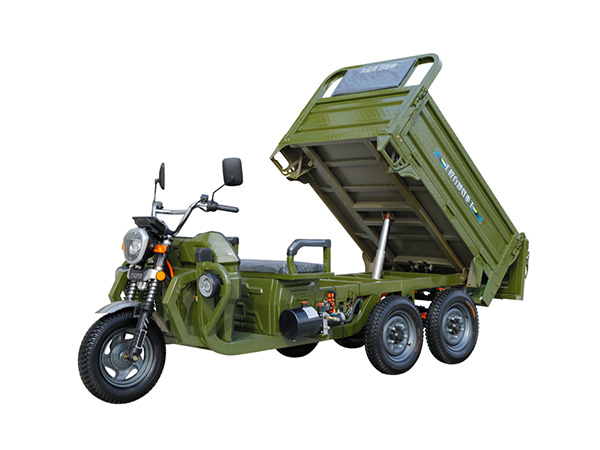
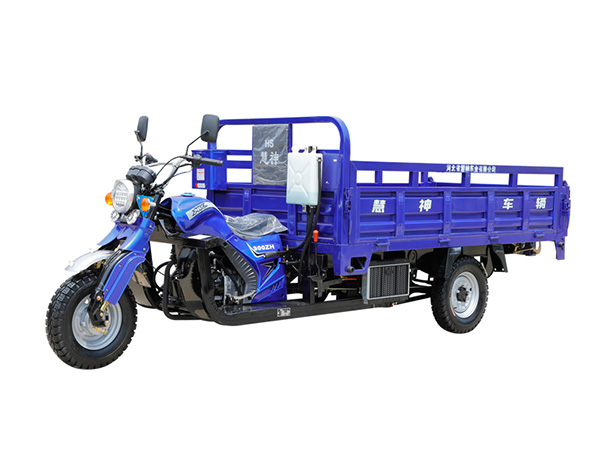
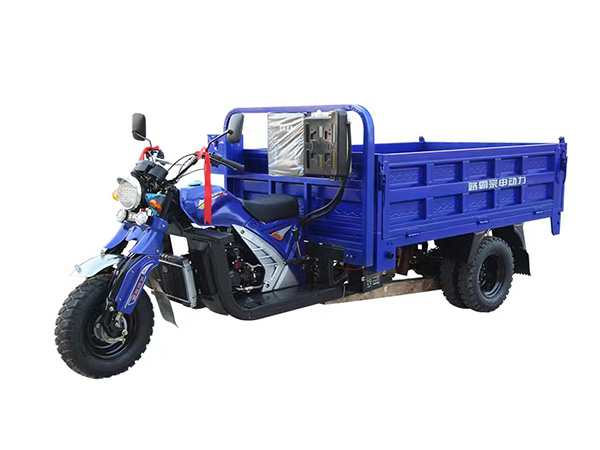
Suspension Systems in Cargo Tricycles: Engineering Guide
Author:duomi Date:2026-10-08 18:06:10 Hits:120
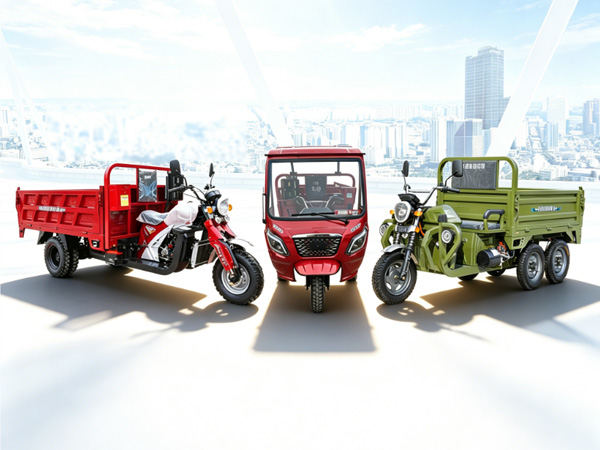
A cargo tricycle that operated only on perfectly smooth concrete would need no suspension at all. Commercial cargo tricycles do not operate on smooth concrete. They operate on warehouse floors with expansion joints, yard surfaces with potholes, farm tracks, construction site access roads, and urban streets with degraded surfaces. The suspension systems in cargo tricycles exist to absorb the energy of these surface irregularities before it reaches the cargo, the frame, and the operator. The quality of that absorption—how the suspension is designed, specified, and maintained—determines whether a loaded vehicle rides controllably or beats itself and its operator to failure.
What Suspension Does on a Three-Wheeled Vehicle
Suspension performs three functions simultaneously. It isolates the vehicle body and cargo from road-induced vibration and shock, keeping the wheels in contact with the ground for traction and braking. It limits the transmission of impact loads to the frame and mounted components, protecting the structure and the cargo from fatigue and damage. And it influences handling and stability by controlling how the vehicle's mass transfers during braking, acceleration, and cornering.
On a three-wheeled vehicle, suspension design carries an additional burden that four-wheeled vehicles do not: with only three contact patches, the vehicle has no inherent roll stability from a fourth wheel, and the suspension's contribution to keeping the loaded vehicle planted through surface irregularities is proportionally larger. A cargo tricycle with poorly matched suspension loses wheel contact on one wheel over a bump, transferring load abruptly and potentially inducing the lateral instability that three-wheelers are structurally more sensitive to. The suspension is therefore not merely a comfort feature—it is a stability and safety component.
Front Suspension: Fork Types and Trade-offs
The front wheel of a cargo tricycle is steered, so its suspension must accommodate steering motion while absorbing shock. Two fork architectures dominate. The telescopic fork uses two sliding tubes with internal coil springs and often oil damping, functioning like a motorcycle front fork in miniature. Its advantages are compact packaging, good shock absorption, and the ability to tune spring rate and damping independently. Its disadvantage is that it is unsprung mass at the steering wheel, and low-quality telescopic forks can suffer seal leakage and progressive performance loss.
The leading-link fork uses a pivoted arm with a spring (often a rubber or coil element) at the pivot, allowing the wheel to move vertically while the steering axis remains fixed. Its advantages are mechanical simplicity, durability under load, and predictable behavior—traits valued in commercial and load-carrying applications. Its disadvantage is generally harsher small-bump absorption than a well-damped telescopic fork. For cargo tricycles carrying substantial loads over poor surfaces, leading-link designs are often favored for robustness, while telescopic forks are favored where ride comfort is prioritized. The choice should follow the operating surface: smooth urban routes favor telescopic comfort; rough site and farm routes favor leading-link durability.
Rear Suspension: Springing the Load-Carrying Axle
The rear axle of a cargo tricycle carries the majority of the vehicle and cargo weight, and its suspension must support high static loads while absorbing dynamic impacts from the road. The predominant rear suspension arrangements are leaf springs, coil springs with dampers, and rigid (unsprung) mounting.
Leaf springs—stacked curved steel plates—are the traditional heavy-duty solution. They provide a progressive spring rate: as load increases, additional leaves engage, so the suspension remains controlled whether lightly loaded or at maximum payload. They are durable, simple, and tolerant of overload, which explains their persistence in commercial and agricultural vehicles. Their disadvantage is a harsher empty-vehicle ride, because the spring rate that handles full load is stiff when unloaded.
Coil springs with hydraulic dampers offer a more refined ride and better control of oscillation (the spring absorbs energy, the damper prevents it from bouncing back repeatedly). They package compactly and can be tuned for a specific load range, but they are more expensive and, for a given durability target, may require more careful specification than leaf springs at the upper end of the load range. Rigid rear mounting—no suspension at the rear—is found on the lowest-cost or lightest-duty tricycles; it transfers all road shock to the frame and cargo and is unsuitable for anything beyond smooth-surface, light-load operation.
Load-Dependent Behavior: The Central Suspension Challenge
The defining engineering challenge of suspension systems in cargo tricycles is that the load varies. A vehicle might run empty on the return trip and fully loaded on the outbound trip, a two-to-threefold change in sprung mass. A spring rate tuned for the loaded condition produces a harsh, uncontrolled ride when empty; a rate tuned for comfort when empty allows excessive sag and bottoming-out when loaded.
This is why progressive springs—leaf springs engaging additional leaves, or coil springs with variable pitch—are valuable in cargo applications: they provide a softer rate at low load and a stiffer rate at high load, approximating the ideal of consistent ride quality across the load range. For buyers, the practical evaluation is to observe the vehicle at both empty and loaded ride height: excessive sag when loaded (the frame sitting close to the axle) indicates under-sprung specification that will bottom out and transmit shock to the frame; excessive height when empty indicates over-sprung specification that will ride harshly and lose wheel contact over bumps. The correct specification sits the vehicle at a consistent, moderate stance across the expected load range.
Terrain-Based Tuning and Specification
Suspension should be specified to the dominant operating surface. On smooth paved routes with light loads, softer spring rates and good damping optimize comfort and cargo protection. On broken urban surfaces, a balance of absorption and control prevents the vehicle from pitching and bouncing under braking. On dirt, gravel, and site roads, firmer springs with adequate travel prevent bottoming-out and maintain wheel contact over repeated irregularities. The travel—the distance the wheel can move up and down—must be sufficient for the worst surface encountered; insufficient travel forces the suspension to its limit on every bump, transmitting full shock to the frame.
Damping deserves specific attention. A spring without adequate damping oscillates: after a bump, the wheel and body bounce repeatedly, reducing control and comfort. Hydraulic dampers (shock absorbers) dissipate this energy. Vehicles specified without dampers, or with dampers mismatched to spring rate, exhibit exactly this uncontrolled behavior. For commercial cargo tricycles, dampers matched to the spring rate and load range are not optional refinement—they are necessary for stable, controllable loaded operation.
Maintenance and Failure Modes
Suspension systems in cargo tricycles fail gradually and visibly if inspected. Leaf springs lose arch (sag) over time and can crack at the center bolt or eye; coils can fracture under fatigue if overloaded repeatedly; fork seals leak, reducing damping; damper mounts and bushings wear, introducing play that degrades handling. The maintenance program should include scheduled inspection of spring condition and ride height, checking for leakage at dampers and forks, verifying bushing and mount tightness, and replacing worn components before they allow excessive play.
A frequently overlooked maintenance item is lubrication of pivot points on leading-link and leaf-spring suspensions. Dry pivots bind and wear, changing the suspension's effective behavior and accelerating component failure. Greasing pivots on the recommended interval is a low-cost practice that extends suspension life substantially in dirty, wet operating environments.
Selection Factors for B2B Buyers
When specifying suspension systems in cargo tricycles, match the architecture to the duty: leading-link or robust telescopic front forks for rough-surface, heavy-load duty; leaf or coil rear springing sized to the maximum payload with progressive rate; dampers matched to spring and load; and adequate wheel travel for the worst expected surface. Require the supplier to state the spring rate or load rating and the recommended loaded ride height, and verify these against your actual maximum cargo. For vehicles operating in corrosive environments (coastal, agricultural chemical exposure), specify corrosion-protected spring and damper components. Documented spare-part availability for springs, dampers, and bushings protects against extended downtime when suspension components eventually wear.
Frequently Asked Questions
Should I choose leaf spring or coil spring rear suspension for a cargo tricycle?
For heavy, variable loads and rough surfaces, leaf springs are generally the more durable and overload-tolerant choice, with a progressive rate that handles both empty and loaded conditions reasonably. For smoother routes where ride refinement and cargo protection matter more, coil springs with dampers provide better small-bump absorption and oscillation control. The decision should follow your dominant surface and load variability rather than a universal preference.
Why does my loaded cargo tricycle ride harshly when empty?
This indicates the suspension is sprung for the loaded condition, which is too stiff when unloaded—common with leaf springs specified at the upper end of the load range. Progressive-rate springs mitigate this by softening at low load. If the harshness is severe, the spring rate may simply be mismatched to your actual duty cycle, and softer-rate or progressive springs should be considered. Confirm the supplier's specified load range matches your typical empty-to-loaded variation.
Do cargo tricycles need shock absorbers, or is a spring enough?
A spring alone absorbs energy but does not control the rebound, causing the wheel and body to oscillate after each bump—reducing control, comfort, and cargo protection. Hydraulic dampers (shock absorbers) dissipate this oscillation and are necessary for stable, controllable loaded operation, particularly on broken surfaces. Vehicles without dampers, or with dampers mismatched to the spring rate, exhibit uncontrolled bouncing that degrades handling and accelerates component wear.
How do I know if the rear suspension is under-sprung for my cargo?
Observe ride height at maximum payload: if the frame sits close to the axle or the springs are visibly compressed to near-solid, the suspension is under-sprung and will bottom out, transmitting shock to the frame and risking damage. Excessive sag also reduces available travel for bumps. The correct specification maintains a moderate, consistent stance at maximum load with travel remaining for surface irregularities. Request the supplier's load-vs-ride-height data and verify it against your heaviest typical cargo.
Conclusion
The suspension systems in cargo tricycles are engineering subsystems that determine ride quality, cargo protection, component life, and—critically for a three-wheeled vehicle—stability under real operating conditions. The defining design challenge is variable load: suspension must perform across a two-to-threefold change in sprung mass, which favors progressive-rate springs (leaf or variable-pitch coil) and dampers matched to the spring and load range. Front fork choice should follow the surface—telescopic for comfort on smoother routes, leading-link for durability on rough ones—and rear springing should be sized to maximum payload with adequate travel for the worst encountered surface. Buyers who specify suspension against their actual duty cycle, and who maintain it through scheduled inspection and pivot lubrication, operate vehicles that remain stable and controllable and that protect both cargo and frame from the punishment of commercial surfaces. Neglected or mismatched suspension, by contrast, becomes a source of accelerated wear, unstable handling, and cargo damage.
References
Gillespie, T.D., "Fundamentals of Vehicle Dynamics," SAE International, 1992.
Milliken, W.F. and Milliken, D.L., "Race Car Vehicle Dynamics," SAE International, 1995.
Reimpell, J. and Stoll, H., "The Automotive Chassis: Engineering Principles," Butterworth-Heinemann, 2001.
International Organization for Standardization, "ISO 8855: Road Vehicles — Vehicle Dynamics and Road-Holding Ability — Vocabulary," ISO, 2011.
Wong, J.Y., "Theory of Ground Vehicles," Wiley, 4th Edition, 2008.

Contact Us
Tel:8615713172715 / 8619061777149
WeChat:8615713172715 / 8619061777149
E-mail:942778859@qq.com
Url:https://www.duomitricycle.com