







- Site Navigation -
Safety Features in Modern Cargo Tricycles: A Guide
Author:duomi Date:2026-09-12 10:40:39 Hits:63
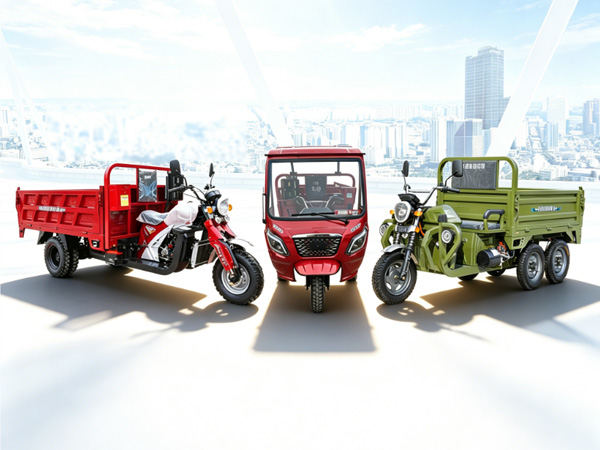
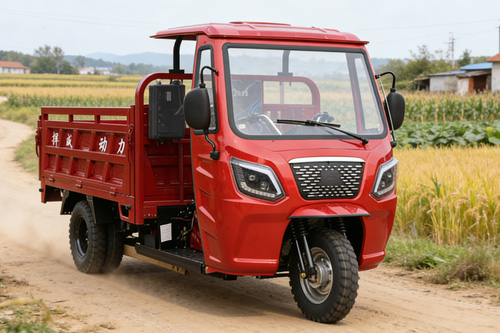
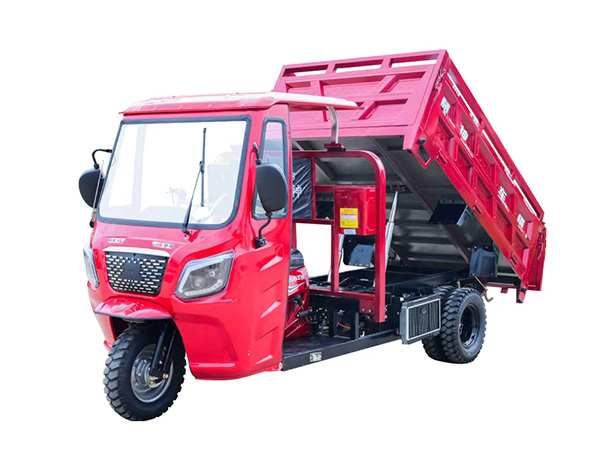
The cargo tricycle occupies a unique risk position in commercial transport. It carries loads approaching a motorcycle's worth of mass, operates on the same roads as cars and trucks, yet lacks the crumple zones, seat belts, and stability systems of enclosed vehicles. For fleet operators and procurement managers, cargo tricycle safety is therefore not a marketing feature—it is the engineering discipline that determines whether the vehicle protects its operator and the public during the thousands of trips it makes each year. The safety features in a modern cargo tricycle range from the obvious (brakes) to the subtle (frame geometry and load center of gravity), and evaluating them correctly requires understanding how each feature performs under real commercial stress rather than on a showroom floor.
Braking Systems: The Single Most Critical Safety Feature
If a cargo tricycle has one safety system that matters above all others, it is the brakes. A loaded cargo tricycle carrying 500 kg at 25 km/h carries kinetic energy comparable to a small car at low urban speed, and stopping that mass safely requires brakes matched to the gross vehicle weight. Mechanical drum brakes on all three wheels are the baseline specification for budget models, but they suffer from heat fade under repeated use and require frequent adjustment as shoes wear. Hydraulic disc brakes represent the meaningful safety upgrade: consistent stopping power across temperature ranges, self-adjusting pad wear, and superior wet-weather performance. For vehicles operating in hilly terrain or with payloads above 400 kg, hydraulic disc brakes on all three wheels are not optional—they are the difference between controlled stops and runaway descents. A stopping distance test on a level surface with full rated load (from 25 km/h to zero) should be completed in under 7 meters for a well-braked cargo tricycle; anything beyond 10 meters indicates an underspecified braking system that should be rejected.
Stability Engineering and Load Center of Gravity
A cargo tricycle's three-wheel configuration gives it an inherent stability advantage over two-wheelers at rest and low speed, but this advantage is easily lost through poor design. The dominant stability risk is tipping during cornering when the cargo's center of gravity sits too high or too far to one side. Modern cargo tricycle designs manage this through low-slung cargo beds (load floor 300–400 mm above ground), a wide rear track (900–1,100 mm between rear wheel centers), and a low-mounted battery or engine position that keeps the vehicle's mass centered and low. A well-designed cargo tricycle can carry its rated load through a 15° banked turn at 15 km/h without lifting a wheel; vehicles that tip under these conditions have a center-of-gravity problem that no operator training can fully compensate for. Buyers should request the manufacturer's tilt-test data or conduct a slow-speed cornering test with a representative load before accepting delivery.
Lighting and Visibility for Mixed Traffic Operation
For any cargo tricycle operating on public roads or in shared industrial yards, visibility is a safety feature as important as braking. A compliant lighting package includes a front white headlamp (minimum 200 lumens for dusk and night operation), rear red tail and brake lights, amber turn indicators visible from front and rear, and side-reflective markings or rim reflectors that make the vehicle detectable from all angles. Reflective tape on the cargo bed perimeter adds passive visibility even when the electrical system is off. Many incidents involving cargo tricycles in mixed traffic occur because the vehicle was not seen by a turning car or reversing forklift—lighting and reflectivity directly address this failure mode. For operations in low-light warehouses, construction sites at dawn, or pre-dawn delivery routes, an upgraded lighting package with a handlebar-mounted spotlight is a worthwhile safety investment that costs little relative to the risk it mitigates.
Load Security and Cargo Restraint Systems
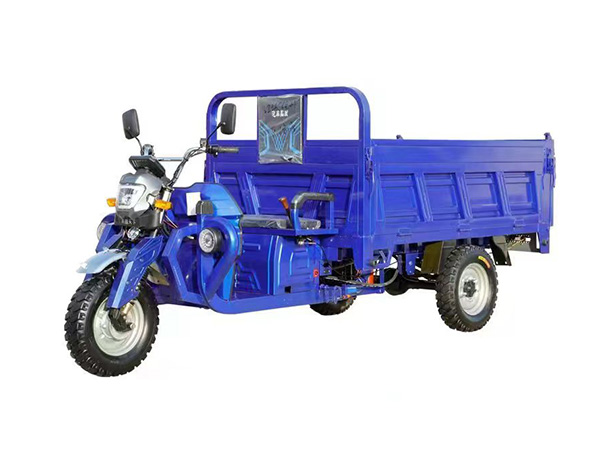
An unsecured load is a dynamic hazard: a 50 kg box that shifts during a turn changes the vehicle's center of gravity instantly and can trigger the instability described above, or fall onto the operator or a bystander. Cargo tricycle safety therefore depends heavily on load restraint. A safe cargo tricycle provides fixed anchor points (rated D-rings or lashing bars) on the cargo bed perimeter, side walls or rails high enough to contain the typical load without reliance on straps alone, and a non-slip bed surface (textured steel or rubber matting) that prevents load sliding under braking. For loose bulk materials, enclosed side walls with adequate height are essential. Operators should be trained to distribute weight evenly across the bed, keep the heaviest items lowest and centered, and secure every load with straps rated above the load weight before moving. A vehicle without adequate anchor points forces operators into unsafe improvisation—a design failure that procurement should screen out at the specification stage.
Operator Protection: Ergonomics and Guarding
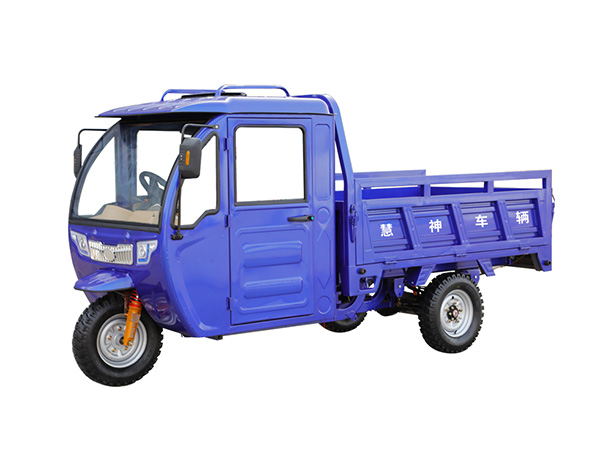
The operator is the most vulnerable component of any cargo tricycle system, and modern cargo tricycle designs protect them through deliberate engineering. Chain and drive-component guards prevent clothing or limbs from catching in moving parts—a common cause of serious injury on unguarded vehicles. A parking brake that holds the loaded vehicle on a 12° slope prevents roll-away during loading and unloading. Ergonomic handlebar height and grips reduce operator fatigue that leads to slower reaction times, and a properly positioned brake lever allows full braking force within one-third of lever travel without the operator overreaching. For electric models, the controller should include a low-voltage cutoff and automatic power cut on brake application, preventing the dangerous "runaway assist" scenario where the motor continues driving against an applied brake. These features are invisible in a purchase decision focused on price, but they are the difference between a vehicle that protects its operator and one that exposes them to preventable harm.
Standards Compliance and Certification
A credible cargo tricycle safety evaluation includes verification that the vehicle meets applicable safety standards. In European markets, cargo cycles are assessed against EN 17860 (safety requirements for cargo bicycles) covering braking, structural integrity, and electrical systems for electric variants. In other regions, national standards for power-assisted vehicles or three-wheeled motor vehicles may apply depending on engine size and maximum speed. Reputable suppliers and manufacturers provide test certificates or declarations of conformity covering braking performance, frame structural integrity, and—for electric models—electrical safety including water resistance rating and short-circuit protection. Buyers should request this documentation as a condition of purchase. A supplier unable to provide safety certification for their cargo tricycle is signaling that safety was not a verified part of their design and manufacturing process, and that is a risk no commercial operator should accept.
Frequently Asked Questions
What braking system is safest for a heavy-load cargo tricycle?
Hydraulic disc brakes on all three wheels are the safest specification for any cargo tricycle carrying loads above 400 kg or operating in hilly terrain. They provide consistent, fade-resistant stopping power and superior wet-weather performance compared to mechanical drum brakes. A full-load stopping distance from 25 km/h should be under 7 meters; reject vehicles that cannot meet this benchmark.
How do I prevent a cargo tricycle from tipping during cornering?
Tipping is prevented through design and operation together. Specify a vehicle with a low cargo bed, wide rear track, and low-mounted powertrain. In operation, distribute load evenly and keep the center of gravity low, reduce speed before corners (15 km/h or less through banked turns), and avoid sudden steering inputs with a loaded vehicle. A properly designed cargo tricycle carries rated load through a 15° banked turn at 15 km/h without lifting a wheel.
Are electric cargo tricycles safe in wet conditions?
Yes, when built to an adequate ingress protection rating (IP65 or higher for electrical components) and equipped with hydraulic disc brakes that perform reliably when wet. The key safety considerations are sealed connectors, a water-resistant battery enclosure, and automatic motor cutoff on brake application. Verify the supplier's IP rating documentation before operating electric models in rain or washdown environments.
What safety training should cargo tricycle operators receive?
Operators should be trained in load distribution and restraint, pre-shift brake and tire inspection, cornering speed control, mixed-traffic awareness and hand signaling, and emergency stopping procedure. A structured training program covering these elements reduces incident rates by 30–50% compared to untrained operation, and should be documented as part of the fleet safety record.
Conclusion
The safety features in modern cargo tricycles are the engineering decisions—braking capability, stability geometry, visibility, load restraint, operator guarding, and standards compliance—that determine whether a vehicle protects its operator and the public across years of commercial use. For procurement teams, evaluating these features against measurable benchmarks (stopping distance, tilt stability, certification documentation) is more valuable than comparing purchase prices, because a single safety incident can cost more than the entire price difference between a safe vehicle and a cheap one. The safest cargo tricycles from established suppliers integrate hydraulic disc brakes, low center-of-gravity design, complete lighting packages, secure load anchor points, and operator guarding as standard—not as optional upgrades. Specifying vehicles to this standard, and training operators to use them correctly, is the foundation of a safe and productive cargo tricycle fleet.
References
European Committee for Standardization, "EN 17860: Cycles — Safety Requirements for Cargo Bicycles," CEN, 2023.
National Highway Traffic Safety Administration, "Crash Avoidance Metrics for Low-Speed Commercial Vehicles," NHTSA Technical Report, 2021.
Papadimitriou, E. et al., "Risk Factors in Urban Freight Cycling: A Safety Analysis," Accident Analysis & Prevention, vol. 145, 2020.
Wood, J. and Lachenmeier, T., "Stability and Braking Performance of Three-Wheeled Cargo Vehicles," Transportation Research Part F, vol. 78, 2021.

Contact Us
Tel:8615713172715 / 8619061777149
WeChat:8615713172715 / 8619061777149
E-mail:942778859@qq.com
Url:https://www.duomitricycle.com