







- Site Navigation -
Engineering of Three-Wheeled Dump Trucks: Design and Specs
Author:duomi Date:2026-09-23 15:07:30 Hits:122
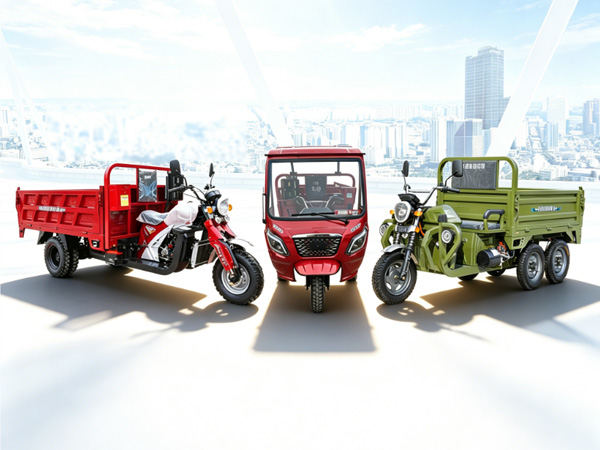
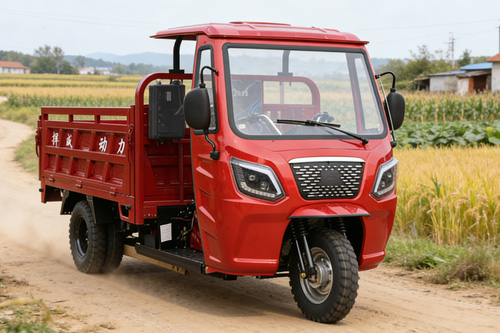
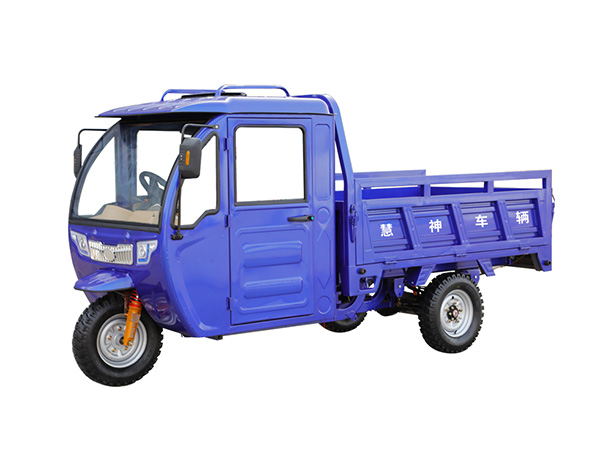
A full-size dump truck with a 15-tonne capacity and a 6×4 drivetrain is engineered for highway hauling between distant points. It is not the right tool for moving 800 kg of sand from a stockpile to a formwork point 60 meters away, on uneven ground, through a site gate that excludes heavy vehicles. This is the application space of the three-wheeled dump truck: a compact, maneuverable, self-loading material transport vehicle that bridges the gap between wheelbarrow and full-size dump truck. The engineering of three-wheeled dump trucks must solve a specific set of problems—how to carry a heavy concentrated load, how to dump it safely without tipping, how to survive rough site terrain, and how to do this reliably across years of daily commercial use—using engineering solutions that are different in scale but identical in rigor to those applied in heavy equipment design.
Chassis and Frame Engineering for Site Conditions
The chassis of a three-wheeled dump truck must perform two jobs simultaneously: provide a rigid structural platform for the cargo bed and powertrain, and absorb and redistribute the shock loads from rough site terrain without transmitting damaging forces to the powertrain and suspension components.
The frame is a ladder-type structure—two longitudinal frame rails connected by cross members—fabricated from channel section or closed rectangular tube steel. The frame rails carry the primary bending and torsion loads from the cargo bed and powertrain; the cross members maintain geometry and distribute point loads across the frame width. Frame rail section size is determined by the maximum expected bending moment from the cargo load (acting at the cargo bed mounting points) and the maximum torsional moment from chassis twist on uneven ground. For a three-wheeled dump truck rated at 800–1,200 kg payload, frame rail section modulus is typically 15–30 cm³ in Q235 or Q345 steel.
The critical design challenge is torsional rigidity versus weight. A frame that is too stiff in bending but flexible in torsion twists under one-wheel bump events, creating stress concentrations at suspension and powertrain mounting points. A frame with adequate torsional stiffness—achieved through properly designed cross member geometry and adequate weld penetration at frame intersections—distributes these loads more evenly and extends component service life. Quality-focused manufacturers conduct finite element analysis of the frame structure to optimize the balance between bending stiffness, torsional stiffness, and weight before committing to production geometry.
Dump Mechanism Design: Load, Tilt, and Safety
The dump mechanism is the defining engineering feature of a three-wheeled dump truck, and its design must address a fundamental physics problem: the vehicle must remain stable when the cargo bed is fully raised and the load has shifted to its highest and most rearward position, creating the maximum overturning moment of the entire loading cycle.
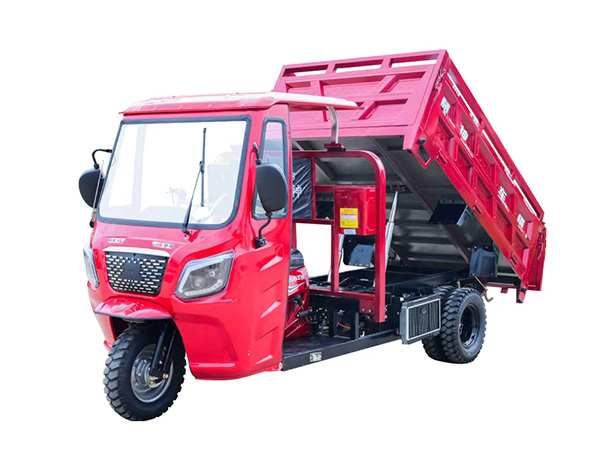
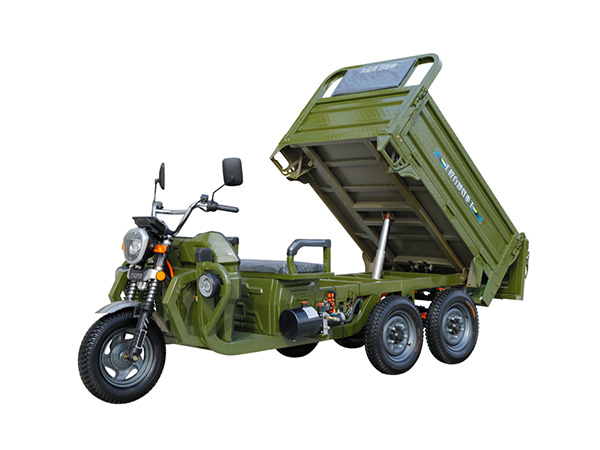
The dump mechanism uses a hydraulic ram or scissor-lift mechanism mounted between the chassis frame and the underside of the cargo bed. When hydraulic pressure is applied, the ram extends, pushing the rear of the cargo bed upward and tilting it to dump its load. The hydraulic system consists of a manually operated pump or electric pump motor, a hydraulic cylinder, a directional control valve, and the associated tubing and fittings.
The engineering specification of the dump mechanism includes: the maximum lift angle (typically 45–55 degrees from horizontal for a flat-bed design, sufficient for complete discharge of sand, gravel, and soil), the lift force required to raise the fully loaded bed (calculated from the bed weight, cargo weight, and the geometry of the lift system), the hydraulic cylinder bore and rod diameter that provides adequate lift force with commercially available pump pressure, and the hydraulic system pressure rating that provides a minimum 2:1 safety factor against the maximum working pressure. The safety interlocks that prevent accidental dump activation and ensure the bed is locked in the travel position are also part of the mechanism design—these are safety-critical functions that prevent the bed from dropping during transport.
The cargo bed itself is a structural element of the dump mechanism. It must resist the bending loads from the cargo weight (acting at the bed's center of gravity when loaded) and the torsional loads from the lift mechanism (which applies asymmetric forces to the bed structure during raising and lowering). Bed floor plate thickness, side wall gauge, and cross-member spacing beneath the floor are all specified based on the rated cargo density and the mechanical properties of the bed materials. A bed designed for aggregate and rock is specified with heavier floor plate and closer cross-member spacing than one designed for lighter materials such as soil or mulch.
Powertrain and Drive System Engineering
The powertrain of a three-wheeled dump truck must do two things: provide enough traction to move the fully loaded vehicle up the maximum anticipated grade, and do so reliably across the vehicle's service life in the demanding environment of a construction site.
The engine is typically a single-cylinder or twin-cylinder air-cooled gasoline engine in the 150–300 cc displacement range, producing 8–15 kW at rated speed. The engine is mounted on rubber engine mounts that isolate vibration from the chassis and reduce noise at the operator position. Engine power is transmitted through a manual clutch and sequential gearbox (typically 3–4 forward gears) to a final drive that splits power to the rear wheels. The final drive ratio is selected to provide adequate wheel torque for grade climbing at the intended operating speed—with the engine at or slightly below its peak torque RPM.
The clutch is a dry single-plate design, manually operated by a foot pedal. The clutch must transmit the engine's maximum torque without slip, disengage cleanly to allow gear shifts without grinding, and do so through thousands of engagement cycles without wear-related deterioration. For three-wheeled dump truck applications, a heavy-duty commercial clutch with higher torque capacity than the engine's peak output provides the durability margin needed for loaded starts on grades.
The rear axle is a full-floating design—the axle shaft transmits torque to the wheel while the housing carries the vehicle load. This is important because a half-floating axle (where the axle shaft carries both torque and vehicle load) experiences bending stresses that accelerate shaft fatigue. Full-floating axles are standard on commercial three-wheeled dump trucks because they are more durable under the repeated heavy loading of site work.
Steering and Suspension for Site Maneuvering
The engineering of three-wheeled dump trucks must address the reality that these vehicles operate in confined spaces with poor surface conditions. Steering geometry must allow tight turns without tire scrubbing, and the suspension must protect both the vehicle and its cargo from the vibration and impact loads of rough terrain.
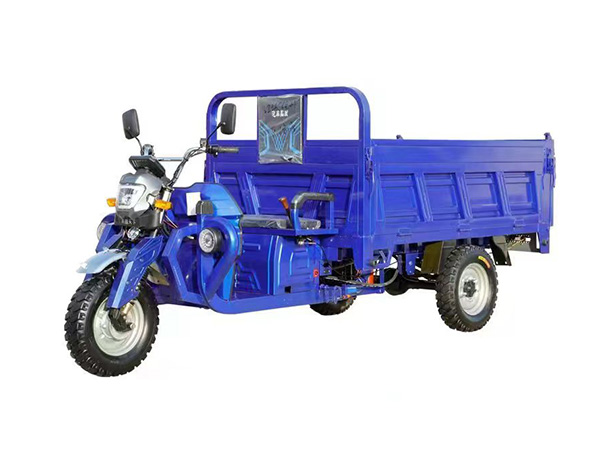
The steering system is a handlebar-operated mechanical or hydraulic system that pivots the front wheel around a steering head. The steering head angle—the angle of the steering axis from vertical—determines how much force is required to turn the wheel and how much the wheel self-centers after a turn. A steeper steering head angle (more vertical) provides lighter steering effort and quicker response, suitable for vehicles operating in confined spaces. A slacker angle provides more stable high-speed tracking but requires more steering effort. The steering ratio—the number of degrees of handlebar rotation required to achieve a given angle of front wheel turn—is chosen to balance ease of maneuvering with stability: commercial three-wheeled dump trucks typically use a ratio that allows full lock turns within one-and-a-half to two full handlebar rotations.
The suspension on a three-wheeled dump truck serving site applications is typically a combination of front fork spring suspension (coil spring or elastomer) and a rigid rear axle with leaf spring or coil spring mounting. The front suspension absorbs road shocks from surface irregularities, protecting both the vehicle frame and the cargo from impact damage. The rear suspension must support the high loads from the cargo bed while maintaining wheel alignment and ground contact. Leaf springs are the traditional choice for heavy-duty applications because they provide progressive spring rates that handle both light unloaded and heavy loaded conditions; coil springs with shock absorbers offer a more compact package and better ride quality but at higher cost.
Wheel, Tire, and Ground Contact Engineering
For a three-wheeled dump truck operating on construction sites, the wheels and tires are not an afterthought—they are the interface between the vehicle and the working environment, and their specification directly affects traction, stability, and the ability to navigate site terrain.
The front wheel is typically a 16–18 inch diameter wheel with a narrow tire (2.5–3.0 inch width) sized for steering precision and maneuverability. The two rear wheels are typically 20–26 inch diameter with wider tires (4.0–6.0 inch width) sized to carry the majority of the vehicle and cargo load. The rear wheel track—the lateral distance between the centers of the two rear tires—determines the stability base, with wider track providing more lateral stability at the cost of fitting through narrower openings.
Tire ply rating and tread pattern must be matched to the operating surface. For compacted earth and gravel site surfaces, a 4–6 ply rating with an all-terrain or cross-country tread pattern provides the best combination of traction and durability. For paved surfaces, a smoother tread with higher ply rating reduces rolling resistance. For muddy conditions, a aggressive mud-terrain tread with self-cleaning lugs is necessary to maintain traction. The tire pressure specification is equally important: over-inflation reduces traction and increases road shock; under-inflation causes sidewall damage and rapid wear. The manufacturer's specified tire pressure should be verified before each shift and adjusted for the actual load and surface conditions.
Electrical System Design for Site Reliability
The electrical system on a three-wheeled dump truck performs two essential functions: powering the lighting system for public road or site road travel, and—on electric-start models—cranking the engine and supplying power to the electrical accessories.
The lighting system includes the headlamp, tail lamp, brake light, and turn indicators described in the safety section of this guide. These are powered by a 12V DC electrical system with a generator or alternator that charges the battery during operation. The system must be robust enough to operate reliably in the wet, dusty, high-vibration environment of a construction site. Sealed connectors, weatherproof switches, and adequate wire gauge to prevent voltage drop over the wiring runs are all part of the engineering specification.
For models with electric starting, the battery capacity and cranking performance must be adequate for cold-start conditions. Lead-acid batteries lose significant cranking capacity at temperatures below 5 degrees Celsius, which can be a problem for vehicles stored outdoors in cold climates. A battery with adequate cold cranking amp (CCA) rating—typically 30–50 CCA per liter of engine displacement for gasoline engines—ensures reliable starting in cold conditions.
Frequently Asked Questions
What is the typical payload capacity of a three-wheeled dump truck, and how is it determined?
Commercial three-wheeled dump trucks are rated from 500 kg to 1,500 kg payload depending on frame structure, axle rating, wheel and tire specification, and brake capacity. The payload rating is the minimum of these component ratings—it is determined by whichever component has the lowest capacity. Procurement specifications should verify that the vehicle's stated payload rating is supported by documentation for all major components, not just the frame.
How does the dump mechanism prevent the vehicle from tipping during unloading?
The dump mechanism is designed so that the vehicle's center of gravity with an empty bed is well forward of the rear axle, providing a restoring moment that resists tipping. Additionally, the stabilizer legs (if fitted) or the geometry of the three-point contact between the two rear wheels and the front wheel prevent tipping during the dump cycle. Vehicles rated above 800 kg should be specified with stabilizer legs for loading and unloading on slopes.
What powertrain specification is appropriate for steep site terrain?
For sites with grades exceeding 10%, specify a 200–300 cc engine with a first gear ratio of 3.0:1 or higher (numerically lower first gear = more torque at the wheel). Verify the manufacturer's stated maximum grade climbing ability against your actual site conditions, and add a 20% margin for safety. Vehicles without documented grade climbing ability should be tested on the steepest anticipated route before procurement.
How should I specify tires for construction site operation?
Specify 4–6 ply rated tires with all-terrain or cross-country tread pattern. Front tire width of 2.5–3.0 inches and rear tire width of 4.0–6.0 inches. Verify that the tire load rating exceeds the maximum wheel load (vehicle weight plus cargo, divided by the number of wheels). Check tire pressure against manufacturer specifications before each shift and adjust for load conditions. In muddy site conditions, mud-terrain tread with aggressive self-cleaning lugs is essential for maintaining traction.
Conclusion
The engineering of three-wheeled dump trucks is a disciplined application of mechanical engineering principles to a specific and demanding operating environment. The key engineering domains that determine vehicle quality and suitability are: ladder-type frame design with adequate bending and torsional stiffness for site loads, dump mechanism engineering with verified lift capacity, safety interlocks, and bed structural specification matched to the intended cargo density, powertrain specification adequate for the maximum grade at rated load, full-floating rear axle for durability under repeated heavy loading, front fork and rear spring suspension that absorbs site terrain shock while maintaining cargo integrity, and wheel and tire specification matched to the operating surface. B2B buyers who evaluate vehicles against these engineering criteria—requesting documented specifications, test data, and load ratings—procure vehicles that perform reliably in site conditions, rather than discovering design limitations through premature failures in commercial operation.
References
Peurifoy, R.L., Schexnayder, C.J., and Shapira, A., "Construction Planning, Equipment, and Methods," McGraw-Hill Education, 9th Edition, 2019.
Thomas, H.R. and Ellis, R.D., "Fundamentals of Heavy Equipment," American Society of Civil Engineers, 2020.
Gransberg, D.D. and Molenaar, K.R., "Life-Cycle Cost Analysis for Construction Equipment," Journal of Construction Engineering and Management, vol. 130, no. 5, 2004.
ASTM International, "ASTM D632: Standard Specification for Sodium Chloride," ASTM, 2019.
Harris, F. and McCaffer, R., "Modern Construction Management," Wiley-Blackwell, 8th Edition, 2021.

Contact Us
Tel:8615713172715 / 8619061777149
WeChat:8615713172715 / 8619061777149
E-mail:942778859@qq.com
Url:https://www.duomitricycle.com