







- Site Navigation -
Electrical Systems in Electric Tricycles: Components Guide
Author:duomi Date:2026-10-02 17:09:52 Hits:60
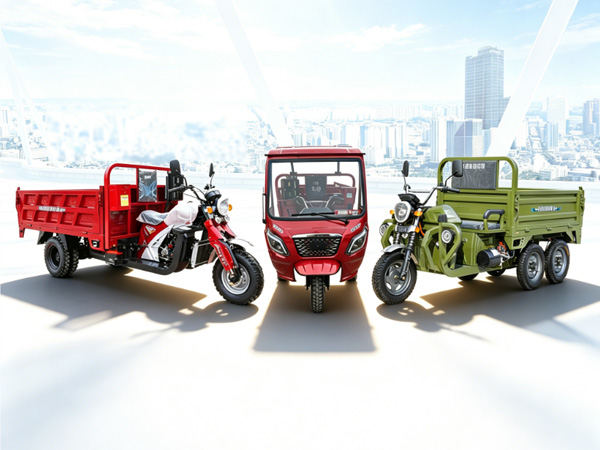
When evaluating a fuel-powered cargo tricycle, the engineering conversation centers on the engine, transmission, and fuel system. For an electric tricycle, that conversation shifts almost entirely to the electrical system. The electrical systems in electric tricycles comprise the battery pack, traction motor, motor controller, battery management system (BMS), wiring harness, and charging equipment—and the way these components are specified and integrated determines the vehicle's usable range, load capacity, hill-climbing ability, service life, and safety. For B2B buyers building electric fleets, understanding these subsystems is not optional background; it is the foundation of every procurement and maintenance decision that follows.
Why the Electrical System Defines Electric Tricycle Performance
An electric tricycle has no combustion engine to fall back on, no fuel tank to refill in minutes, and no mechanical transmission to multiply torque. Every joule of energy that moves the vehicle, powers the lights, and operates the accessories comes from the battery and passes through the controller to the motor. This makes the electrical system both the source of the vehicle's capabilities and the locus of its limitations.
Three performance characteristics matter most to commercial operators: range per charge, available tractive power for load and grade, and system durability over years of daily cycling. Range is governed primarily by battery capacity (ampere-hours) and the vehicle's energy consumption per kilometer. Tractive power is governed by motor rated power and the controller's current delivery capability. Durability is governed by battery chemistry and the quality of the BMS that protects it. A buyer who understands how these factors interrelate can specify a vehicle that meets operational requirements rather than one that looks adequate on a specification sheet but underperforms in service.
Battery Pack: Chemistry, Voltage, and Capacity
The battery is the single most expensive and most consequential component in the electrical systems in electric tricycles. Two lithium-ion chemistries dominate the commercial electric tricycle market: lithium iron phosphate (LiFePO4, commonly abbreviated LFP) and nickel manganese cobalt oxide (NMC).
LFP cells operate at a nominal 3.2 volts per cell and are characterized by long cycle life—commonly rated for 2,000 or more full charge-discharge cycles before capacity falls to 80% of initial—and a comparatively stable thermal profile that makes them forgiving under abuse conditions. Their trade-off is lower specific energy (roughly 90–160 Wh/kg depending on cell format), meaning an LFP pack of a given capacity is heavier and larger than an equivalent NMC pack. NMC cells operate at a nominal 3.6–3.7 volts per cell, offer higher specific energy (160–250 Wh/kg), and therefore deliver more range for a given weight, but they are more thermally sensitive and typically rated for fewer cycles (800–1,500) under equivalent use.
The pack voltage platform—48V, 60V, and 72V are common in commercial electric tricycles—is determined by the number of cells connected in series. A 48V LFP pack uses approximately 15 cells in series; a 72V NMC pack uses approximately 20 cells in series. Higher voltage platforms allow the same power to be delivered at lower current, which reduces resistive losses in the wiring and controller and improves efficiency on heavier vehicles. Capacity, measured in ampere-hours (Ah), combined with pack voltage, gives the energy content in watt-hours (Wh = V × Ah), which is the figure that most directly predicts range. A 60V 40Ah pack stores 2,400 Wh; at a consumption of 30–50 Wh per kilometer under commercial cargo loads, this yields a realistic range of 48–80 km per charge.
Traction Motor: Hub vs Mid-Drive Configurations
The traction motor converts electrical energy from the battery into mechanical rotation. Commercial electric tricycles predominantly use brushless DC (BLDC) permanent-magnet motors for their efficiency, low maintenance, and good torque characteristics at low speed—where cargo tricycles spend most of their operating time.
The motor can be mounted in two configurations. A hub motor is built into the wheel hub, directly driving the wheel without chains or belts. Its advantages are mechanical simplicity, sealed construction that resists dust and water ingress, and elimination of drivetrain wear components. Its disadvantage is that it adds unsprung mass at the wheel, which can degrade ride quality and, on the front wheel, steering feel. A mid-drive motor is mounted at the frame's bottom bracket and drives the rear wheel through the existing chain and sprocket system. Its advantages are centralized mass (better weight distribution and handling), the ability to use the gear ratio for torque multiplication on grades, and easier motor cooling. Its disadvantage is that it places mechanical strain on the chain and sprockets, which then become wear items. For cargo tricycles carrying 300–500 kg, mid-drive configurations are often preferred for their torque and weight distribution; for lighter duty, hub motors offer simplicity and lower maintenance.
Rated motor power in commercial electric tricycles typically spans 500W to 2,000W, with the choice governed by local regulatory limits on electric vehicle power and by the load-and-grade requirements of the application. Buyers should note that rated continuous power—sustainable without overheating—is more meaningful for commercial use than peak power figures that can only be sustained for seconds.
Motor Controller and Battery Management System
The motor controller is the interface between the battery and the motor. It converts the battery's DC supply into the three-phase AC (or sequenced DC for simpler motors) needed to drive the BLDC motor, using pulse-width modulation and rotor-position feedback from Hall-effect sensors to commutate the motor efficiently. The controller's current limit—the maximum amperes it will deliver to the motor—directly caps the available tractive power. A controller rated below the motor's capability wastes motor potential; one rated far above it provides headroom but adds cost and heat.
The battery management system is a separate electronic subsystem dedicated to battery safety and longevity. Its core functions are cell voltage monitoring (detecting over-voltage during charge and under-voltage during discharge), current limiting to prevent over-current events, temperature monitoring with charge and discharge cutoffs at thermal limits, and cell balancing to correct the small capacity divergences that develop between series-connected cells over time. A BMS that performs passive balancing (dissipating excess charge from higher cells as heat) is standard; active balancing (transferring charge between cells) is found on higher-end packs. The BMS is the component most responsible for preventing the thermal runaway and premature capacity loss that destroy battery packs, and its specification should be a primary evaluation criterion for any electric tricycle battery.
Wiring, Connectors, and Ingress Protection
The wiring harness and connectors are the often-overlooked components that determine whether the rest of the electrical systems in electric tricycles function reliably in commercial environments. Cargo tricycles operate in rain, dust, vibration, and temperature swings, all of which attack electrical connections.
Connectors should be rated for the current they carry with adequate margin, sealed against moisture ingress, and secured with locking mechanisms that resist vibration-induced disconnection. The controller and battery enclosures should carry an IP (ingress protection) rating appropriate to the operating environment—IP65 (dust-tight, protected against low-pressure water jets) is a reasonable minimum for vehicles operating in rain or washdown conditions; IP67 (protected against temporary immersion) provides additional margin. Wire gauge must be selected so that voltage drop across the harness at maximum current does not exceed approximately 3% of pack voltage, which otherwise wastes power as heat and reduces motor performance. A vehicle with undersized wiring or unsealed connectors will develop intermittent faults that are difficult to diagnose and expensive to chase.
Charging Infrastructure and Battery Life
Charging is where battery life is won or lost. Lithium-ion batteries charge most safely and durably using a constant-current, constant-voltage (CC-CV) profile: current is held constant until the cell reaches its upper voltage limit, then voltage is held constant while current tapers to a cutoff. Off-board chargers supplied with the vehicle implement this profile automatically.
Charge rate, expressed as a C-rate (a 1C charge delivers the pack's capacity in one hour), affects both convenience and longevity. Charging at 0.2C–0.5C (a 40Ah pack at 8–20A) is gentle on the cells and extends cycle life; charging at 1C or higher is faster but accelerates capacity fade. For fleet operations where vehicles must return to service quickly, the trade-off between charge speed and battery replacement cost should be calculated explicitly: a pack charged gently may deliver 30–50% more total lifetime energy throughput than one fast-charged daily. Charger output voltage must match the pack platform exactly, and charger quality (clean DC output, proper termination) materially affects battery health.
Maintenance, Diagnosis, and Component Sourcing
The electrical systems in electric tricycles require less routine maintenance than combustion systems but demand disciplined monitoring. Battery state-of-health should be tracked through periodic capacity checks—measuring how many ampere-hours the pack actually delivers versus its rated capacity—to schedule replacement before range becomes operationally limiting. Connectors should be inspected for corrosion or looseness during scheduled service. The controller cooling fins or fan (if fitted) should be kept clear of debris.
When faults occur, diagnosis follows the power path: battery output voltage under load, controller input and output, motor phase resistance, and Hall sensor signals. A multimeter and the manufacturer's wiring diagram are sufficient for most field diagnosis. For B2B buyers, the critical procurement consideration is parts availability: specify vehicles from suppliers who can deliver replacement battery packs, controllers, and motors on a defined lead time, because an electric tricycle out of service awaiting a proprietary component costs far more than the component itself.
Selection Factors for B2B Buyers
When specifying electrical systems in electric tricycles for a commercial fleet, prioritize these evaluation criteria in order: battery chemistry and cycle-life rating matched to duty cycle (LFP for maximum longevity, NMC for maximum range per weight); pack energy content (Wh) sized to the longest daily route with margin; motor configuration and rated continuous power matched to load and grade; controller current rating matched to motor; BMS functions verified (balancing, thermal cutoff, over-current); IP rating appropriate to environment; and documented spare parts availability with lead times. Request the manufacturer's battery cycle-life test data and the electrical schematic as part of the technical due diligence, and verify that stated voltages and capacities are consistent across the battery, controller, and charger specifications.
Frequently Asked Questions
Which battery chemistry is better for a commercial electric tricycle fleet: LFP or NMC?
For high-utilization commercial fleets where vehicles are charged daily and expected to remain in service for several years, LFP (lithium iron phosphate) is generally the more durable choice, offering 2,000 or more cycles and a stable thermal profile. NMC offers higher energy density and therefore more range per kilogram of battery, which matters when payload capacity or weight is constrained, but typically at the cost of shorter cycle life. The choice depends on whether range per charge or total lifetime energy throughput is the binding constraint.
What pack voltage platform should I specify—48V, 60V, or 72V?
Higher voltage platforms (60V, 72V) deliver the same power at lower current, reducing resistive losses and controller heating, which improves efficiency and component life on heavier vehicles. 48V platforms are adequate for lighter-duty applications and are often simpler and less expensive. The platform must be consistent across battery, controller, motor, and charger—mismatched voltage is a common and destructive specification error that buyers should verify explicitly.
How does the BMS protect the battery, and why does its specification matter?
The BMS monitors cell voltages, pack current, and temperature, interrupting charge or discharge when parameters exceed safe limits, and balances cells to prevent individual cells from drifting out of tolerance. Without a functioning BMS, over-discharge, over-charge, or thermal events can permanently damage the pack or create safety hazards. Its specification should be evaluated alongside the battery chemistry, not treated as a minor accessory.
What charge rate best balances speed and battery life for fleet operation?
Charging at 0.2C–0.5C (for example, 8–20 amperes into a 40Ah pack) is gentle on cells and maximizes cycle life, while 1C or faster charging reduces turnaround time at the expense of accelerated capacity fade. The optimal rate is the one that keeps vehicles in service without shortening pack life to the point that replacement cost exceeds the value of faster turnaround. Track lifetime energy throughput per pack to quantify the trade-off for your specific operation.
Conclusion
The electrical systems in electric tricycles are the subsystems that determine whether a vehicle meets its operational promises of range, power, and service life. The defining technical decisions are battery chemistry and energy content matched to duty cycle, motor configuration and rated power matched to load and terrain, controller current capability matched to the motor, a BMS with verified protection and balancing functions, ingress protection appropriate to the operating environment, and a charging regime that balances turnaround speed against battery longevity. B2B buyers who evaluate these criteria with the same rigor applied to combustion drivetrains—requesting cycle-life data, electrical schematics, and documented spare-parts lead times—procure electric tricycles that deliver predictable performance and low lifetime cost rather than vehicles whose limitations surface only after they enter commercial service.
References
Larminie, J. and Lowry, J., "Electric Vehicle Technology Explained," Wiley, 2nd Edition, 2012.
Reddy, T.B. (ed.), "Linden's Handbook of Batteries," McGraw-Hill, 4th Edition, 2010.
International Electrotechnical Commission, "IEC 62133: Secondary Cells and Batteries Containing Alkaline or Other Non-Acid Electrolytes," IEC, 2017.
International Organization for Standardization, "ISO 6469: Electrically Propelled Road Vehicles — Safety Specifications," ISO, 2019.
Society of Automotive Engineers, "SAE J2344: Guidelines for Electric Vehicle Safety," SAE International, 2010.

Contact Us
Tel:8615713172715 / 8619061777149
WeChat:8615713172715 / 8619061777149
E-mail:942778859@qq.com
Url:https://www.duomitricycle.com