







- Site Navigation -
Electric vs Fuel Tricycle: Which Should You Choose for Industrial Operations?
Author:duomi Date:2026-07-12 22:25:30 Hits:106
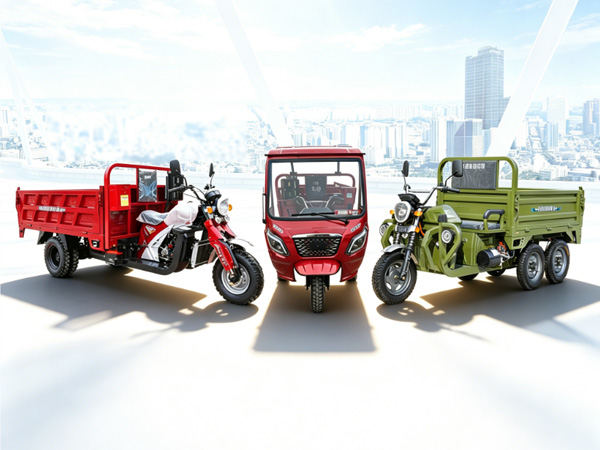
Selecting between an electric tricycle and a fuel powered tricycle is no longer a niche procurement question—it is a strategic fleet decision that affects operating costs, regulatory compliance, and long-term competitiveness. The choice hinges on quantifying trade-offs across powertrain characteristics, infrastructure requirements, and application fit. This guide presents a side-by-side technical comparison using real-world operational data from industrial deployments in logistics, construction, and agriculture, enabling B2B buyers to match vehicle type to their specific operating profile with confidence.
Powertrain Architecture: How Each System Performs
An electric tricycle uses a brushless DC or mid-drive motor powered by a lithium battery pack, delivering maximum torque from zero RPM. This characteristic makes electric models exceptionally effective for stop-and-go urban delivery, warehouse interior transport, and any application involving frequent starts under load. A fuel powered tricycle uses a small internal combustion engine (typically 50–150 cc) delivering sustained power across its RPM range. The IC engine excels at maintaining speed under load on sustained grades and over long distances where battery energy density remains a constraint. For flat, short-range urban loops under 40 km per shift, the electric tricycle powertrain is superior in efficiency and operating cost. For rural routes exceeding 60 km per day or sustained grades above 8%, the fuel powered tricycle maintains performance where electric systems may experience thermal derating or range limitation.
Total Cost of Ownership: The 5-Year Calculation
Procurement decisions should be based on total cost of ownership, not purchase price. The following 5-year TCO comparison assumes daily operation of 30 km, 300 kg average payload, and local industrial electricity and fuel pricing:
| Cost Category | Electric Tricycle | Fuel Powered Tricycle |
|---|---|---|
| Purchase Price | $2,200–$4,500 | $1,500–$3,200 |
| Energy Cost (5 years) | $150–$450 | $3,000–$6,000 |
| Maintenance (5 years) | $400–$1,000 | $1,500–$3,000 |
| Battery Replacement | $400–$800 (once) | $0 |
| Engine Overhaul | $0 | $300–$800 (once) |
| Total 5-Year TCO | $3,150–$6,750 | $6,300–$13,000 |
The data shows the electric tricycle delivers 40–60% lower TCO over 5 years for typical urban and intra-facility applications. The fuel model's lower purchase price is offset within 12–18 months by energy and maintenance cost differentials.
Infrastructure Requirements Compared
Infrastructure planning differs fundamentally between the two powertrains. An electric tricycle fleet requires: a charging area with 240 V outlets (one per 2–3 vehicles, $50–$150 per charging point), secure overnight storage to prevent battery theft, and a spare battery inventory for multi-shift operations. A fuel powered tricycle fleet requires: on-site fuel storage (diesel or gasoline, with fire safety compliance if storing >20 L on-site), refueling procedures and staff training, and emission venting for indoor parking areas. For businesses already operating gasoline or diesel equipment, adding fuel powered tricycles requires minimal additional infrastructure. For businesses without fuel storage, the electric tricycle eliminates fuel handling, storage, and theft risk entirely.
Performance on Grades and Heavy Loads
Grade performance is a key differentiator. On a 5% grade with 400 kg payload, a 750 W electric tricycle maintains 12–15 km/h with adequate battery capacity remaining. On a 10% grade, the same vehicle's speed drops to 6–9 km/h and battery range reduces by 40–50%. A fuel powered tricycle with a 110 cc engine maintains 15–20 km/h on a 10% grade with minimal performance degradation. For operations on hilly terrain or with sustained heavy loads exceeding 500 kg, the fuel powered tricycle delivers more consistent performance. However, next-generation electric models with 1,000–1,500 W motors and advanced battery management systems are narrowing this gap rapidly, particularly for grades under 8%.
Emissions, Noise, and Indoor Operation
An electric tricycle produces zero direct emissions and operates at 45–60 dB—suitable for indoor warehouses, factories, hospitals, and residential areas without hearing protection or ventilation requirements. A fuel powered tricycle produces 70–85 dB noise and emits CO, NOx, and particulates, restricting operation to outdoor areas with adequate ventilation. In Europe and China, tightening emissions regulations are restricting fuel powered tricycles from urban centers and enclosed facilities. For mixed indoor-outdoor operations, only the electric tricycle provides seamless transition capability. Even for purely outdoor operations, the noise advantage of electric models reduces community noise complaints in residential delivery zones.
Battery Lifecycle and Replacement Planning
The lithium battery pack is the primary life-cycle cost item for an electric tricycle. Modern lithium iron phosphate (LiFePO4) batteries rated for 2,000+ cycles retain 70–80% capacity after 4–6 years of daily commercial use. Replacement cost is $300–$800 per pack, depending on capacity and cell quality. Lead-acid batteries are cheaper ($150–$300) but last only 300–500 cycles and add 15–25 kg of weight. For fleet deployments, battery replacement should be budgeted as a scheduled maintenance item at year 4–5, not treated as unexpected failure. Some manufacturers offer battery swap programs that reduce downtime to under 2 minutes per swap, enabling continuous multi-shift operation without waiting for charging.
Frequently Asked Questions
Which is better for daily urban delivery routes?
For urban delivery with daily distance under 50 km and payloads under 500 kg, the electric tricycle is the better choice. It offers 85–90% lower energy cost per kilometer, 60–80% lower maintenance cost, zero emissions for indoor and pedestrian zone access, and 40–55% lower 5-year TCO. The fuel powered tricycle is only preferable if routes exceed 80 km per day or involve sustained steep grades.
How long does battery charging take?
Standard charging from empty to full takes 4–6 hours on a 240 V outlet for a 48V/20Ah lithium pack. Fast-charge options (higher-current chargers) reduce this to 2–3 hours. For single-shift operations, overnight charging is sufficient. For multi-shift operations, budget for a spare battery pack per vehicle ($300–$600) to enable continuous operation.
Do fuel powered tricycles require a driver's license?
In most jurisdictions, fuel powered tricycles with engines exceeding 50 cc are classified as motor vehicles and require a motorcycle or moped license to operate on public roads. Electric tricycles with motors under 250–750 W (varies by jurisdiction) typically operate under bicycle-equivalent regulations and do not require a driver's license. This licensing difference significantly affects labor recruitment and training costs.
Can electric tricycles handle rain and wet conditions?
Yes. IP65-rated electric tricycles operate safely in rain. Key specifications for wet-weather operation include: sealed connectors on all electrical junctions, waterproof battery enclosure, stainless steel or nickel-plated chain, and hydraulic disc brakes (which maintain performance when wet, unlike rim brakes). Reduce payload by 15–20% on wet surfaces due to reduced traction.
Conclusion
The electric vs fuel tricycle decision is a data-driven choice, not a matter of preference. For urban logistics, intra-facility transport, and any application with daily distance under 50 km, the electric tricycle delivers measurably superior economics, regulatory compliance, and operational flexibility. For rural distribution, long-range routes exceeding 80 km per day, and sustained operation on steep grades, the fuel powered tricycle remains the pragmatic choice. The global trend toward urban emission restrictions and battery cost reduction (8–12% per year) favors electric adoption. For B2B buyers with a 3–5 year planning horizon, the electric tricycle is the future-proof investment for the majority of industrial applications.
References
International Energy Agency, "Global EV Outlook 2024: Electric Two- and Three-Wheelers Market Analysis," IEA, 2024.
Quarles, N. and Kockelman, K.M., "Electric vs. Gasoline Powered Cargo Trikes for Last-Mile Delivery: A Lifecycle Assessment," Transportation Research Part D, vol. 95, 2022.
Weiss, M. et al., "On the Electrification of Road Transport—Learning Rates and Cost Reductions for Electric Vehicles," Energy Policy, vol. 168, p. 113064, 2022.
Worley, O. and Klabjan, D., "Electric Cargo Bikes and Their Potential to Replace Delivery Trucks in Urban Areas," Transportation Research Record, vol. 2676, no. 7, pp. 570–582, 2022.

Contact Us
Tel:8615713172715 / 8619061777149
WeChat:8615713172715 / 8619061777149
E-mail:942778859@qq.com
Url:https://www.duomitricycle.com