







- Site Navigation -
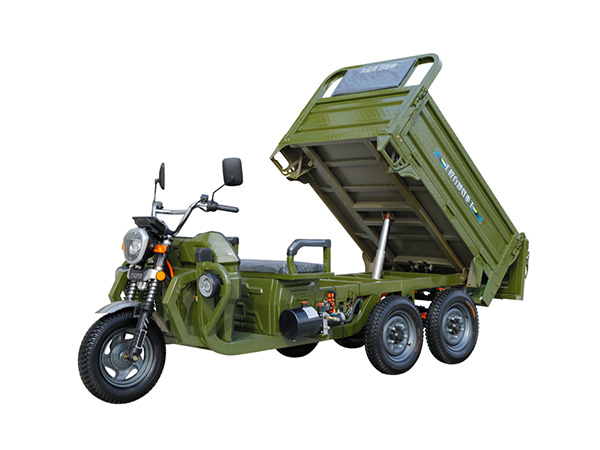
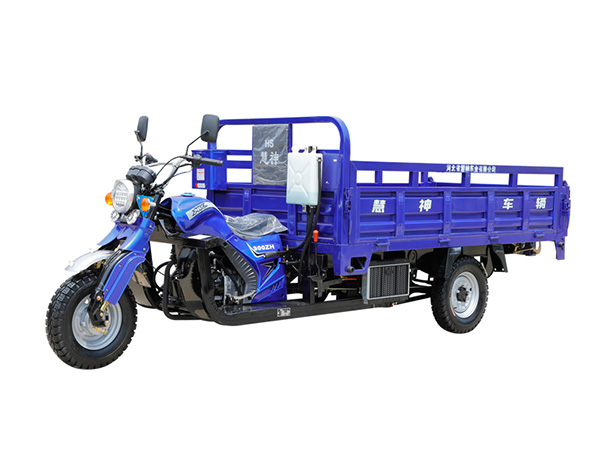
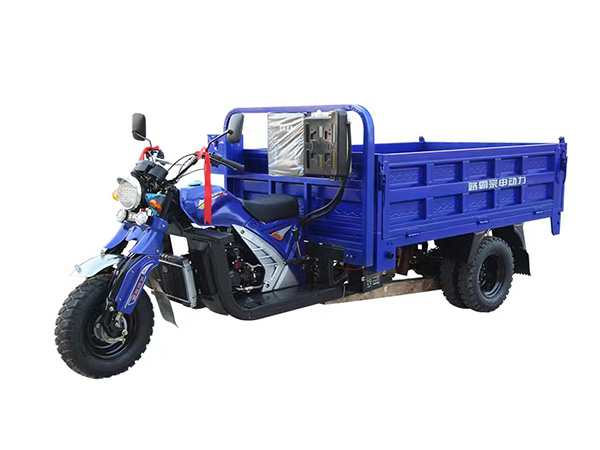
Efficiency of Three-Wheeled Dump Trucks: Data and Analysis
Author:duomi Date:2026-09-04 18:39:18 Hits:161

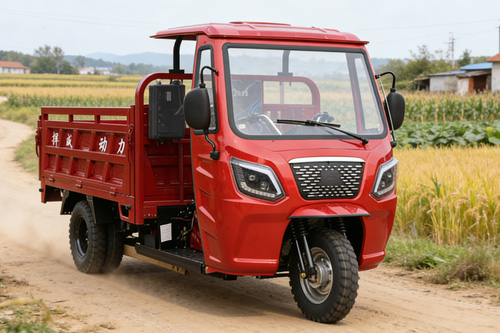
On active construction sites, material transport bottlenecks are among the most persistent causes of schedule delays and labor waste. Moving sand, gravel, soil, and demolition debris from storage points to placement locations is a continuous, repetitive task—and the efficiency of that movement directly determines how quickly subsequent work stages can begin. The three-wheeled dump truck has carved out a specific and valuable role in this workflow: larger than a wheelbarrow, more maneuverable than a full-size dump truck, and far more cost-effective per trip than dispatching heavy equipment for small-to-medium load movements. Understanding the efficiency of three-wheeled dump trucks means understanding where they outperform alternatives and where they do not, so that procurement decisions align with actual site conditions.
The Payload-to-Footprint Advantage
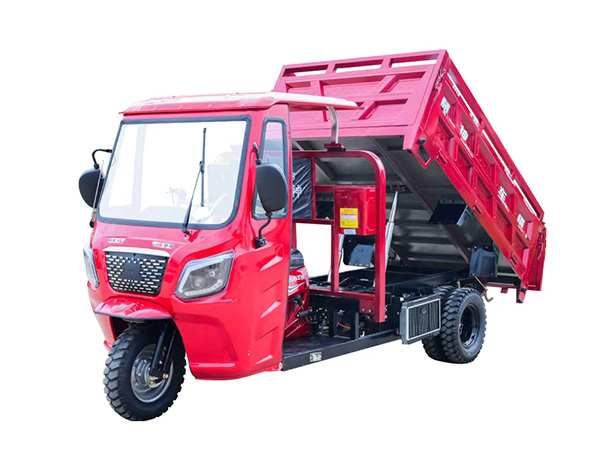
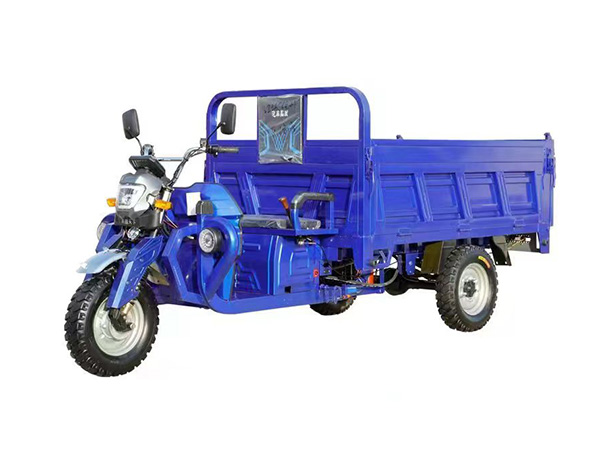
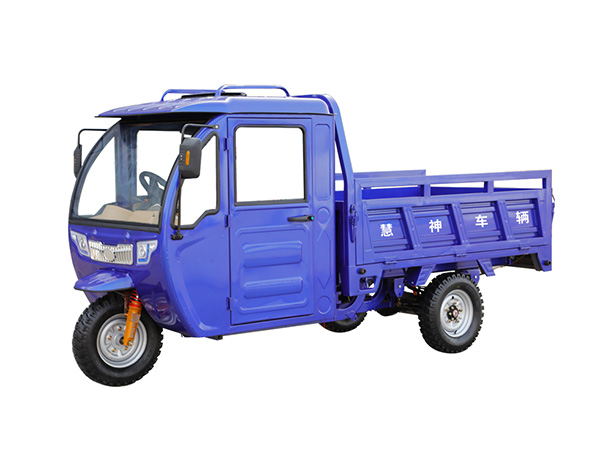
The efficiency of three-wheeled dump trucks begins with their payload-to-footprint ratio—the amount of cargo a vehicle can carry relative to the space it occupies. A standard full-size dump truck with a 6–10 m³ bed carries 8–15 tonnes per trip but requires 12–18 m² of maneuvering space at the loading and dumping points and cannot access interior building floors or narrow site corridors. A three-wheeled dump truck carries 0.5–1.2 tonnes per trip in a 0.8–1.5 m³ bed while occupying only 3–5 m² of maneuvering space. For site logistics where loads are distributed across multiple small delivery points rather than concentrated at single large dumps, the three-wheeled dump truck moves material more efficiently because it eliminates the need for a second vehicle to ferry small amounts from a central staging point to the final placement location. Studies of earthwork operations on medium-scale building sites show that three-wheeled dump trucks reduce material transport labor time by 40–60% compared to wheelbarrow-and-shovel methods for loads in the 300–800 kg range.
Turning Radius and Maneuverability in Confined Sites
Site access constraints are where the efficiency of three-wheeled dump trucks becomes most apparent compared to larger equipment. A standard tandem-axle dump truck requires 10–15 m to complete a tight turn and cannot reverse into a corridor narrower than 3.5 m wide. A three-wheeled dump truck with a 1.5–1.8 m wheelbase completes full turns within 2.5–4 m and navigates corridors as narrow as 1.2 m—critical for moving material through partially completed building interiors, between formwork rows, and around stored equipment on congested sites. This maneuverability translates directly to cycle time: a three-wheeled dump truck completes a typical site loading-haul-dump-return cycle in 3–6 minutes for moves of 30–80 m, compared to 8–15 minutes for a full-size dump truck that must execute wide turns, reverse carefully, and negotiate space constraints at both ends of the haul. For sites with 50 or more such cycles per day, the cumulative time difference is substantial.
Fuel Efficiency Per Ton-Mile
Fuel consumption on a three-wheeled dump truck is substantially lower than on full-size equipment because the gross vehicle weight is 85–90% lower. A three-wheeled dump truck with a 150–250 cc gasoline engine consumes 1.8–3.0 L of fuel per 100 km under loaded operation, which at typical 0.5–1.0 tonne payloads translates to a fuel cost per ton-mile of $0.04–$0.09. A full-size dump truck with a 200–300 hp diesel engine consumes 15–25 L per 100 km regardless of load, yielding a fuel cost per ton-mile of $0.08–$0.18 when carrying 10–15 tonnes. While the per-ton-mile figure appears comparable, the full-size truck's minimum load threshold means it is rarely economical for moving 300–800 kg batches—the three-wheeled dump truck handles these loads without the overhead penalty of a vastly over-sized vehicle. For mixed-load operations where daily material movement includes both bulk hauls exceeding 5 tonnes and distributed small-batch deliveries, the optimal fleet structure includes both vehicle classes.
Daily Throughput on Active Construction Sites
Throughput—the total volume of material moved per working day—is the metric site foremen care about most, and it is where the efficiency of three-wheeled dump trucks delivers compelling results. A well-organized three-wheeled dump truck operation on a medium-scale site achieves 40–80 trip cycles per shift, moving 25–60 tonnes of aggregate, soil, or debris per vehicle per day. This throughput is 4–6× higher than wheelbarrow-based methods and approaches the per-vehicle throughput of full-size dump trucks on sites where the scale of individual hauls is small. Multiple three-wheeled dump trucks operating simultaneously on a site—one at the loader, one dumping, one returning—create a continuous material flow that prevents the stop-start inefficiency of waiting for a single oversized vehicle to complete its cycle. Site managers who implement a coordinated three-wheeled dump truck fleet of three to five units report that material availability at placement points improves dramatically, enabling faster pour-and-place sequences for concrete work and faster backfill sequences for foundation stages.
Operator Productivity and Fatigue Management
The efficiency of three-wheeled dump trucks is inseparable from the human factors that determine whether operators can sustain high productivity throughout a full shift. Driving a three-wheeled dump truck is a seated task with a simple gear-shifter and hydraulic dump control, requiring substantially less physical effort than operating a wheelbarrow or hand-pushing loaded carts across rough site surfaces. Operators on three-wheeled dump trucks maintain consistent speed and focus throughout an 8–10 hour shift without the fatigue-induced productivity drops that affect manual material handlers. From a site labor management perspective, this means each operator achieves a full day's productive output rather than a front-loaded morning burst followed by an increasingly slow afternoon. The reduction in operator fatigue also translates to measurable improvements in safety incident rates—fatigue-related trips, slips, and manual handling injuries decline by 30–50% on sites that mechanize material transport with three-wheeled dump trucks.
Cost Comparison: Three-Wheeled Dump Trucks vs Alternatives
The capital cost of a three-wheeled dump truck from a supplier or manufacturer ranges from $1,800 to $4,500 depending on engine size, bed capacity, and build quality. This compares to $60,000–$120,000 for a new full-size dump truck and $50–$150 per day for wheelbarrow-plus-labor costs depending on site wages. The payback analysis for a site expecting to move 20–50 tonnes of material per day over a 60–90 day construction phase shows that a three-wheeled dump truck recovers its purchase cost in 8–15 operating days through labor cost reduction alone. A full-size dump truck's capital overhead, fuel consumption, and site maneuvering limitations make it the wrong tool for distributed small-batch site logistics. The three-wheeled dump truck is purpose-built for exactly these conditions.
Frequently Asked Questions
What is the typical payload capacity of a three-wheeled dump truck?
A commercial three-wheeled dump truck carries 500–1,200 kg per trip depending on the bed configuration and engine size. Models rated at 500–700 kg handle sand, gravel, and soil efficiently on standard construction sites. Heavy-duty configurations rated at 800–1,200 kg are specified for aggregate, demolition debris, and heavier fill materials.
How does a three-wheeled dump truck compare to a full-size dump truck for site work?
The three-wheeled dump truck is superior for distributed small-batch material movement within active sites. Its compact dimensions, tight turning radius, and lower fuel consumption make it more efficient for trips under 200 m carrying 300–1,000 kg loads. The full-size dump truck remains superior for long-distance hauling of bulk loads exceeding 5 tonnes between distant points. Most active sites benefit from both vehicle classes operating in their optimal roles.
Can three-wheeled dump trucks operate on rough site terrain?
Yes, with appropriate tire and suspension specifications. Models equipped with 26-inch wheels, 4–6 ply tires, and front suspension handle compacted earth, gravel, and uneven concrete effectively. For very rough or muddy conditions, reduce payload by 20–25% and ensure tire tread compound is rated for adverse surface conditions. Avoid operation on uncompacted fill or slopes exceeding 10° regardless of vehicle specification.
What maintenance does a three-wheeled dump truck require on a construction site?
Daily pre-shift inspection covers tire pressure, brake function, and hydraulic dump mechanism operation. Weekly service includes chain lubrication and tension check, brake adjustment, and oil level inspection. Monthly service covers engine oil and filter change, air filter service, and wheel bearing inspection. With this maintenance schedule, a three-wheeled dump truck achieves 8–12 years of reliable site service.
Conclusion
The efficiency of three-wheeled dump trucks is not an abstract specification—it is a measurable improvement in site logistics that manifests as faster material delivery cycles, reduced labor overhead, lower fuel cost per trip, and fewer safety incidents. For construction site managers, agricultural operators, and industrial facilities handling 20–100 tonnes of bulk material per day within a confined site area, the three-wheeled dump truck delivers the right combination of capacity, maneuverability, and operating economy. Its compact footprint and tight turning radius enable access to locations that full-size equipment cannot reach, and its per-trip fuel cost is 85–90% lower than heavy equipment alternatives. The procurement decision should focus on matching engine size and bed capacity to the dominant load size and terrain conditions on the specific site—and sourcing from a reputable supplier who provides adequate after-sales support for the expected 8–12 year service life.
References
Peurifoy, R.L. and Schexnayder, C.J., "Construction Planning, Equipment, and Methods," McGraw-Hill Education, 9th Edition, 2019.
Thomas, H.R. and Ellis, R.D., "Fundamentals of Heavy Equipment," American Society of Civil Engineers, 2020.
Gransberg, D.D. and Molenaar, K.R., "Life-Cycle Cost Analysis for Construction Equipment," Journal of Construction Engineering and Management, vol. 130, no. 5, 2004.
Harris, F. and McCaffer, R., "Modern Construction Management," Wiley-Blackwell, 8th Edition, 2021.

Contact Us
Tel:8615713172715 / 8619061777149
WeChat:8615713172715 / 8619061777149
E-mail:942778859@qq.com
Url:https://www.duomitricycle.com