







- Site Navigation -
Safety Features in Modern Cargo Tricycles: A B2B Guide
Author:duomi Date:2026-09-20 14:12:22 Hits:154
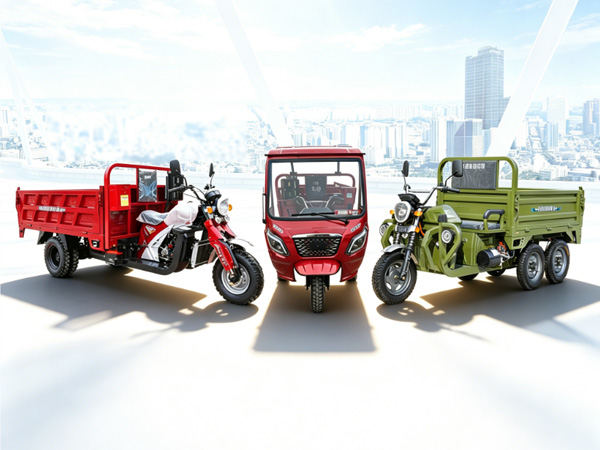
When a cargo tricycle carrying 600 kg of material enters a shared traffic lane, passes through a construction site gate, or navigates a warehouse aisle between racking, the engineering decisions made during its design are what separate a controlled, predictable vehicle from a hazard. For B2B buyers—fleet managers, procurement officers, site engineers, and import distributors—evaluating cargo tricycle safety is not a secondary consideration that follows price and payload. It is the first filter that eliminates unsuitable vehicles from a shortlist, before any other specification is compared. Understanding what genuine safety looks like in a modern cargo tricycle requires moving beyond the marketing language of "reliable" and "durable" to the measurable engineering criteria that actually prevent accidents.
The Braking System: Engineering That Stops the Load
A loaded cargo tricycle moving at 25 km/h carries kinetic energy that demands respect—and a braking system capable of dissipating it safely and repeatedly. The brake system is the single most consequential safety component on any cargo tricycle, and the difference between adequate and excellent braking engineering is the difference between controlled stops and runaway scenarios.
Mechanical drum brakes, found on most entry-priced models, operate through cable-actuated brake shoes that press against a rotating drum. They function acceptably for light loads on flat terrain but suffer from heat fade under repeated braking, water sensitivity in wet conditions, and rapid pad wear that requires frequent adjustment. For vehicles carrying 300 kg or more, or operating in hilly or wet environments, mechanical drums represent a genuine safety limitation.
Hydraulic disc brakes represent the meaningful upgrade. A caliper piston forces brake pads against a steel rotor, creating consistent friction regardless of pad wear state, water contamination, or heat buildup from repeated stops. For modern cargo tricycle designs rated above 400 kg payload, hydraulic disc brakes on all three wheels are the appropriate specification. They provide shorter stopping distances, better wet-weather performance, and self-adjusting pad wear that maintains consistent feel throughout service intervals. A properly specified cargo tricycle with hydraulic disc brakes should achieve a full-load stopping distance of under 7 meters from 25 km/h on a dry level surface. Any vehicle that cannot meet this benchmark should be treated as a safety concern, not merely a performance gap.
The parking brake is a separate safety system that prevents roll-away during loading, unloading, and parking. A compliant parking brake holds the fully loaded vehicle on a 12-degree slope without movement. Vehicles without a functioning parking brake create roll-away risk during the highest-risk moments of loading operations—when the operator is standing at the side or rear of the vehicle with no ability to reach the controls.
Stability Geometry: Why Frame Design Determines Who Walks Away
The three-wheel configuration gives a cargo tricycle inherent stability at rest and low speed, but this natural advantage is easily undermined by poor frame geometry. The dominant stability risk in a loaded cargo tricycle is tipping during cornering when the combined center of gravity of the vehicle and its load shifts beyond the stability triangle formed by the three tire contact patches.
Modern cargo tricycle safety design manages this through several geometric strategies. A low cargo bed floor—typically 300–400 mm above ground—keeps the load mass low, reducing the overturning moment during cornering. A wide rear track of 900–1,100 mm between rear wheel centers broadens the stability triangle, allowing the vehicle to resist lateral tipping forces more effectively. The powertrain mass—battery for electric models, engine for fuel-powered variants—is positioned as low and centrally as structural packaging allows, further lowering the overall center of gravity.
A well-designed cargo tricycle should be able to carry its rated payload through a 15-degree banked turn at 15 km/h without lifting any wheel from the surface. This is a verifiable performance criterion: buyers can conduct a slow-speed cornering test with a representative load to assess whether the vehicle feels planted or unstable through turns. A vehicle that lifts a wheel during this test has a center-of-gravity problem that no amount of operator skill can fully compensate. Beyond geometry, some modern cargo tricycle designs incorporate a low-speed stability assist system that limits maximum speed or reduces motor torque when a lean sensor detects an unsafe tilt angle—a feature worth specifying for operators working on uneven terrain or compound grades.
Load Security: Preventing the Most Common Cause of On-Road Incidents
Loads that shift, spill, or fall from a cargo tricycle are among the most common causes of on-road incidents involving these vehicles. A 50 kg box that slides laterally during a corner changes the vehicle's center of gravity instantly, potentially triggering the tipping scenario described above. A load that falls onto a pedestrian, cyclist, or passing vehicle creates a serious liability event. Preventing load-related incidents requires deliberate engineering of the cargo bed and operator training in load management.
A safe cargo tricycle design incorporates fixed lashing anchor points around the perimeter of the cargo bed—rated D-rings or lashing bars that accept standard cargo straps. Side walls or mesh rails must be high enough and rigid enough to contain the typical load without collapsing inward under acceleration or braking forces. The bed floor surface must provide sufficient friction to prevent load sliding under braking—textured steel, rubber matting, or anti-slip coatings all serve this purpose. For loose bulk materials, fully enclosed side walls of adequate height are essential; open beds designed for palletized cargo are unsuitable for aggregate, soil, or granular materials without additional containment measures.
From an operator standpoint, safe load management requires training in load distribution—placing the heaviest items lowest and centered—and proper use of restraint straps on every trip, regardless of how short the journey seems. Procurement specifications should include anchor point count and rating as mandatory evaluation criteria.
Visibility and Lighting: Being Seen Prevents Collisions
Many serious incidents involving cargo tricycles in mixed traffic occur because the tricycle was not visible to another road user—not because the tricycle did anything wrong. In urban delivery environments, at dawn and dusk, in rain, and in the blind spots of larger vehicles, visibility is a safety feature as important as the brakes.
A compliant cargo tricycle lighting package for public road operation includes a front white headlamp sufficient for the intended operating environment—200 lumens minimum for vehicles operating in low-light conditions—a rear red tail lamp and brake light that activates when braking, amber turn indicators visible from front and rear, and side reflectors or reflective rim tape that makes the vehicle detectable from lateral angles. For vehicles operating in industrial yards, construction sites, or warehouse floors, supplementary lighting may be required by site safety regulations, and buyers should verify compliance with the relevant jurisdiction.
Beyond the lighting itself, the placement and visibility of the cargo bed affects how other road users perceive the vehicle. A fully enclosed box cargo design with a solid rear panel reduces rear visibility for following traffic but is highly visible. An open flatbed is lighter and easier to load but presents a narrower profile to following traffic. The appropriate balance depends on the operating environment—but visibility should never be compromised below the minimum legal standard.
Operator Protection and Electrical Safety Systems
The operator of a cargo tricycle is the most exposed person in the vehicle system, and modern cargo tricycle designs address operator protection through physical guarding and intelligent electrical system design.
Physical guarding covers the drive chain, belt, or direct-drive mechanism between the motor or engine and the rear wheel. An unguarded drive system can catch loose clothing, long hair, or body parts with serious consequences. Guards must be durable enough to withstand operational vibration and removal for maintenance without cracking or dislodging.
For electric cargo tricycles, the electrical safety systems deserve particular attention. The battery management system must include over-current protection, over-temperature cutoff, and deep-discharge prevention. When the operator applies the brakes, the motor controller should cut drive power immediately—this "drive-cutoff on brake" function prevents the dangerous scenario where motor torque continues to drive the vehicle against applied brakes. The electrical connectors should be water-resistant to at least IP65 for vehicles that operate in rain or washdown environments, protecting the controller and motor from moisture ingress that can cause unpredictable behavior or short circuits.
Standards and Compliance: The Verification That Safety Claims Require
Marketing materials describe vehicles as "safe" and "reliable" freely. Standards compliance provides the verifiable evidence that these claims rest on engineering verification rather than assertion. B2B buyers should request documentation of compliance with applicable safety standards as a condition of procurement, and treat a supplier's inability or unwillingness to provide this documentation as a significant warning signal.
In European markets, cargo bicycles and cargo tricycles are assessed against EN 17860 (Cycles — Safety Requirements for Cargo Bicycles), which specifies requirements and test methods for braking performance, structural integrity, lighting systems, and electrical safety for powered variants. In other markets, national standards for power-assisted cycles, low-speed electric vehicles, or motor tricycles may apply depending on the vehicle's power output and maximum speed. Reputable manufacturers conduct type testing through accredited laboratories and provide declarations of conformity or test certificates that buyers can verify independently.
For B2B buyers conducting due diligence, the practical verification steps are: request copies of relevant test certificates, verify the certificate number against the issuing laboratory's records if possible, confirm that the certificates cover the specific model and configuration being procured (not just a similar model), and confirm that the factory holds a quality management system certification such as ISO 9001, which provides additional assurance that the production process consistently meets the specifications that the test certificates cover.
Frequently Asked Questions
What braking system specification is appropriate for a heavy-load cargo tricycle?
For cargo tricycles rated above 400 kg payload, or operating in hilly or wet environments, hydraulic disc brakes on all three wheels are the appropriate minimum specification. Mechanical drum brakes are acceptable for lighter vehicles on flat terrain only. A full-load stopping distance test from 25 km/h to zero should complete in under 7 meters on dry level ground—request this data from the supplier or conduct it as part of acceptance testing.
How can I verify that a cargo tricycle meets applicable safety standards?
Request the manufacturer's declaration of conformity or test certificates covering the specific model being procured. Verify that the standards cited are applicable in your market (EN 17860 in Europe, equivalent national standards elsewhere). Confirm the issuing laboratory is an accredited testing body. Additionally, verify the factory holds a quality management system certification such as ISO 9001.
What stability features should I look for when evaluating cargo tricycle frame design?
Key stability features are: a low cargo bed floor height (300–400 mm), a wide rear track (900–1,100 mm), and a low-mounted powertrain that keeps the overall center of gravity as low as possible. Conduct a loaded slow-speed cornering test at 15 km/h through a banked turn of approximately 15 degrees. A vehicle that lifts a wheel during this test has a center-of-gravity problem. Ask the supplier for their tilt test data as part of the technical specification review.
Are electric cargo tricycles safe to operate in rain or wet environments?
Electric cargo tricycles are safe in wet conditions when built to adequate ingress protection standards—look for IP65 or higher for electrical enclosures and connectors. The brake system should be hydraulic disc, which performs reliably in wet conditions. Verify that the motor controller includes drive-cutoff on brake application and over-current protection. Conduct a full-system functional test after any incident involving submergence or pressure washing.
Conclusion
Cargo tricycle safety is a measurable engineering discipline, not a marketing attribute. The safety features that define a genuinely safe modern cargo tricycle—hydraulic disc brakes on all three wheels, stable frame geometry verified through tilt testing, adequate load anchor points and side containment, compliant lighting and visibility systems, operator guarding and intelligent electrical controls, and documented compliance with applicable standards—are all specifiable, testable, and verifiable by B2B buyers who know what to ask for. Procurement teams that evaluate safety on these objective criteria rather than price or brand reputation protect their operators, reduce incident liability, and ultimately achieve lower total cost of ownership than those who treat safety as an afterthought. A vehicle that carries 600 kg of material through daily commercial operation has earned its safety credentials through engineering, not through a data sheet.
References
European Committee for Standardization, "EN 17860-1: Cycles — Safety Requirements for Cargo Bicycles — Part 1: Terms and Definitions," CEN, 2023.
National Highway Traffic Safety Administration, "Braking Performance Requirements for Low-Speed Vehicles and Three-Wheeled Vehicles," NHTSA Federal Motor Vehicle Safety Standards, 2022.
Papadimitriou, E. et al., "Safety of Cargo Cycles in Urban Logistics: Risk Factors and Countermeasures," Accident Analysis & Prevention, vol. 145, 2020.
Wood, J. and Lachenmeier, T., "Static and Dynamic Stability of Three-Wheeled Cargo Vehicles Under Load," Transportation Research Part F, vol. 78, 2021.
International Organization for Standardization, "ISO 9001:2015 — Quality Management Systems — Requirements," ISO, 2015.

Contact Us
Tel:8615713172715 / 8619061777149
WeChat:8615713172715 / 8619061777149
E-mail:942778859@qq.com
Url:https://www.duomitricycle.com